Wang Quan, He Wei-Yang, Zeng Yi-Zhou, Hossain Arman, Gou Xin
Department of Urology, The First Affiliated Hospital of Chongqing Medical University, Chongqing, 400016, China.
Central Laboratory, The First Affiliated Hospital of Chongqing Medical University, Chongqing, 400016, China.
Int Urol Nephrol. 2018 Apr;50(4):675-686. doi: 10.1007/s11255-018-1801-5. Epub 2018 Feb 19.
This study investigates the docetaxel-resistant mechanism and explores the effect of tea polyphenols (TP) on autophagy and its related mechanism in human castration-resistant prostate cancer (CRPC) cell lines PC3 and DU145.
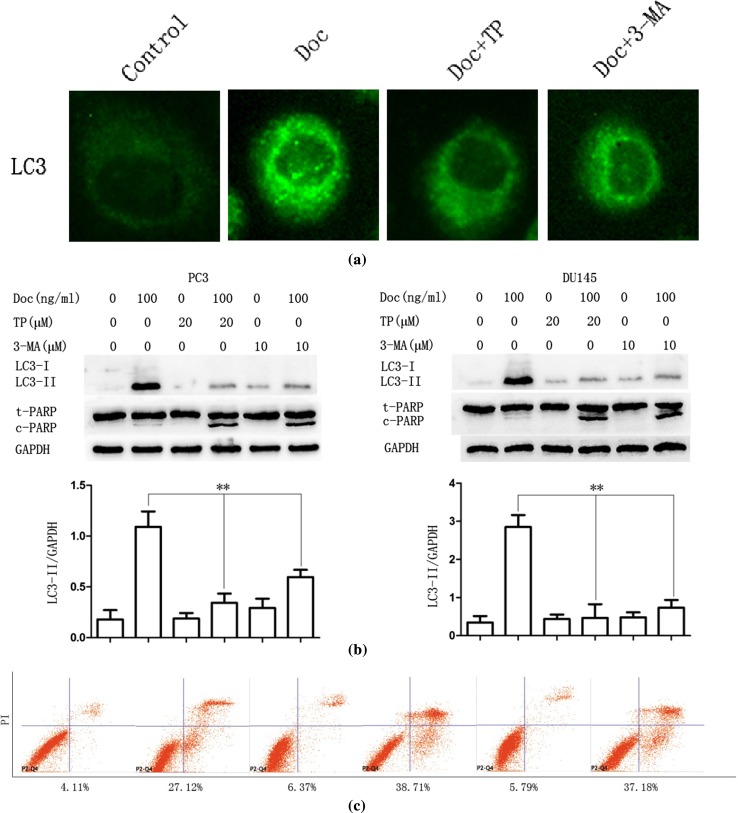
Immunofluorescence assay and annexin V-FITC/PI double staining flow cytometry were used to analyze the apoptosis and autophagy of PC3 and DU145 cells. The expression of autophagy-related proteins was detected by western bolt.
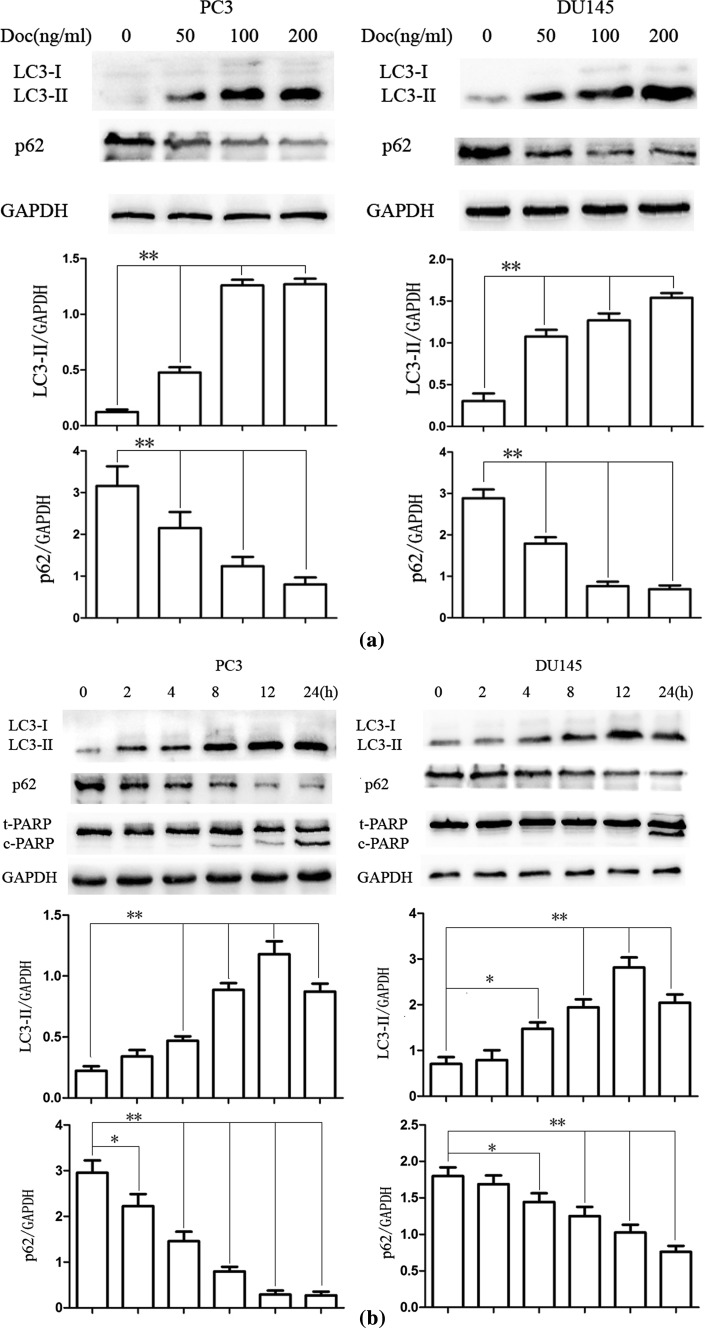
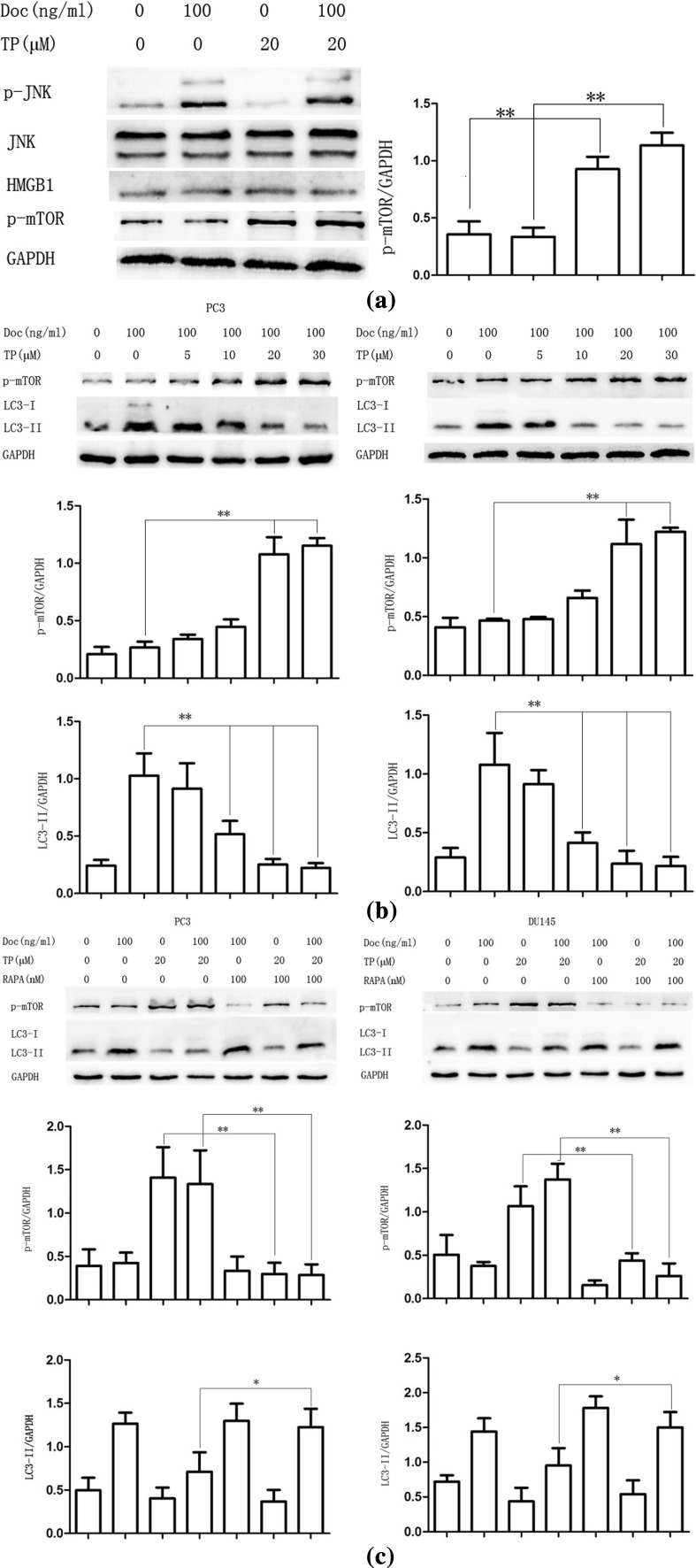
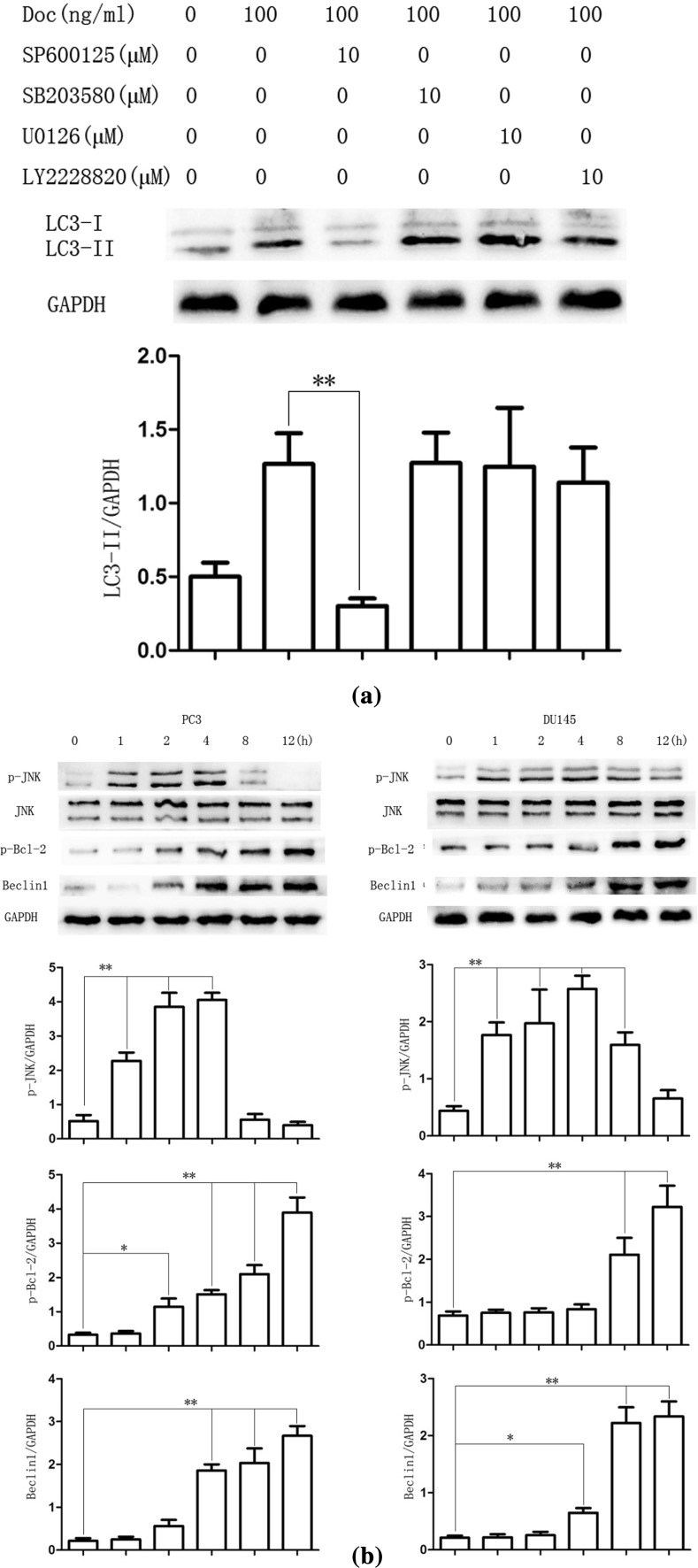
Docetaxel could induce autophagy and apoptosis, together with the expression increase in p-JNK, p-Bcl-2 and Beclin1. The level of autophagy was remarkably decreased, but apoptosis was increased after combining with TP. In addition, the expression of p-mTOR was increased after combining with TP.
Docetaxel induces protective autophagy in CRPC cells by JNK pathway activation and then Bcl-2 phosphorylation and Beclin1 dissociation. TP activates mTOR pathway, which ultimately inhibits docetaxel-induced autophagy and improves therapeutic efficacy of docetaxel in CRPC cells.
本研究探讨多西他赛耐药机制,并探究茶多酚(TP)对人去势抵抗性前列腺癌(CRPC)细胞系PC3和DU145自噬的影响及其相关机制。
采用免疫荧光法和膜联蛋白V-FITC/PI双染流式细胞术分析PC3和DU145细胞的凋亡与自噬情况。通过蛋白质免疫印迹法检测自噬相关蛋白的表达。
多西他赛可诱导自噬和凋亡,同时p-JNK、p-Bcl-2和Beclin1表达增加。与TP联合后,自噬水平显著降低,但凋亡增加。此外,与TP联合后p-mTOR表达增加。
多西他赛通过激活JNK通路,随后使Bcl-2磷酸化和Beclin1解离,在CRPC细胞中诱导保护性自噬。TP激活mTOR通路,最终抑制多西他赛诱导的自噬并提高多西他赛对CRPC细胞的治疗效果。