Tang Zheng-Hai, Li Ting, Chang Lin-Lin, Zhu Hong, Tong Yun-Guang, Chen Xiu-Ping, Wang Yi-Tao, Lu Jin-Jian
State Key Laboratory of Quality Research in Chinese Medicine, Institute of Chinese Medical Sciences, University of Macau , Macao, China.
J Agric Food Chem. 2014 Dec 10;62(49):11910-6. doi: 10.1021/jf503968k. Epub 2014 Nov 24.
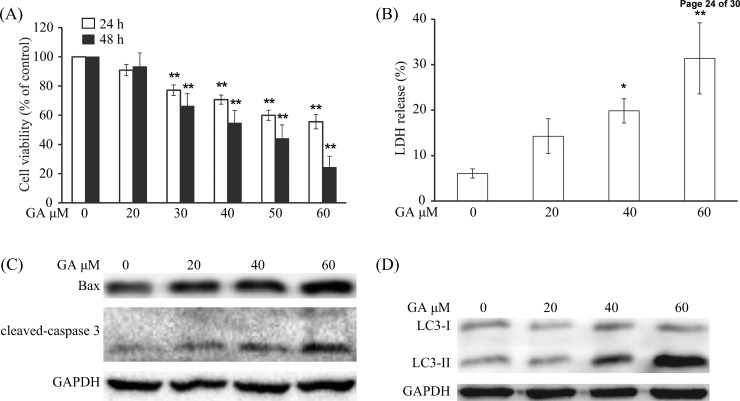
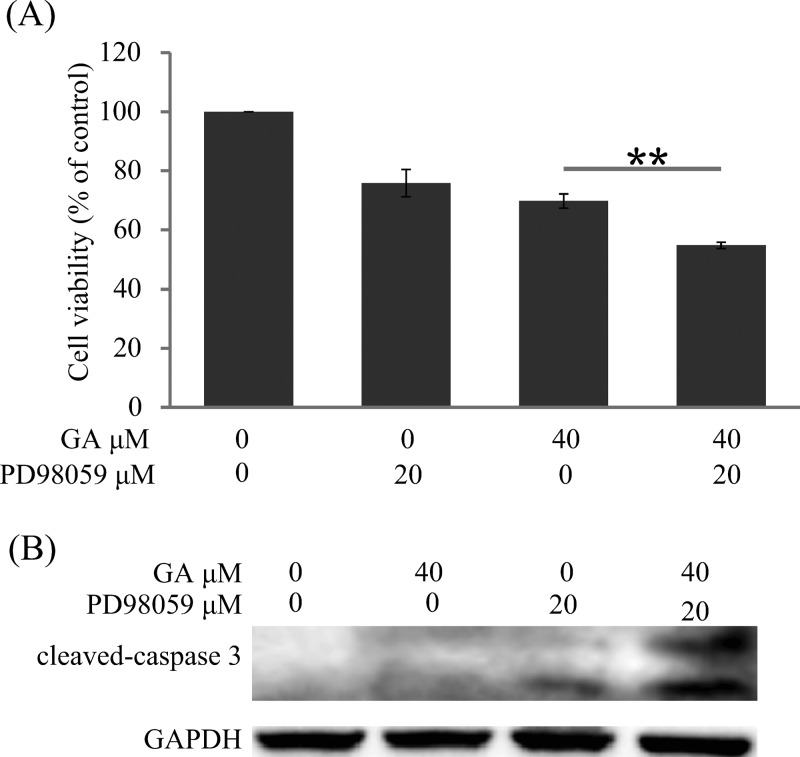
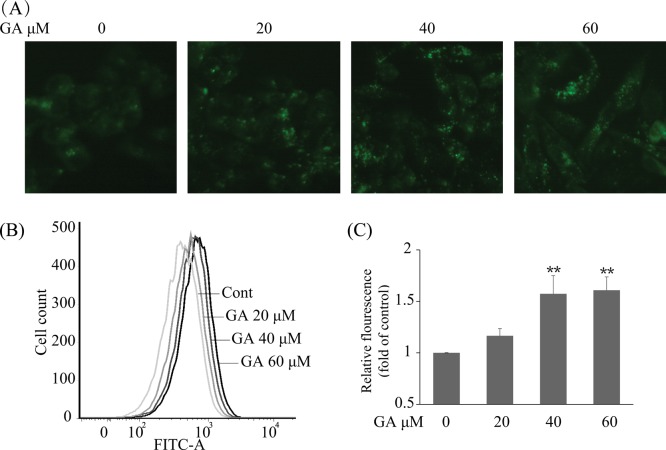
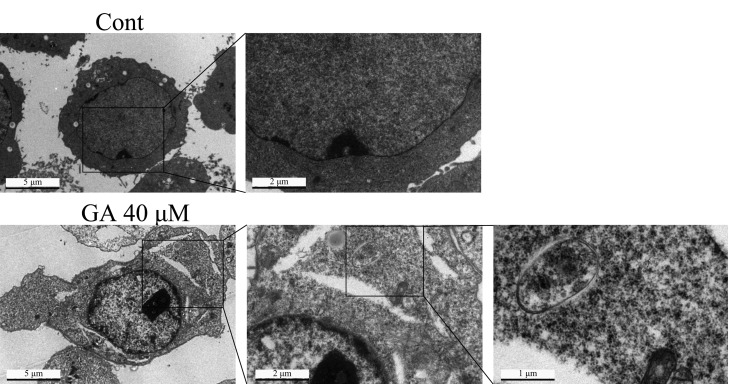
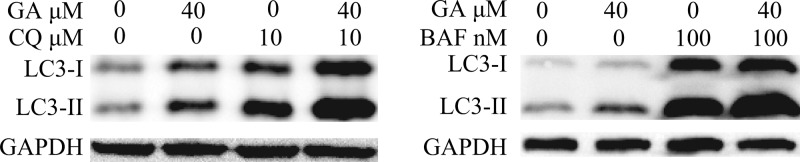
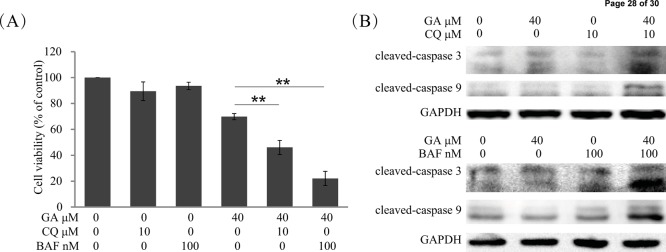
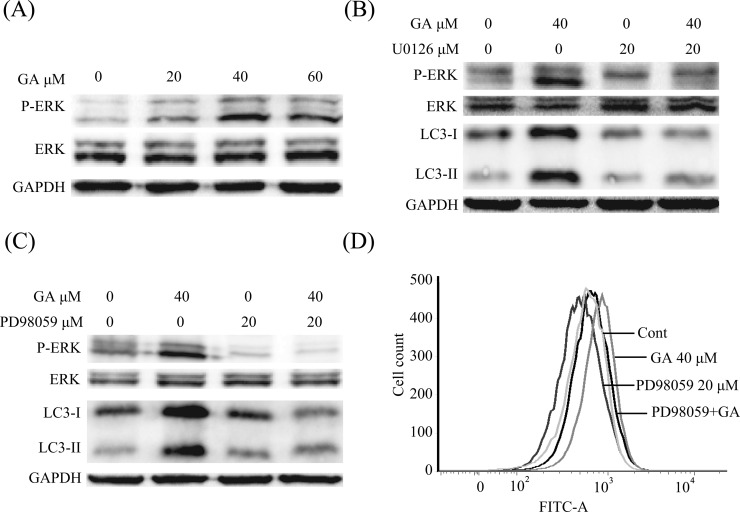
Glycyrrhetinic acid (GA), one of the main constituents of the famous Chinese medicinal herb and food additive licorice (Glycyrrhiza uralensis Fisch), has been indicated to possess potential anticancer effects and is widely utilized in hepatocellular carcinoma (HCC) targeted drug delivery systems (TDDS) due to the highly expressed target binding sites of GA on HCC cells. This study found that GA reduced the cell viability, increased the release of lactate dehydrogenase, and enhanced the expression of Bax, cleaved caspase-3, and LC3-II in HCC cells. The GA-triggered autophagy has been further confirmed by monodansylcadaverine staining as well as transmission electron microscopy analysis. The cell viability was obviously decreased whereas the expression of cleaved caspases was significantly increased when inhibition of autophagy by choloroquine or bafilomycin A1, suggesting that GA triggered a protective autophagy. Extracellular regulated protein kinase (ERK) was activated after treatment with GA in HepG2 cells and pretreatment with U0126 or PD98059, the MEK inhibitors, reversed GA-triggered autophagy as evidenced by decreased expression of LC3-II and formation of autophagosomes, respectively. Furthermore, GA-induced cell death and apoptosis were enhanced after pretreatment with PD98059. This is the first report that GA triggers a protective autophagy in HCC cells via activation of ERK, which might attenuate the anticancer effects of GA or chemotherapeutic drugs loaded with GA-modified TDDS.
甘草次酸(GA)是著名的中草药和食品添加剂甘草(Glycyrrhiza uralensis Fisch)的主要成分之一,已被证明具有潜在的抗癌作用,并且由于GA在肝癌(HCC)细胞上的靶结合位点高度表达,因此被广泛应用于肝癌靶向给药系统(TDDS)。本研究发现,GA降低了肝癌细胞的活力,增加了乳酸脱氢酶的释放,并增强了Bax、裂解的半胱天冬酶-3和LC3-II在肝癌细胞中的表达。单丹磺酰尸胺染色以及透射电子显微镜分析进一步证实了GA触发的自噬。当用氯喹或巴弗洛霉素A1抑制自噬时,细胞活力明显降低,而裂解的半胱天冬酶的表达显著增加,这表明GA触发了保护性自噬。在HepG2细胞中用GA处理后,细胞外调节蛋白激酶(ERK)被激活,用MEK抑制剂U0126或PD98059预处理可逆转GA触发的自噬,分别表现为LC3-II表达降低和自噬体形成减少。此外,用PD98059预处理后,GA诱导的细胞死亡和凋亡增强。这是首次报道GA通过激活ERK在肝癌细胞中触发保护性自噬,这可能会减弱GA或载有GA修饰的TDDS的化疗药物的抗癌作用。