Preventive Cardiology & Sports Medicine, University Clinic for Cardiology, Inselspital, Bern University Hospital, University of Bern, Bern, Switzerland.
PLoS One. 2018 Feb 20;13(2):e0193203. doi: 10.1371/journal.pone.0193203. eCollection 2018.
Long-term endurance sport practice leads to eccentric left ventricular hypertrophy (LVH). We aimed to compare the new 4-tiered classification (4TC) for LVH with the established 2-tiered classification (2TC) in a cohort of normotensive non-elite endurance athletes.
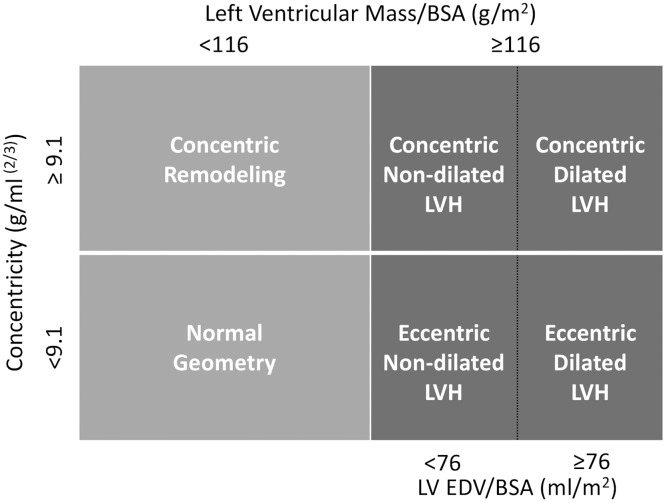
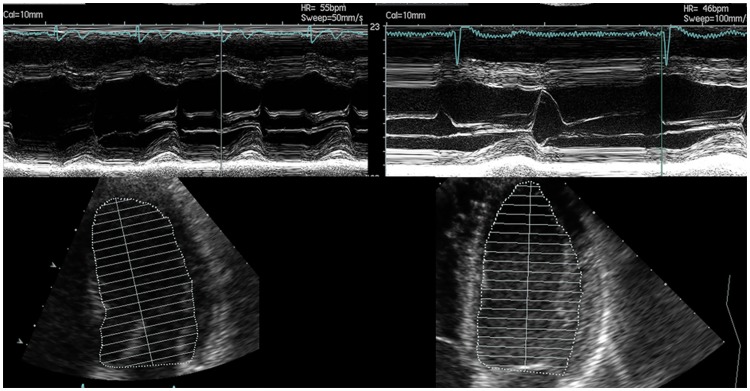
Male participants of a 10-mile race were recruited and included when blood pressure (BP) was normal (<140/90 mmHg). Phenotypic characterization of LVH was based on relative wall thickness (2TC), and on LV concentricity2/3 (LV mass/end-diastolic volume [LVM/EDV]2/3) plus LVEDV index (4TC). Parameters of LV geometry, BP, cumulative training hours, and race time were compared between 2TC and 4TC by analysis of variance, and post-hoc analysis.
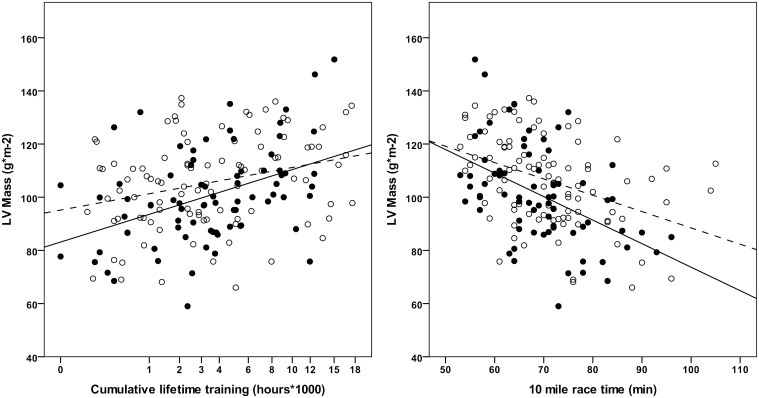
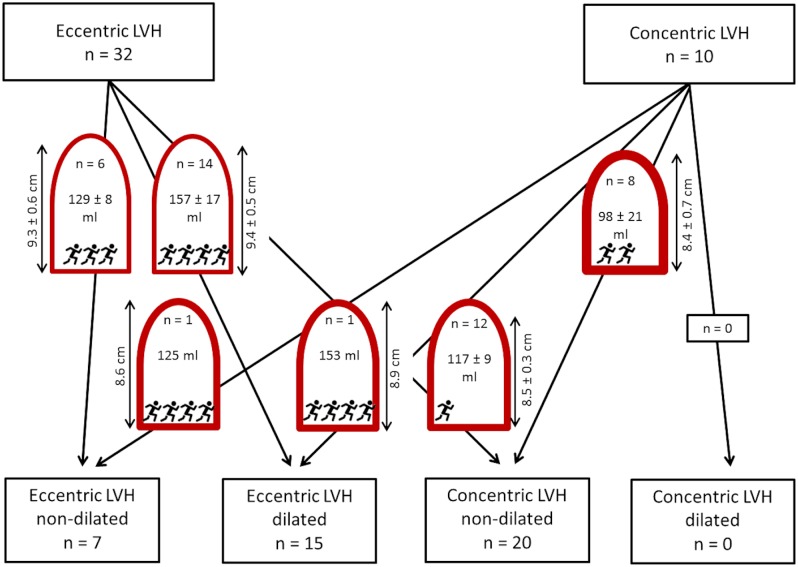
Of 198 athletes recruited, 174 were included. Mean age was 41.6±7.5 years. Forty-two (24%) athletes had LVH. Allocation in the 2TC was: 32 (76%) eccentric LVH and 10 (24%) concentric LVH. Using the 4TC 12 were reclassified to concentric LVH, and 2 to eccentric LVH, resulting in 22 (52%) eccentric LVH (7 non-dilated, 15 dilated), and 20 (48%) concentric LVH (all non-dilated). Based on the 2TC, markers of endurance training did not differ between eccentric and concentric LVH. Based on the 4TC, athletes with eccentric LVH had more cumulative training hours and faster race times, with highest values thereof in athletes with eccentric dilated LVH.
In our cohort of normotensive endurance athletes, the new 4TC demonstrated a superior discrimination of exercise-induced LVH patterns, compared to the established 2TC, most likely because it takes three-dimensional information of the ventricular geometry into account.
长期进行耐力运动可导致左心室向心性肥厚(LVH)。我们旨在比较新的 4 层分类(4TC)与已建立的 2 层分类(2TC)在正常血压(<140/90mmHg)的非精英耐力运动员队列中的应用。
招募参加 10 英里赛跑的男性参与者,当血压正常时纳入研究(<140/90mmHg)。LVH 的表型特征基于相对壁厚度(2TC),以及基于 LV 同心性 2/3(LV 质量/舒张末期容积 [LVM/EDV]2/3)加 LVEDV 指数(4TC)。通过方差分析和事后分析比较 2TC 和 4TC 之间的 LV 几何形状、BP、累积训练时间和比赛时间的参数。
共招募 198 名运动员,其中 174 名运动员入选。平均年龄为 41.6±7.5 岁。42 名(24%)运动员有 LVH。2TC 分配为:32 名(76%)离心性 LVH 和 10 名(24%)向心性 LVH。使用 4TC,12 名被重新分类为向心性 LVH,2 名被重新分类为离心性 LVH,导致 22 名(52%)离心性 LVH(7 名非扩张性,15 名扩张性)和 20 名(48%)向心性 LVH(均为非扩张性)。基于 2TC,离心性和向心性 LVH 之间的耐力训练标志物无差异。基于 4TC,离心性 LVH 的运动员具有更多的累积训练时间和更快的比赛时间,其中离心性扩张性 LVH 运动员的数值最高。
在我们的正常血压耐力运动员队列中,与已建立的 2TC 相比,新的 4TC 显示出对运动诱导的 LVH 模式的更好区分,这很可能是因为它考虑了心室几何形状的三维信息。