Muñoz-Alía Miguel Ángel, Muller Claude P, Russell Stephen J
Department of Molecular Medicine, Mayo Clinic, Rochester, Minnesota, United States of America.
Department of Infection and Immunity, Luxembourg Institute of Health, Esch-Sur-Alzette (Grand Duchy of Luxembourg), Luxembourg.
PLoS One. 2018 Feb 21;13(2):e0192245. doi: 10.1371/journal.pone.0192245. eCollection 2018.
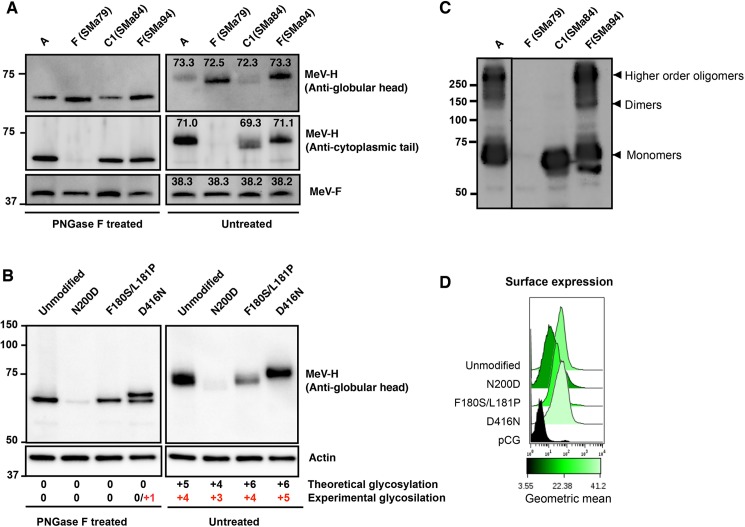
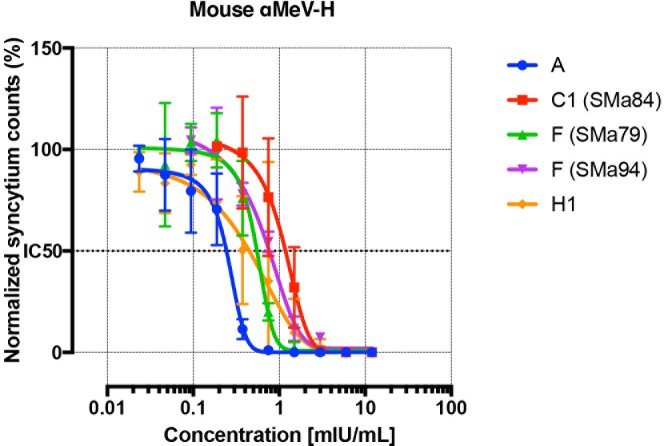
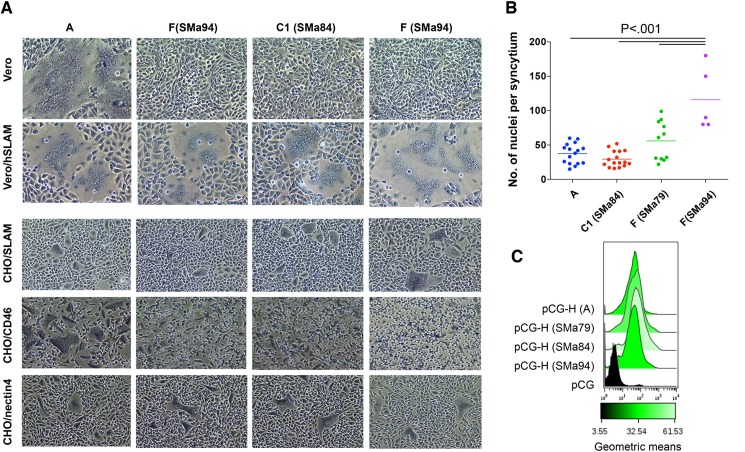
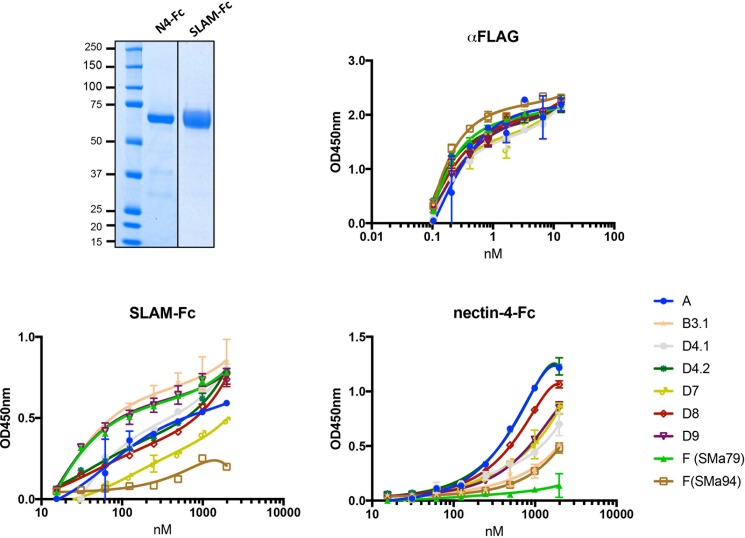
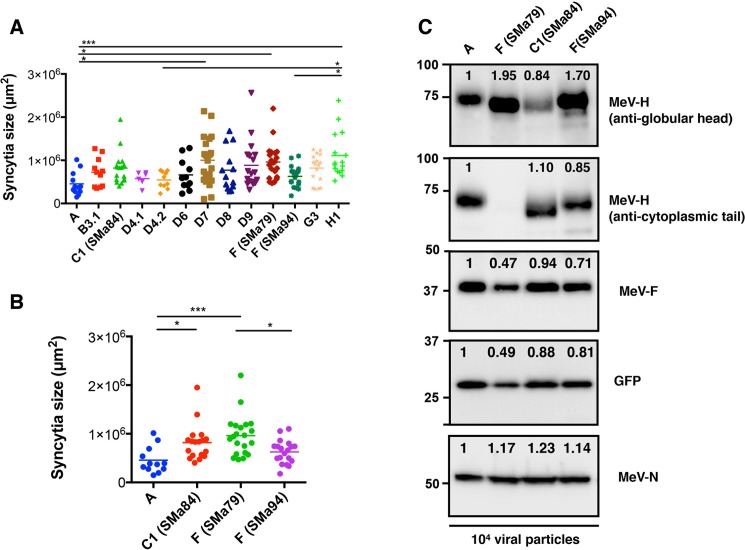
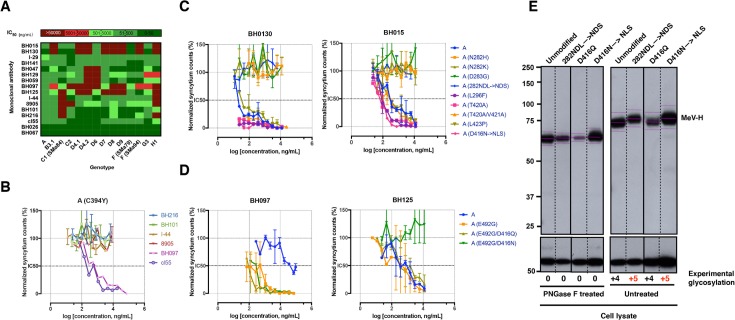
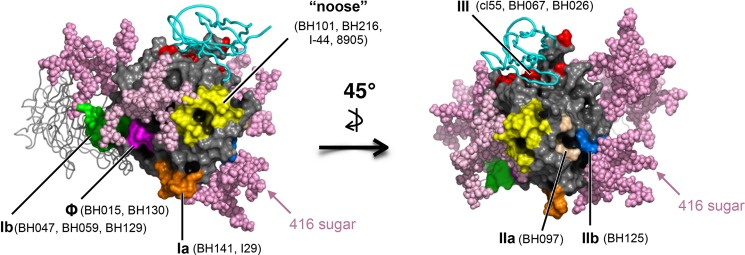
Subacute sclerosing panencephalitis (SSPE) is a progressive, lethal complication of measles caused by particular mutants of measles virus (MeV) that persist in the brain despite high levels of neutralizing antibodies. We addressed the hypothesis that antigenic drift is involved in the pathogenetic mechanism of SSPE by analyzing antigenic alterations in the MeV envelope hemagglutinin protein (MeV-H) found in patients with SSPE in relation to major circulating MeV genotypes. To this aim, we obtained cDNA for the MeV-H gene from tissue taken at brain autopsy from 3 deceased persons with SSPE who had short (3-4 months, SMa79), average (3.5 years, SMa84), and long (18 years, SMa94) disease courses. Recombinant MeVs with a substituted MeV-H gene were generated by a reverse genetic system. Virus neutralization assays with a panel of anti-MeV-H murine monoclonal antibodies (mAbs) or vaccine-immunized mouse anti-MeV-H polyclonal sera were performed to determine the antigenic relatedness. Functional and receptor-binding analysis of the SSPE MeV-H showed activity in a SLAM/nectin-4-dependent manner. Similar to our panel of wild-type viruses, our SSPE viruses showed an altered antigenic profile. Genotypes A, G3, and F (SSPE case SMa79) were the exception, with an intact antigenic structure. Genotypes D7 and F (SSPE SMa79) showed enhanced neutralization by mAbs targeting antigenic site IIa. Genotypes H1 and the recently reported D4.2 were the most antigenically altered genotypes. Epitope mapping of neutralizing mAbs BH015 and BH130 reveal a new antigenic site on MeV-H, which we designated Φ for its intermediate position between previously defined antigenic sites Ia and Ib. We conclude that SSPE-causing viruses show similar antigenic properties to currently circulating MeV genotypes. The absence of a direct correlation between antigenic changes and predisposition of a certain genotype to cause SSPE does not lend support to the proposed antigenic drift as a pathogenetic mechanism in SSPE.
亚急性硬化性全脑炎(SSPE)是麻疹的一种进行性致死性并发症,由麻疹病毒(MeV)的特定突变株引起,尽管存在高水平的中和抗体,但这些突变株仍能在大脑中持续存在。我们通过分析SSPE患者中发现的MeV包膜血凝素蛋白(MeV-H)的抗原变化与主要流行的MeV基因型的关系,探讨了抗原漂移参与SSPE发病机制的假说。为此,我们从3名患有SSPE的死者的脑尸检组织中获取了MeV-H基因的cDNA,这些患者的病程分别为短(3 - 4个月,SMa79)、平均(3.5年,SMa84)和长(18年,SMa94)。通过反向遗传系统构建了具有替代MeV-H基因的重组MeV。使用一组抗MeV-H鼠单克隆抗体(mAb)或疫苗免疫的小鼠抗MeV-H多克隆血清进行病毒中和试验,以确定抗原相关性。对SSPE MeV-H的功能和受体结合分析显示其以依赖SLAM/nectin-4的方式发挥活性。与我们的野生型病毒组相似,我们的SSPE病毒显示出抗原谱的改变。A、G3和F基因型(SSPE病例SMa79)是例外,其抗原结构完整。D7和F基因型(SSPE SMa79)显示针对抗原位点IIa的mAb增强了中和作用。H1基因型和最近报道的D4.2基因型是抗原改变最大的基因型。中和mAb BH015和BH130的表位作图揭示了MeV-H上一个新的抗原位点,因其在先前定义的抗原位点Ia和Ib之间的中间位置,我们将其命名为Φ。我们得出结论,导致SSPE的病毒与目前流行的MeV基因型具有相似的抗原特性。抗原变化与特定基因型导致SSPE的易感性之间缺乏直接相关性,不支持将抗原漂移作为SSPE发病机制的提议。