Buchborn Tobias, Lyons Taylor, Knöpfel Thomas
Laboratory for Neuronal Circuit Dynamics, Department of Medicine, Imperial College London, London, United Kingdom.
Centre for Neurotechnology, Institute of Biomedical Engineering, Imperial College London, London, United Kingdom.
Front Pharmacol. 2018 Feb 6;9:17. doi: 10.3389/fphar.2018.00017. eCollection 2018.
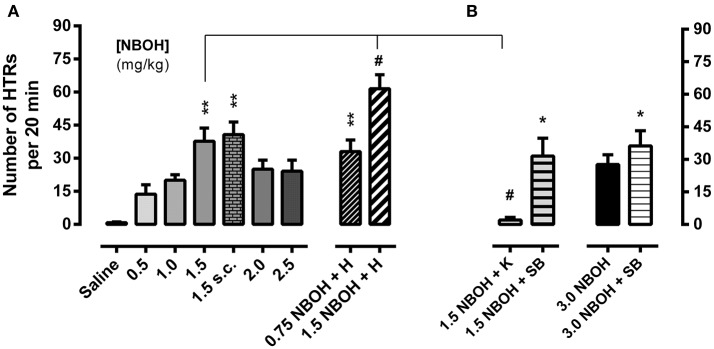
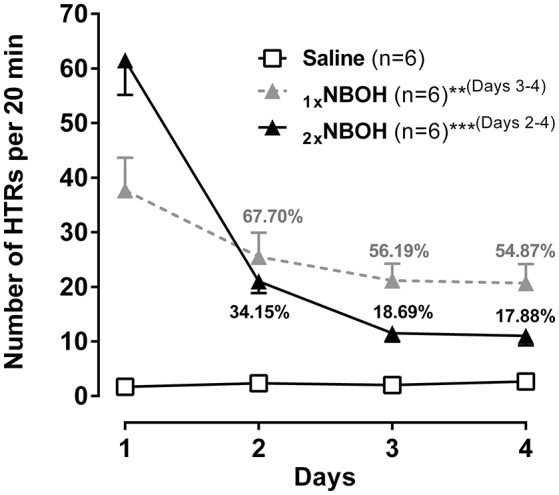
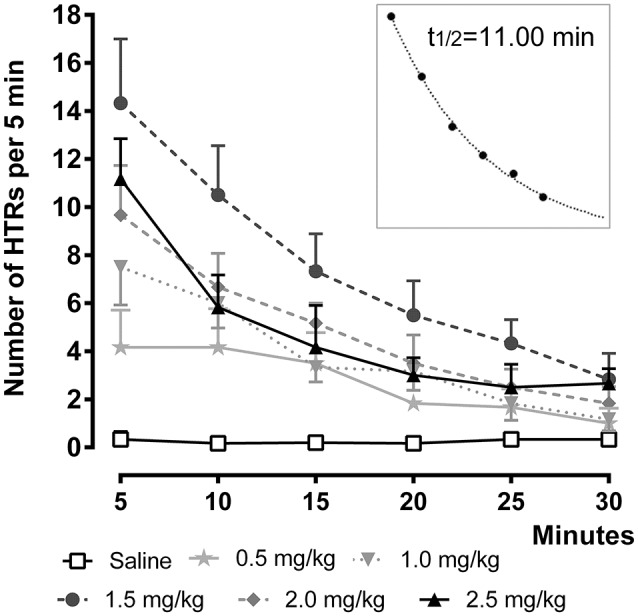
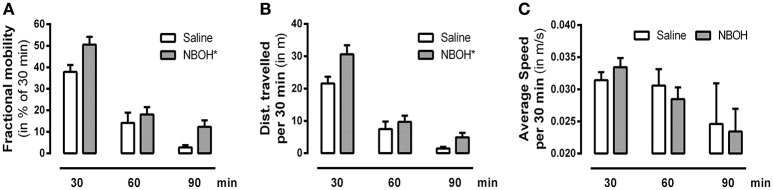
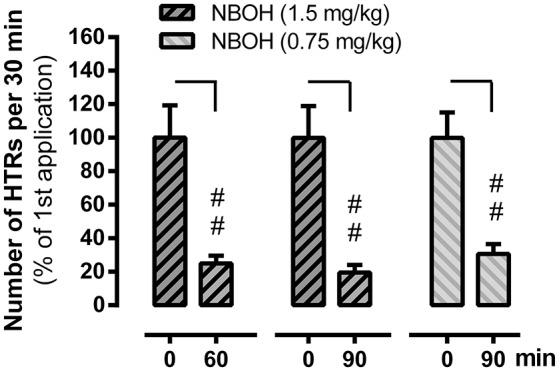
The serotonin (5-HT) 2A receptor is the primary molecular target of serotonergic hallucinogens, which trigger large-scale perturbations of the cortex. Our understanding of how 5-HT activation may cause the effects of hallucinogens has been hampered by the receptor unselectivity of most of the drugs of this class. Here we used 25CN-NBOH (N-(2-hydroxybenzyl)-2,5-dimethoxy-4-cyanophenylethylamine), a newly developed selective 5-HT agonist, and tested it with regard to the head-twitch-response (HTR) model of 5-HT activity and effects on locomotion. 25CN-NBOH evoked HTRs with an inverted u-shape-like dose-response curve and highest efficacy at 1.5 mg/kg, i.p. HTR occurrence peaked within 5 min after agonist injection, and exponentially decreased to half-maximal frequency at ~11 min. Thorough habituation to the experimental procedures (including handling, saline injection, and exposure to the observational boxes 1 day before the experiment) facilitated the animals' response to 25CN-NBOH. 25CN-NBOH (1.5 mg/kg, i.p.) induced HTRs were blocked by the 5-HT antagonist ketanserin (0.75 mg/kg, 30 min pre), but not by the 5-HT antagonist SB-242084 (0.5 mg/kg, i.p., 30 min pre). SB-242084 instead slightly increased the number of HTRs occurring at a 3.0-mg/kg dose of the agonist. Apart from HTR induction, 25CN-NBOH also modestly increased locomotor activity of the mice. Repeated once-per-day injections (1.5 mg/kg, i.p.) led to reduced occurrence of 25CN-NBOH induced HTRs. This intermediate tolerance was augmented when a second (higher) dose of the drug (3.0 mg/kg) was interspersed. Short-interval tolerance (i.e., tachyphylaxis) was observed when the drug was injected twice at intervals of 1.0 and 1.5 h at either dose tested (1.5 mg/kg and 0.75 mg/kg, respectively). Inducing ketanserin-sensitive HTRs, which are dependent on environmental valences and which show signs of tachyphylaxis and tolerance, 25CN-NBOH shares striking features common to serotonergic hallucinogens. Given its distinct selectivity for 5-HT over non5-HT receptors and its behavioral dynamics, 25CN-NBOH appears to be a powerful tool for dissection of receptor-specific cortical circuit dynamics, including 5-HT related psychoactivity.
血清素(5-羟色胺,5-HT)2A受体是血清素能致幻剂的主要分子靶点,这些致幻剂会引发大脑皮层的大规模紊乱。由于此类药物大多对受体缺乏选择性,我们对5-HT激活如何导致致幻剂效应的理解受到了阻碍。在此,我们使用了新开发的选择性5-HT激动剂25CN-NBOH(N-(2-羟基苄基)-2,5-二甲氧基-4-氰基苯乙胺),并根据5-HT活性的头部抽搐反应(HTR)模型及其对运动的影响对其进行了测试。25CN-NBOH诱发的HTR呈倒U形剂量反应曲线,腹腔注射1.5mg/kg时效果最佳。激动剂注射后5分钟内HTR发生率达到峰值,约11分钟时呈指数下降至最大频率的一半。对实验程序(包括实验前一天的处理、生理盐水注射和暴露于观察箱)进行充分的习惯化处理有助于动物对25CN-NBOH产生反应。25CN-NBOH(1.5mg/kg,腹腔注射)诱发的HTR可被5-HT拮抗剂酮色林(0.75mg/kg,提前30分钟)阻断,但不能被5-HT拮抗剂SB-242084(0.5mg/kg,腹腔注射,提前30分钟)阻断。相反,SB-242084在激动剂剂量为3.0mg/kg时略微增加了HTR的发生次数。除了诱发HTR外,25CN-NBOH还适度增加了小鼠的运动活性。每天一次重复注射(1.5mg/kg,腹腔注射)会导致25CN-NBOH诱发的HTR发生率降低。当穿插使用第二剂(更高剂量)药物(3.0mg/kg)时,这种中度耐受性会增强。当以任何一个测试剂量(分别为1.5mg/kg和0.75mg/kg)每隔1.0和1.5小时注射两次药物时,会观察到短期耐受性(即快速耐受性)。25CN-NBOH诱发依赖于环境效价、表现出快速耐受性和耐受性迹象的酮色林敏感HTR,具有血清素能致幻剂共有的显著特征。鉴于其对5-HT相对于非5-HT受体具有明显的选择性及其行为动力学,25CN-NBOH似乎是剖析受体特异性皮层回路动力学(包括5-HT相关精神活性)的有力工具。