School of Life Sciences, Ulsan National Institute of Science and Technology (UNIST), Ulsan, South Korea.
CMRI, Department of Pharmacology, School of Medicine, Kyungpook National University, Daegu, Republic of Korea.
PLoS One. 2018 Feb 22;13(2):e0193310. doi: 10.1371/journal.pone.0193310. eCollection 2018.
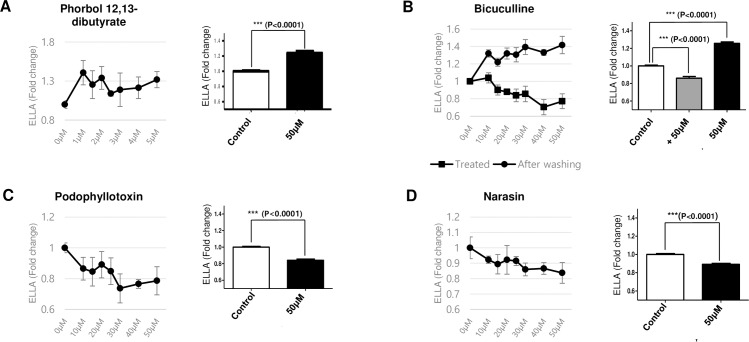
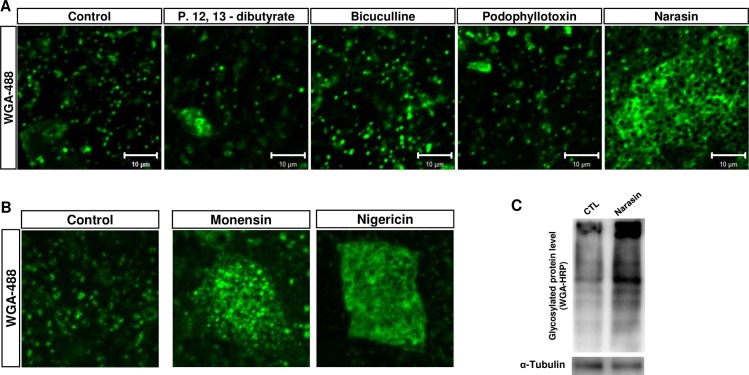
The airway epithelium in human plays a central role as the first line of defense against environmental contaminants. Most respiratory diseases such as chronic obstructive pulmonary disease (COPD), asthma, and respiratory infections, disturb normal muco-ciliary functions by stimulating the hypersecretion of mucus. Several muco-active agents have been used to treat hypersecretion symptoms in patients. Current muco-active reagents control mucus secretion by modulating either airway inflammation, cholinergic parasympathetic nerve activities or by reducing the viscosity by cleaving crosslinking in mucin and digesting DNAs in mucus. However, none of the current medication regulates mucus secretion by directly targeting airway goblet cells. The major hurdle for screening potential muco-active agents that directly affect the goblet cells, is the unavailability of in vivo model systems suitable for high-throughput screening. In this study, we developed a high-throughput in vivo model system for identifying muco-active reagents using Xenopus laevis embryos. We tested mucus secretion under various conditions and developed a screening strategy to identify potential muco-regulators. Using this novel screening technique, we identified narasin as a potential muco-regulator. Narasin treatment of developing Xenopus embryos significantly reduced mucus secretion. Furthermore, the human lung epithelial cell line, Calu-3, responded similarly to narasin treatment, validating our technique for discovering muco-active reagents.
人体的气道上皮在抵御环境污染物方面起着核心作用,是第一道防线。大多数呼吸道疾病,如慢性阻塞性肺疾病(COPD)、哮喘和呼吸道感染,通过刺激黏液过度分泌来扰乱正常的黏液纤毛功能。已经有几种黏液活性剂被用于治疗患者的过度分泌症状。目前的黏液活性剂通过调节气道炎症、副交感神经胆碱能神经活动,或通过裂解黏蛋白的交联和消化黏液中的 DNA 来降低黏液的粘度来控制黏液分泌。然而,目前没有一种药物通过直接针对气道杯状细胞来调节黏液分泌。筛选直接影响杯状细胞的潜在黏液活性剂的主要障碍是缺乏适合高通量筛选的体内模型系统。在这项研究中,我们使用非洲爪蟾(Xenopus laevis)胚胎开发了一种用于鉴定黏液活性剂的高通量体内模型系统。我们在各种条件下测试了黏液分泌,并开发了一种筛选策略来鉴定潜在的黏液调节剂。使用这种新的筛选技术,我们鉴定出那拉菌素(narasin)是一种潜在的黏液调节剂。那拉菌素处理发育中的非洲爪蟾胚胎显著减少了黏液分泌。此外,人肺上皮细胞系 Calu-3 对那拉菌素处理的反应类似,验证了我们发现黏液活性剂的技术。