Department of Urology, The First Affiliated Hospital of Dalian Medical University, No. 222 Zhongshan Road, Dalian, 116011, China.
The Key Laboratory of Tumour Stem Cell Research of Liaoning Province, Dalian Medical University, Dalian, 116044, China.
Cell Death Dis. 2018 Feb 22;9(3):307. doi: 10.1038/s41419-018-0348-9.
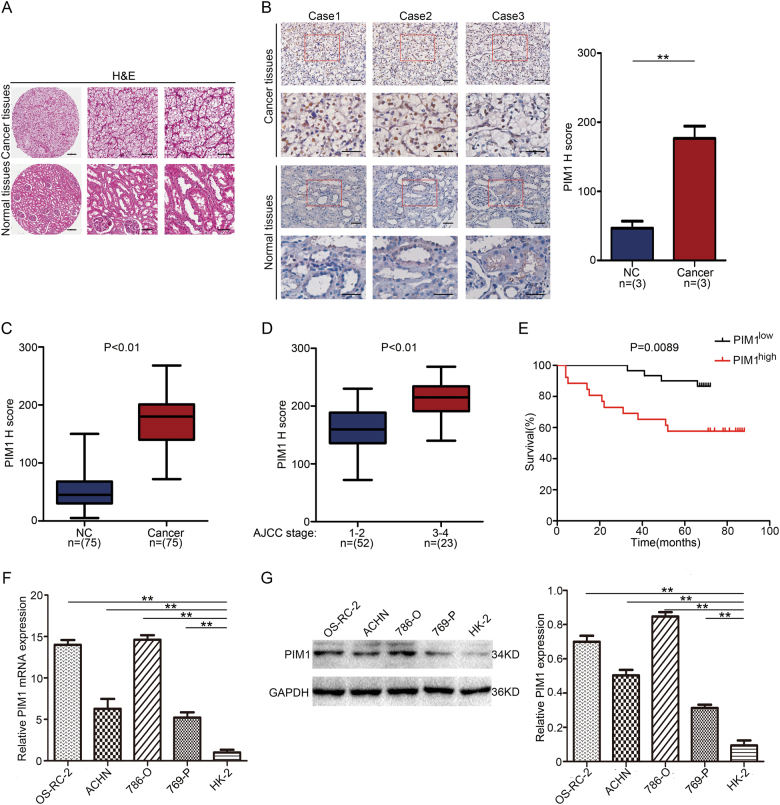
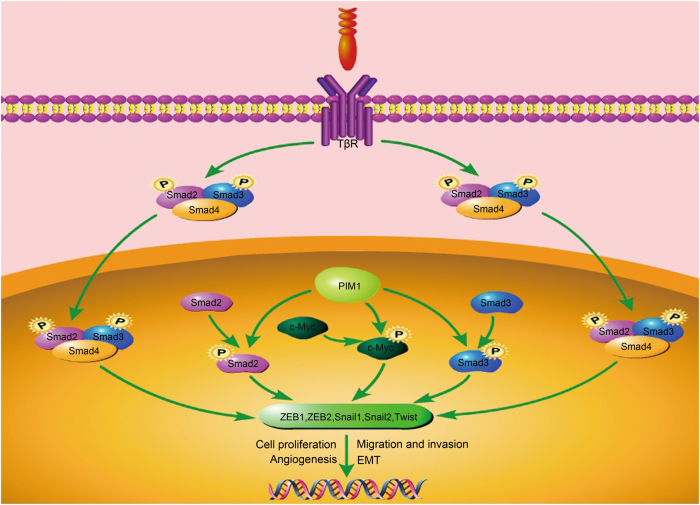
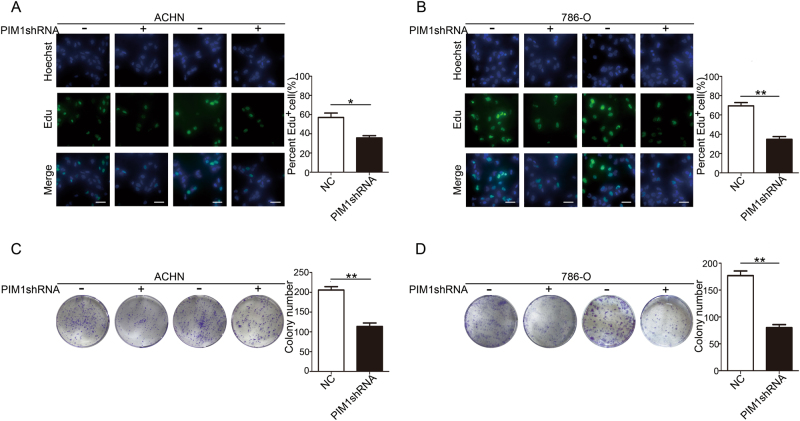
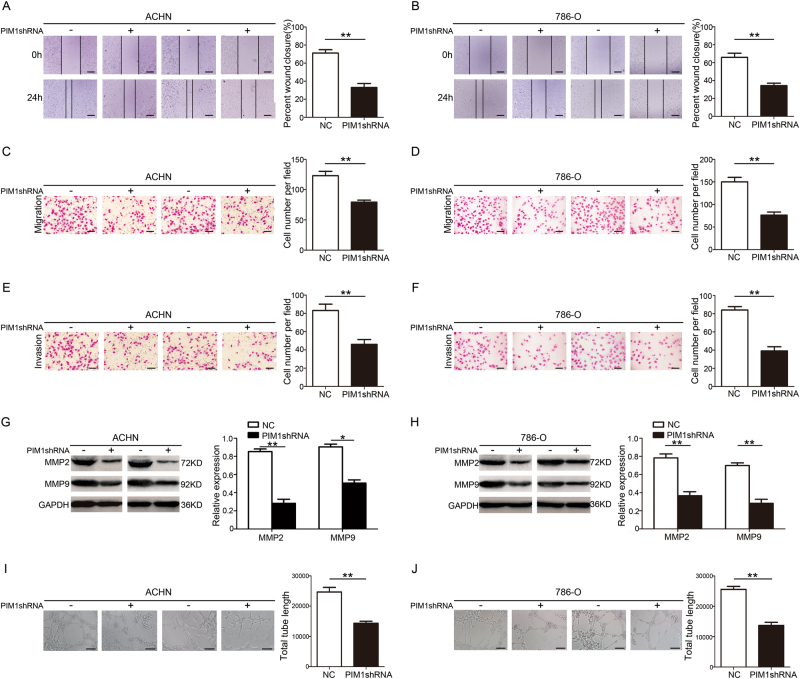
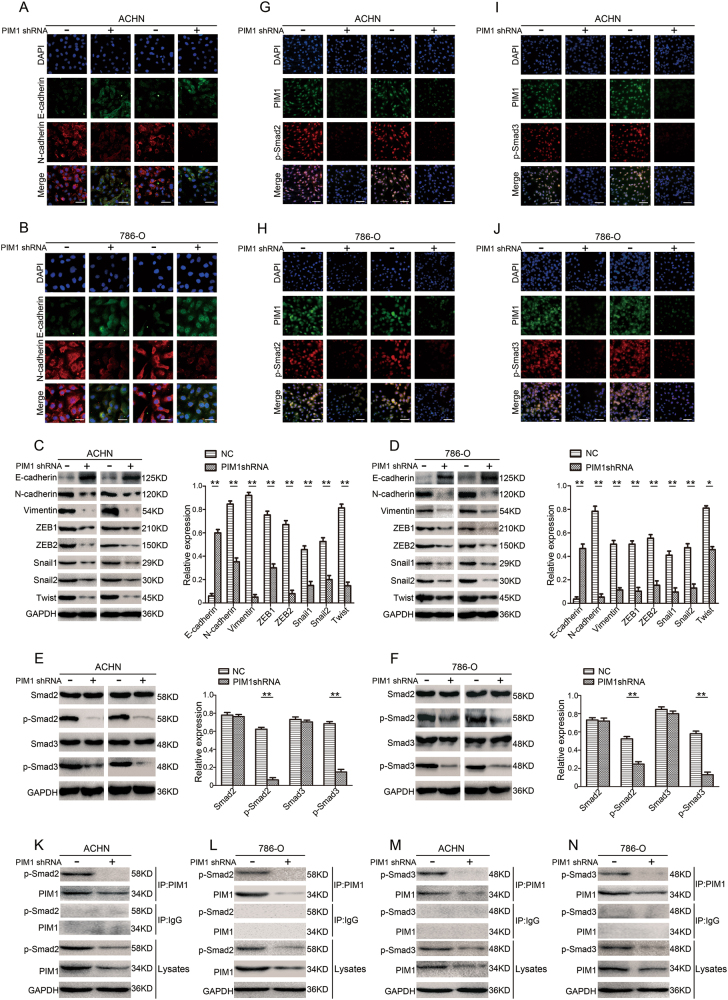
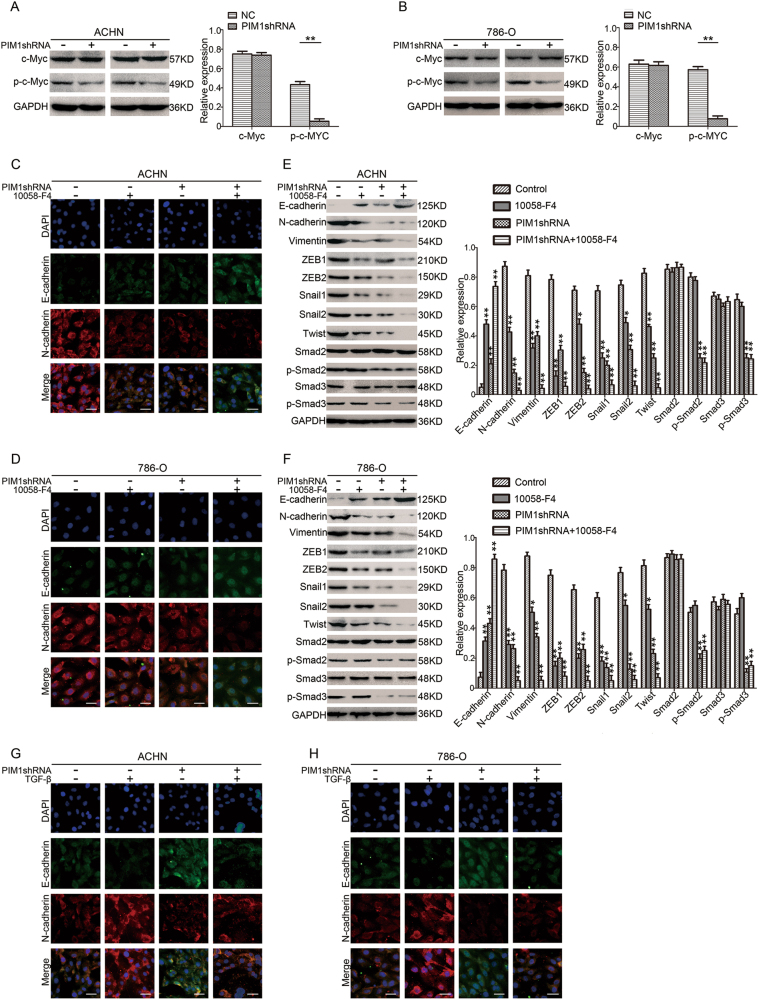
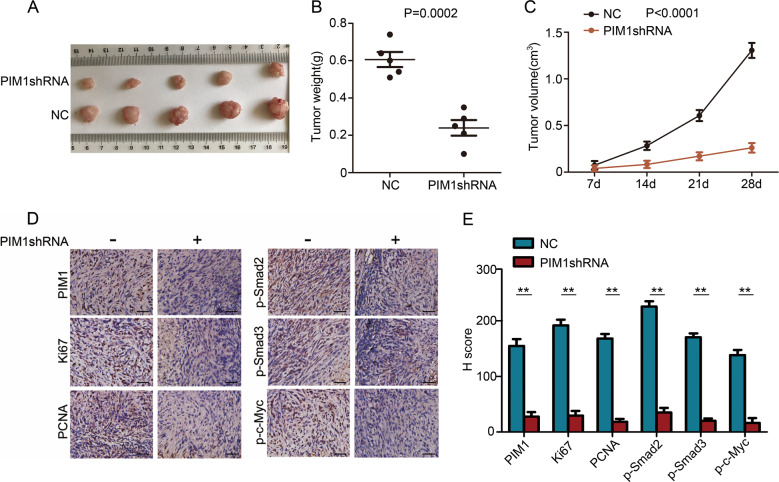
Emerging evidence has shown that the PIM serine/threonine kinase family, including PIM1, PIM2 and PIM3, is associated with tumour progression towards metastasis. PIM1, an attractive molecular target, has been identified as a potential prognostic biomarker for haematological and epithelial malignancies. However, to date, the potential regulatory roles and molecular mechanisms by which PIM1 affects the development and progression of cancers, including clear-cell renal-cell carcinoma (ccRCC), remain largely unknown. Herein, we present the first evidence that PIM1 is aberrantly overexpressed in human ccRCC tissues and cell lines and positively correlated with human ccRCC progression. In our study, depletion of PIM1 attenuated ccRCC cell proliferation, colony formation, migration, invasion and angiogenesis, suggesting that PIM1 expression may be a cancer-promoting event in ccRCC. Mechanistically, we observed that PIM1 could interact with Smad2 or Smad3 in the nucleus and subsequently phosphorylate Smad2 and Smad3 to induce the expression of transcription factors, including ZEB1, ZEB2, Snail1, Snail2 and Twist, to promote epithelial-mesenchymal transition (EMT). In addition, PIM1-mediated phosphorylation of c-Myc activates the expression of the above transcription factors to synergistically promote EMT but does not activate Smads. Collectively, our results demonstrate that aberrant expression of PIM1 contributes to ccRCC development and progression. Moreover, our data reveal a potential molecular mechanism in which PIM1 mediates crosstalk between signalling pathways, including different Smad proteins and c-Myc, which target downstream transcription factors (ZEB1, ZEB2, Snail1, Snail2 and Twist) to trigger EMT. Together, our data suggest that PIM1 may be a potential therapeutic target for ccRCC patients.
新出现的证据表明,PIM 丝氨酸/苏氨酸激酶家族,包括 PIM1、PIM2 和 PIM3,与肿瘤向转移的进展有关。PIM1 作为一个有吸引力的分子靶点,已被确定为血液学和上皮恶性肿瘤的潜在预后生物标志物。然而,迄今为止,PIM1 影响癌症(包括透明细胞肾细胞癌 [ccRCC])发展和进展的潜在调节作用和分子机制在很大程度上仍然未知。在此,我们首次证明 PIM1 在人类 ccRCC 组织和细胞系中异常过表达,并与人类 ccRCC 进展呈正相关。在我们的研究中,PIM1 的耗竭减弱了 ccRCC 细胞的增殖、集落形成、迁移、侵袭和血管生成,表明 PIM1 表达可能是 ccRCC 中的致癌事件。从机制上讲,我们观察到 PIM1 可以在核内与 Smad2 或 Smad3 相互作用,随后磷酸化 Smad2 和 Smad3 以诱导转录因子的表达,包括 ZEB1、ZEB2、Snail1、Snail2 和 Twist,从而促进上皮-间充质转化(EMT)。此外,PIM1 介导的 c-Myc 磷酸化激活上述转录因子的表达,以协同促进 EMT,但不激活 Smads。总的来说,我们的结果表明,PIM1 的异常表达有助于 ccRCC 的发展和进展。此外,我们的数据揭示了一种潜在的分子机制,其中 PIM1 介导信号通路之间的串扰,包括不同的 Smad 蛋白和 c-Myc,靶向下游转录因子(ZEB1、ZEB2、Snail1、Snail2 和 Twist)以触发 EMT。总之,我们的数据表明 PIM1 可能是 ccRCC 患者的潜在治疗靶点。