Oliveira Rodrigo Juliano, da Cruz Leite Santos Naiara, Pesarini João Renato, de Oliveira Beatriz Carneiro, Berno Claudia Rodrigues, de Araújo Flávio Henrique Souza, da Silveira Ingridhy Ostaciana Maia Freitas, Nascimento Raquel Oliveira, Brochado Antoniolli-Silva Andréia Conceição Milan, Duenhas Monreal Antônio Carlos, Beatriz Adilson, de Lima Dênis Pires, da Silva Gomes Roberto
Centro de Estudos em Células Tronco, Terapia Celular e Genética Toxicológica, Hospital Universitário "Maria Aparecida Pedrossian", Empresa Brasileira de Serviços Hospitalares, Campo Grande, MS, Brazil.
Programa de Mestrado em Farmácia, Centro de Ciências Biológicas e da Saúde, Universidade Federal de Mato Grosso do Sul, Campo Grande, MS, Brazil.
Genet Mol Biol. 2018 Jan-Mar;41(1):154-166. doi: 10.1590/1678-4685-GMB-2017-0091. Epub 2018 Feb 19.
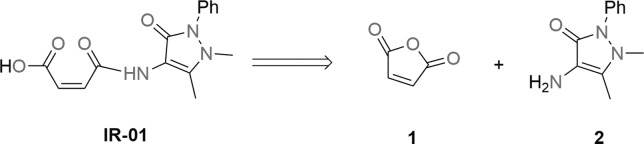
The increased incidence of cancer and its high treatment costs have encouraged the search for new compounds to be used in adjuvant therapies for this disease. This study discloses the synthesis of (Z)-4-((1,5-dimethyl-3-oxo-2-phenyl-2,3dihydro-1H-pyrazol-4-yl) amino)-4-oxobut-2-enoic acid (IR-01) and evaluates not only the action of this compound on genetic integrity, increase in splenic phagocytosis and induction of cell death but also its effects in combination with the commercial chemotherapeutic agents doxorubicin, cisplatin and cyclophosphamide. IR-01 was designed and synthesized based on two multifunctionalyzed structural fragments: 4-aminoantipyrine, an active dipyrone metabolite, described as an antioxidant and anti-inflammatory agent; and the pharmacophore fragment 1,4-dioxo-2-butenyl, a cytotoxic agent. The results indicated that IR-01 is an effective chemoprotector because it can prevent clastogenic and/or aneugenic damage, has good potential to prevent genomic damage, can increase splenic phagocytosis and lymphocyte frequency and induces cell death. However, its use as an adjuvant in combination with chemotherapy is discouraged since IR-01 interferes in the effectiveness of the tested chemotherapeutic agents. This is a pioneer study as it demonstrates the chemopreventive effects of IR-01, which may be associated with the higher antioxidant activity of the precursor structure of 4-aminoantipyrine over the effects of the 1,4-dioxo-2-butenyl fragment.
癌症发病率的上升及其高昂的治疗费用促使人们寻找可用于该疾病辅助治疗的新化合物。本研究披露了(Z)-4-((1,5-二甲基-3-氧代-2-苯基-2,3-二氢-1H-吡唑-4-基)氨基)-4-氧代丁-2-烯酸(IR-01)的合成,并不仅评估了该化合物对遗传完整性的作用、脾吞噬作用的增强以及细胞死亡的诱导,还评估了其与商业化疗药物阿霉素、顺铂和环磷酰胺联合使用的效果。IR-01是基于两个多功能化结构片段设计和合成的:4-氨基安替比林,一种活性安乃近代谢物,被描述为抗氧化剂和抗炎剂;以及药效团片段1,4-二氧代-2-丁烯基,一种细胞毒剂。结果表明,IR-01是一种有效的化学保护剂,因为它可以预防致断裂和/或非整倍体损伤,具有预防基因组损伤的良好潜力,可以增加脾吞噬作用和淋巴细胞频率并诱导细胞死亡。然而,不鼓励将其作为化疗辅助药物使用,因为IR-01会干扰所测试化疗药物的有效性。这是一项开创性研究,因为它证明了IR-01的化学预防作用,这可能与4-氨基安替比林前体结构的较高抗氧化活性有关,而不是1,4-二氧代-2-丁烯基片段的作用。