1 Department of Radiology and Nuclear Medicine, Academic Medical Center , Amsterdam , Netherlands.
2 Centre for Medical Imaging, University College London , London , UK.
Br J Radiol. 2018 Jul;91(1088):20170845. doi: 10.1259/bjr.20170845. Epub 2018 Feb 23.
Dynamic imaging of small intestinal motility is an increasingly common research method to examine bowel physiology in health and disease. However, limited data exist to guide imaging protocols with respect to quantitative analysis. The purpose of this study is to define the required temporal resolution and scan duration in dynamic MRI for small bowel motility assessment.
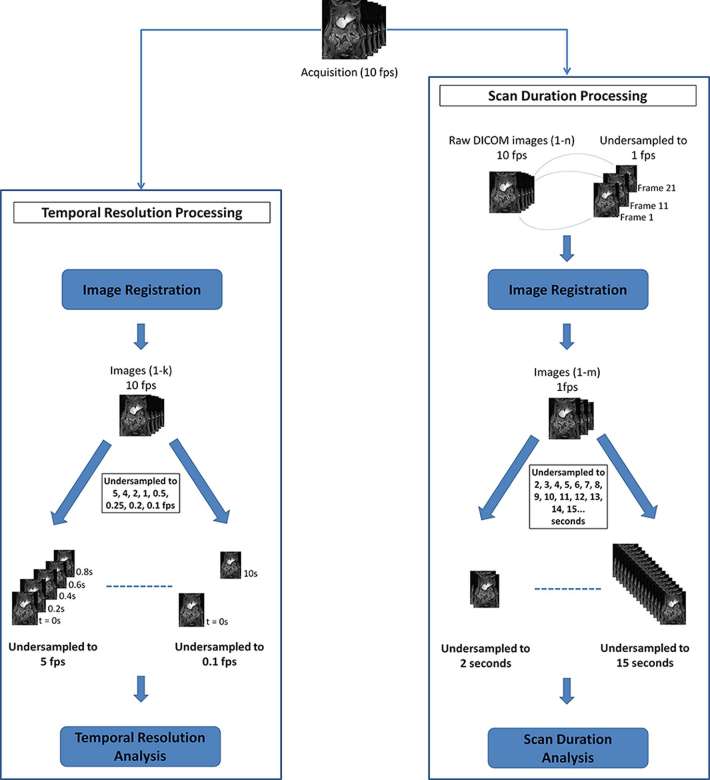
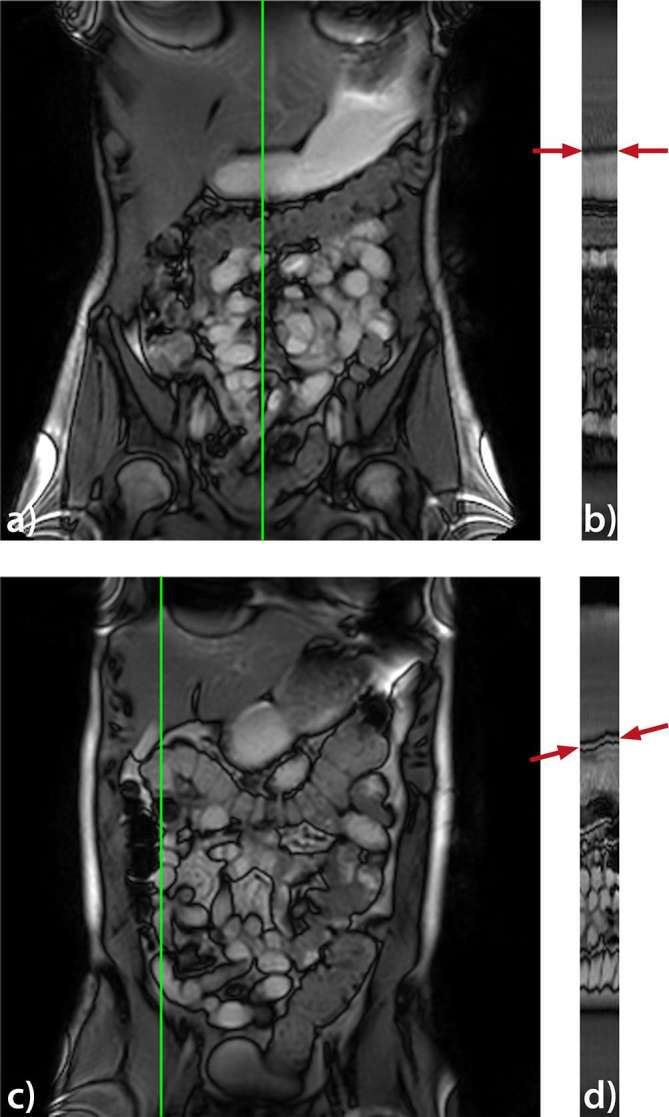
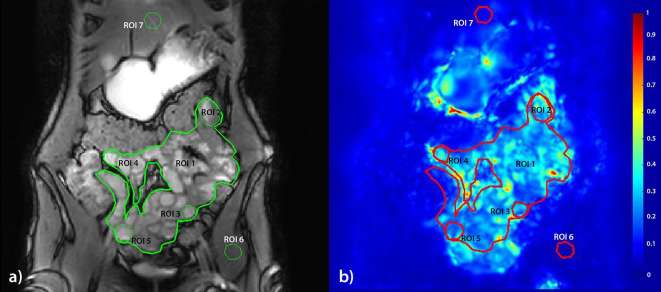
Six healthy volunteers underwent motility imaging with MR enterography using breath-hold protocol. A coronal two-dimensional balanced fast field echo sequence was used to acquire dynamic data at a high temporal resolution of 10 frames per second (fps). Motility was quantified by generating a registration-derived motility index for local and global regions of bowel. To evaluate temporal resolution and scan duration, the data were undersampled and the scan length was varied to determine the impact on motility index.
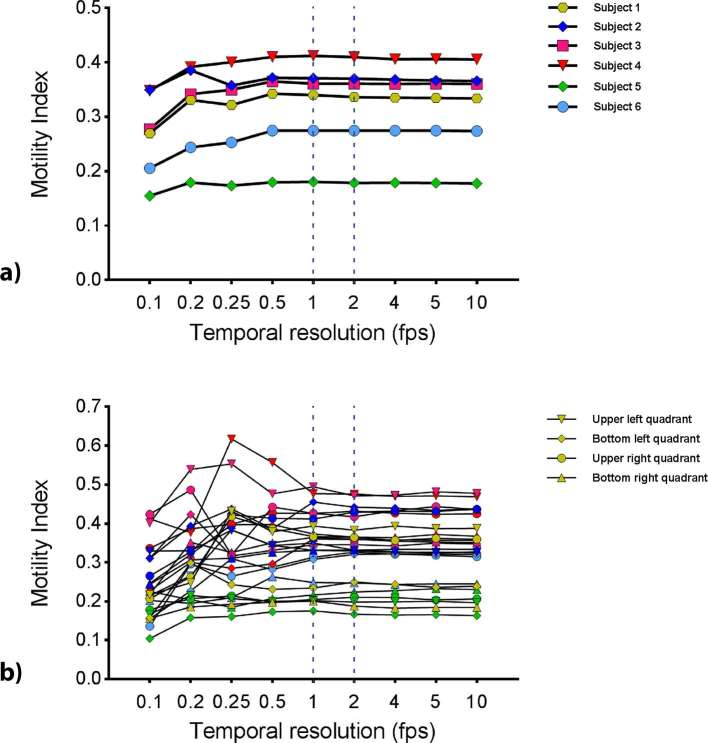
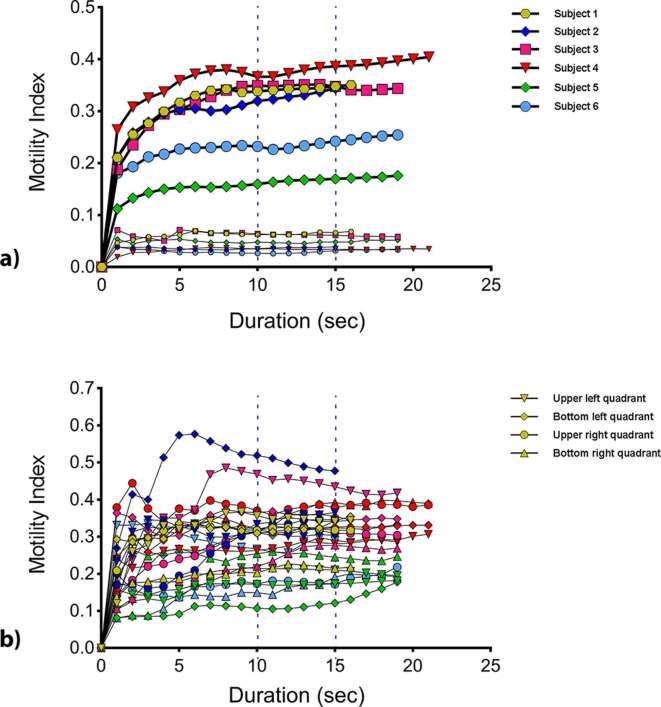
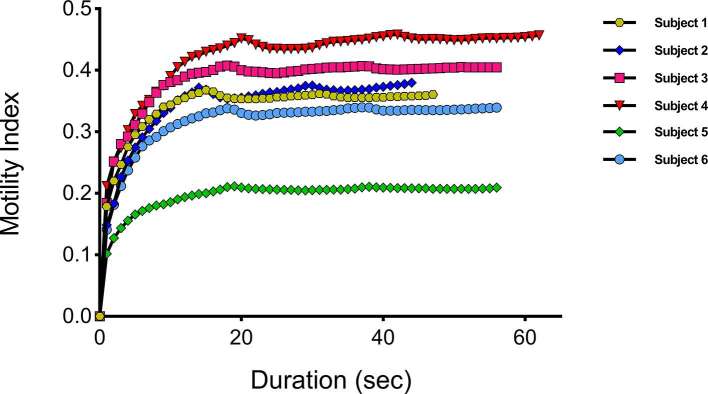
The mean motility index stabilizes at a temporal resolution of 1 fps (median absolute percentage change 1.4% for global and 1.9% for local regions of interest). The mean motility index appears to stabilize for scan durations of 15 s or more in breath-hold (median absolute % change 2.8% for global and 1.7% for local regions of interest).
A temporal resolution of at least 1 fps and a scan duration of at least 15 s is necessary in breath-hold scans for consistent motility observations. The majority of small bowel motility studies to date are in line with these requirements. Advances in knowledge: This study suggests the minimum temporal resolution and scan duration required in breath-hold scans to obtain robust measurements of small bowel motility from MRI.
小肠动力的动态成像已成为一种越来越常见的研究方法,用于检查健康和疾病状态下的肠道生理学。然而,目前用于指导定量分析的成像方案的相关数据有限。本研究旨在确定动态 MRI 中小肠动力评估所需的时间分辨率和扫描时长。
6 名健康志愿者接受了使用 MR 肠造影的动力成像,采用屏气协议。使用冠状二维平衡快速场回波序列以 10 帧/秒(fps)的高时间分辨率采集动态数据。通过生成用于局部和全局肠段的配准衍生运动指数来量化运动。为了评估时间分辨率和扫描时长,对数据进行欠采样并改变扫描长度,以确定其对运动指数的影响。
在 1 fps 的时间分辨率下,平均运动指数趋于稳定(全局和局部感兴趣区域的中位数绝对百分比变化分别为 1.4%和 1.9%)。在屏气中,当扫描时长达到 15 秒或更长时,平均运动指数似乎趋于稳定(全局和局部感兴趣区域的中位数绝对百分比变化分别为 2.8%和 1.7%)。
在屏气扫描中,为了获得一致的运动观察,时间分辨率至少需要 1 fps,扫描时长至少需要 15 秒。迄今为止,大多数小肠动力研究都符合这些要求。
本研究提示了在屏气扫描中获得可靠的小肠动力 MRI 测量所需的最小时间分辨率和扫描时长。