Amo-Adjei Joshua, Aduo-Adjei Kofi, Opoku-Nyamaah Christiana, Izugbara Chimaraoke
African Population and Health Research Centre, Nairobi, Kenya.
Department of Population and Health, University of Cape Coast, Cape Coast, Ghana.
PLoS One. 2018 Feb 23;13(2):e0192513. doi: 10.1371/journal.pone.0192513. eCollection 2018.
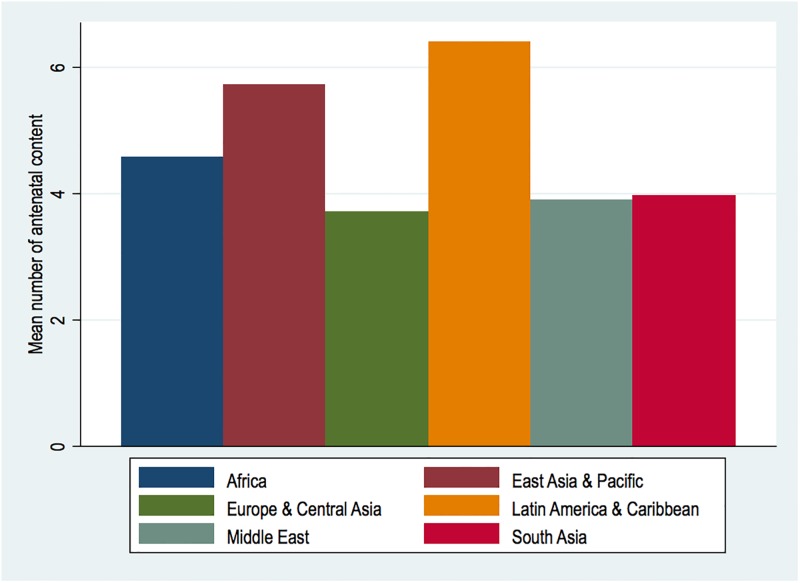
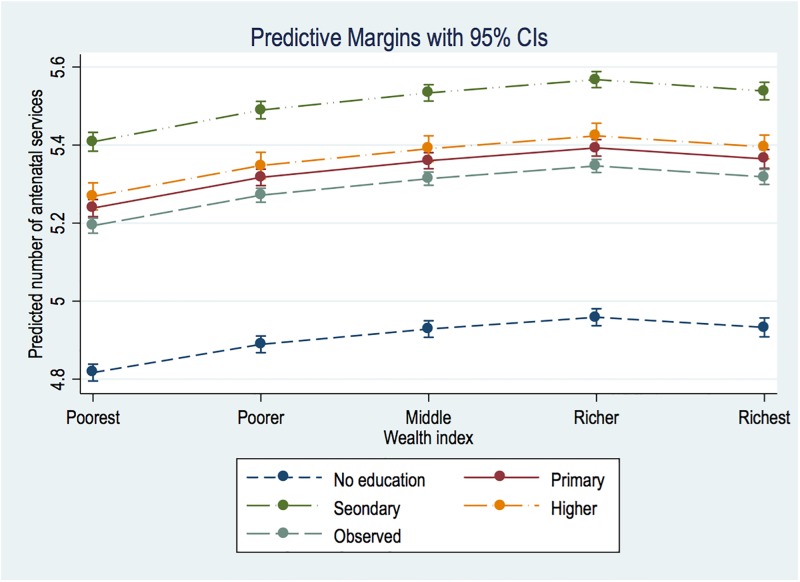
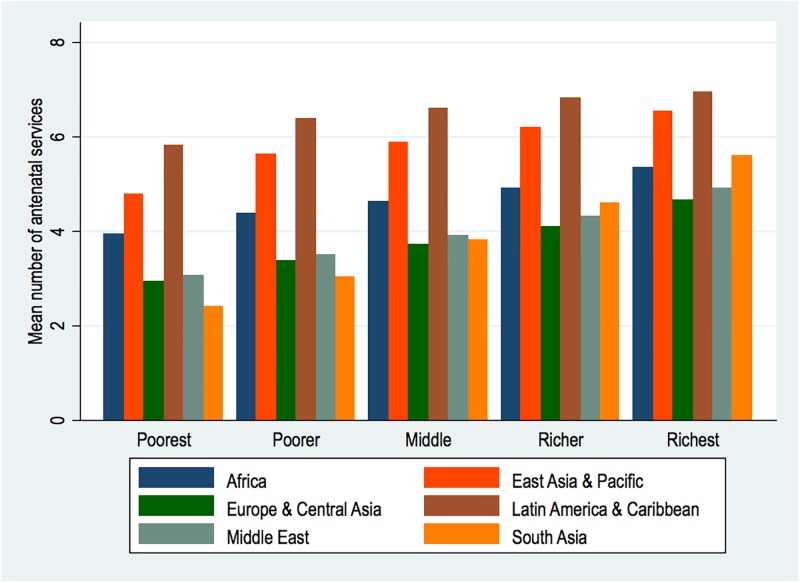
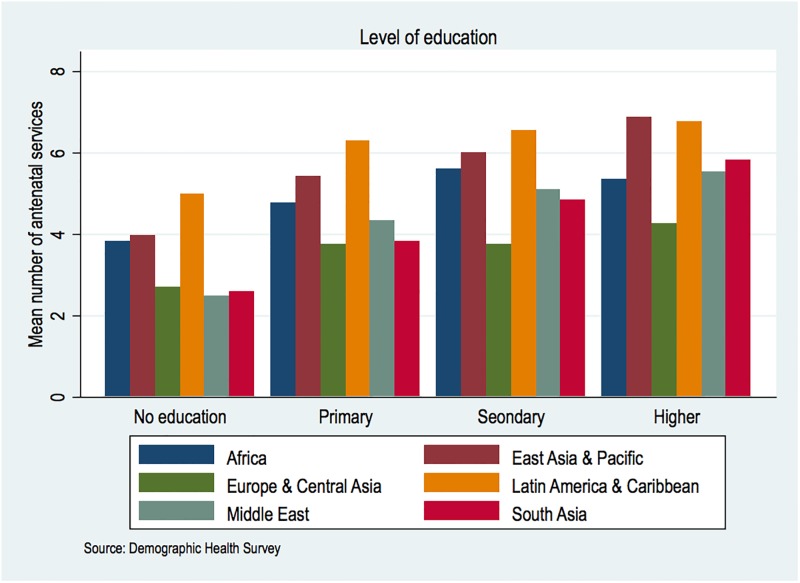
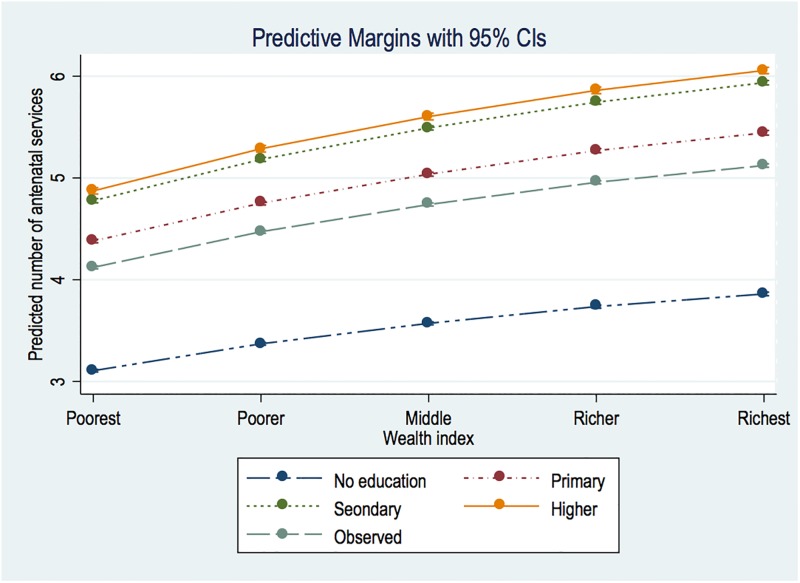
The desired results of increasing access and availability of antenatal care (ANC) services may not be realized if the quality of care offered is not adequate. We analyzed the content/quality of antenatal care to determine whether there are socioeconomic (education and wealth) inequalities in the services provided in 59 low and middle income countries in six WHO regions-Africa, East Asia and Pacific, Europe and Central Asia, Latin America and Caribbean, Middle East and South Asia. We aggregated the most recent (2005-2015) Demographic and Health Survey for each country. The quality of content was measured on eight recommended ANC services-(1) monitoring of blood pressure; (2) tetanus injection; (3) urine analysis for protein; (4) blood test; (5) information about danger signs (6); weight (7); height measurements and (8) provision of iron-folate supplement. Descriptive and Poisson regression techniques were applied to analyse the data. We found considerable wealth and educational differences prior to controlling for known covariates. Between wealth and education, however, the disparities in the latter are larger than the former. Whereas the socioeconomic differences remained at post adjusting for residence, place and number of antenatal care, parity and region, the magnitude of change was minimal. Higher number of ANC content was provided in "other" forms of private facilities; the Latin America and Caribbean region recorded the highest number of content compared to the other regions. The hypothesized socioeconomic status on content/number of ANC services was generally supported, although the associations are substantially constrained to other variables. Efforts are made to increase the number and timing of ANC services; due recognition is needed for the content offered.
如果所提供的护理质量不达标,增加产前护理(ANC)服务的可及性和可得性的预期结果可能无法实现。我们分析了产前护理的内容/质量,以确定在世界卫生组织六个区域(非洲、东亚和太平洋、欧洲和中亚、拉丁美洲和加勒比、中东和南亚)的59个低收入和中等收入国家所提供的服务中是否存在社会经济(教育和财富)不平等。我们汇总了每个国家最新的(2005 - 2015年)人口与健康调查。内容质量通过八项推荐的ANC服务来衡量:(1)血压监测;(2)破伤风注射;(3)尿蛋白分析;(4)血液检测;(5)危险信号信息;(6)体重;(7)身高测量;(8)提供铁叶酸补充剂。应用描述性和泊松回归技术来分析数据。在控制已知协变量之前,我们发现了显著的财富和教育差异。然而,在财富和教育之间,后者的差距比前者更大。尽管在调整了居住地、产前护理地点和次数、产次和地区后社会经济差异仍然存在,但变化幅度很小。“其他”形式的私立机构提供的ANC内容数量更多;与其他地区相比,拉丁美洲和加勒比地区记录的内容数量最多。关于ANC服务内容/数量的假设社会经济地位总体上得到了支持,尽管这些关联在很大程度上受到其他变量的限制。人们努力增加ANC服务的数量和时间;需要对所提供的内容给予应有的认可。