From the Life Sciences Institute and Innovation Center for Cell Signaling Network, Zhejiang University, Hangzhou 310058, China and.
the State Key Laboratory of Molecular Biology, Institute of Biochemistry and Cell Biology, Shanghai Institutes for Biological Sciences, Chinese Academy of Sciences, Shanghai 200031, China.
J Biol Chem. 2018 Apr 6;293(14):5160-5171. doi: 10.1074/jbc.RA117.001474. Epub 2018 Feb 23.
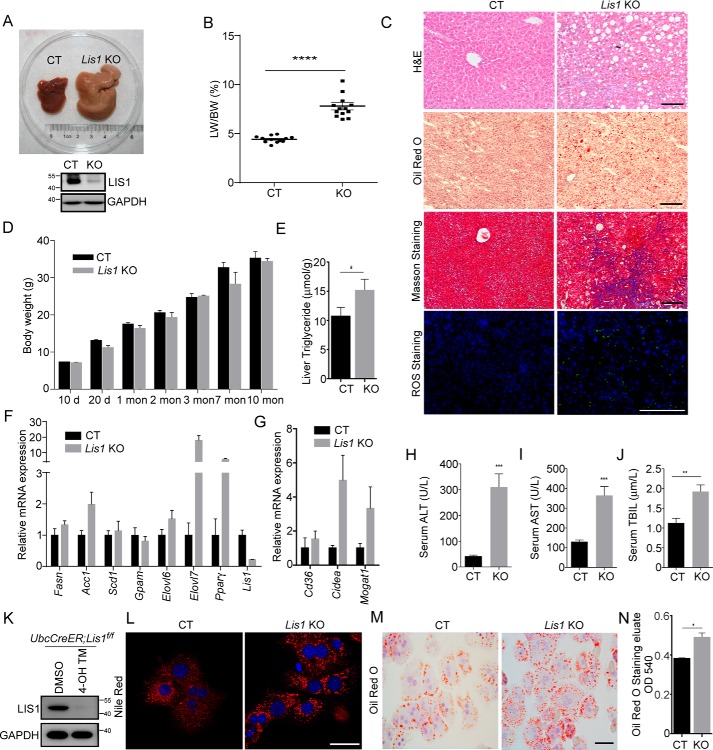
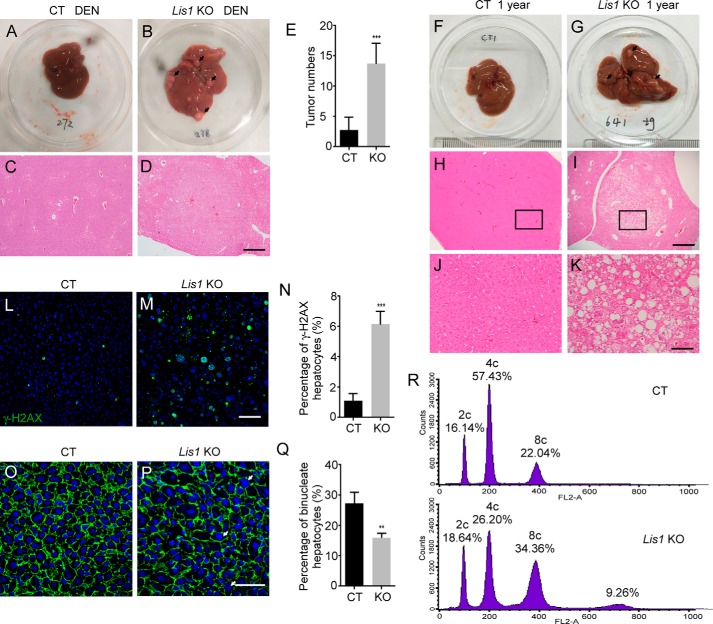
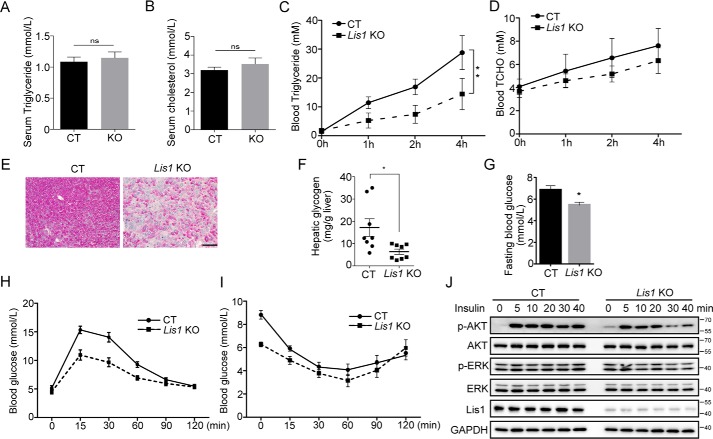
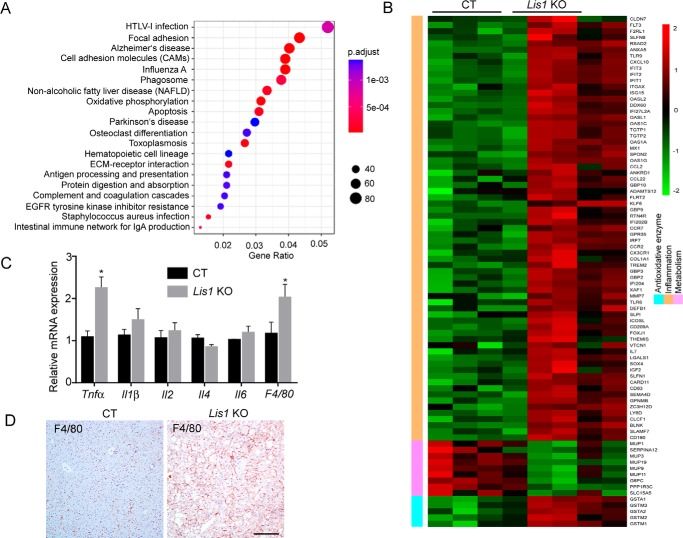
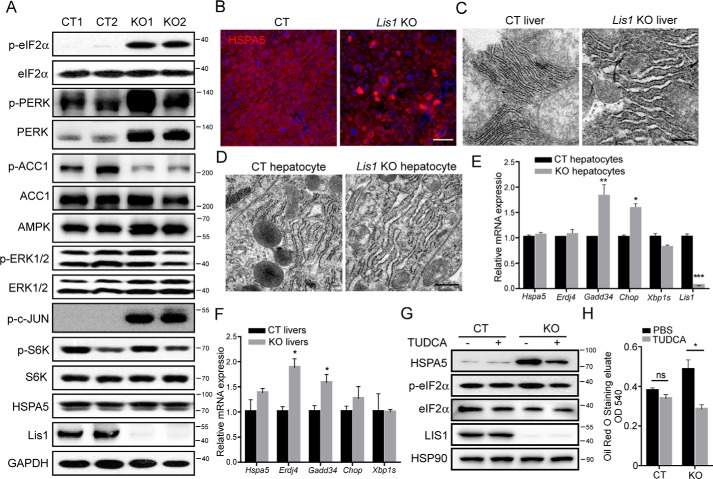
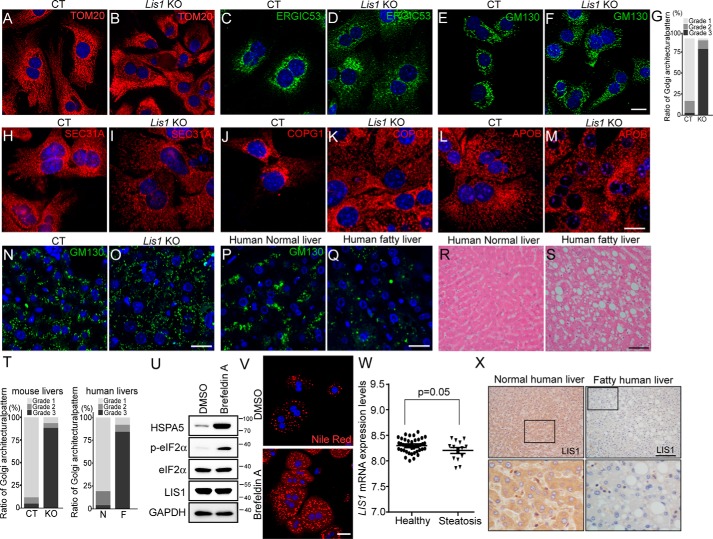
The liver is a major organ in lipid metabolism, and its malfunction leads to various diseases. Nonalcoholic fatty liver disease, the most common chronic liver disorder in developed countries, is characterized by the abnormal retention of excess lipid within hepatocytes and predisposes individuals to liver cancer. We previously reported that the levels of Lissencephaly 1 (LIS1, also known as PAFAH1B1) are down-regulated in human hepatocellular carcinoma. Following up on this observation, we found that genetic deletion of in the mouse liver increases lipid accumulation and inflammation in this organ. Further analysis revealed that loss of triggers endoplasmic reticulum (ER) stress and reduces triglyceride secretion. Attenuation of ER stress by addition of tauroursodeoxycholic acid (TUDCA) diminished lipid accumulation in the -deficient hepatocytes. Moreover, the Golgi stacks were disorganized in -deficient liver cells. Of note, the liver-knockout mice exhibited increased hepatocyte ploidy and accelerated development of liver cancer after exposure to the liver carcinogen diethylnitrosamine (DEN). Taken together, these findings suggest that reduced levels can spur the development of liver diseases from steatosis to liver cancer and provide a useful model for delineating the molecular pathways that lead to these diseases.
肝脏是脂质代谢的主要器官,其功能障碍会导致各种疾病。非酒精性脂肪性肝病是发达国家最常见的慢性肝病,其特征是肝细胞内异常蓄积过多的脂质,并使个体易患肝癌。我们之前曾报道过 Lissencephaly 1(LIS1,也称为 PAFAH1B1)在人肝癌细胞中的水平下调。基于这一观察结果,我们发现小鼠肝脏中 的基因缺失会增加该器官的脂质蓄积和炎症。进一步的分析表明, 的缺失会引发内质网(ER)应激,并减少甘油三酯的分泌。通过添加牛磺熊脱氧胆酸(TUDCA)来减轻 ER 应激,可以减少 缺陷肝细胞中的脂质蓄积。此外, -缺陷的肝细胞中高尔基体堆栈排列紊乱。值得注意的是, -基因敲除的小鼠在暴露于肝致癌物二乙基亚硝胺(DEN)后,肝肿瘤细胞的倍性增加,肝癌的发展加速。综上所述,这些发现表明, 水平的降低可能会促使从脂肪变性到肝癌的肝脏疾病的发展,并为阐明导致这些疾病的分子途径提供了一个有用的模型。