Department of Internal Medicine, Davis Heart & Lung Research Institute, College of Medicine, The Ohio State University, Columbus, OH 43210, USA.
Signal Transduction Laboratory, Kogod Aging Center, Department of Anesthesiology, Mayo Clinic College of Medicine, Rochester, MN 55905, USA.
J Mol Cell Cardiol. 2018 May;118:81-94. doi: 10.1016/j.yjmcc.2018.02.015. Epub 2018 Feb 21.
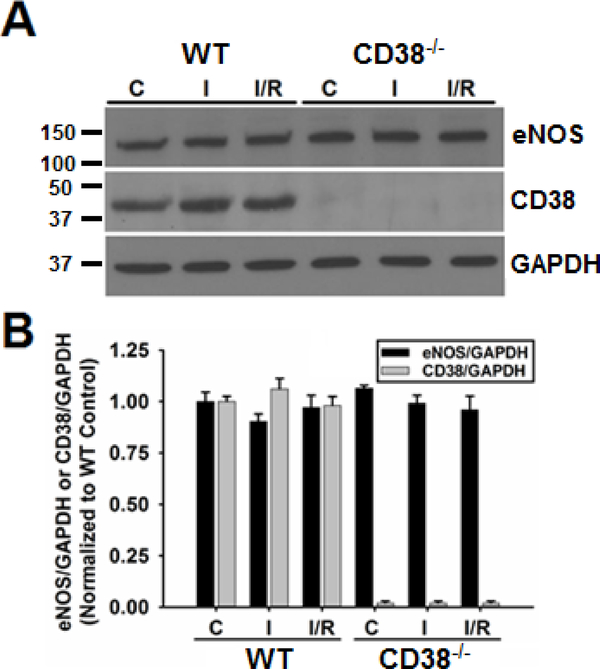
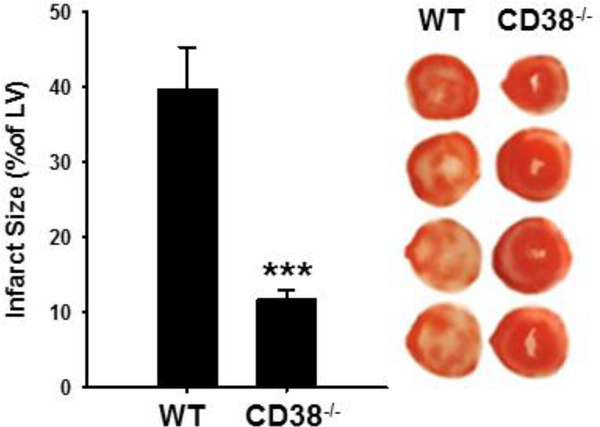
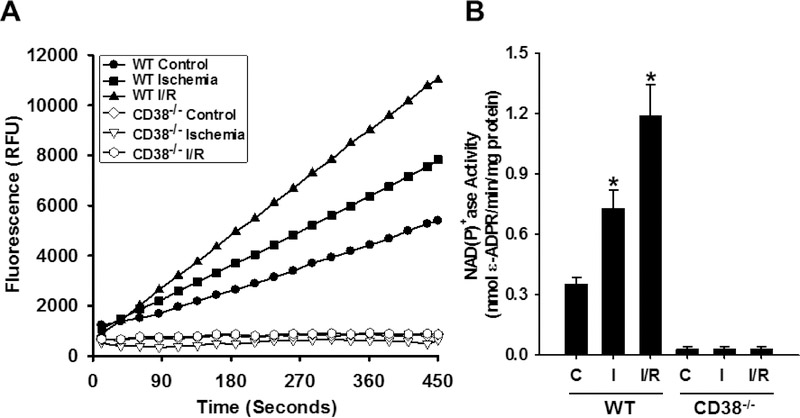
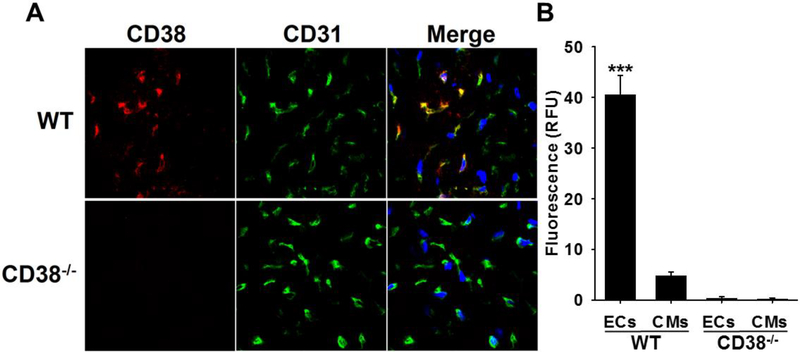
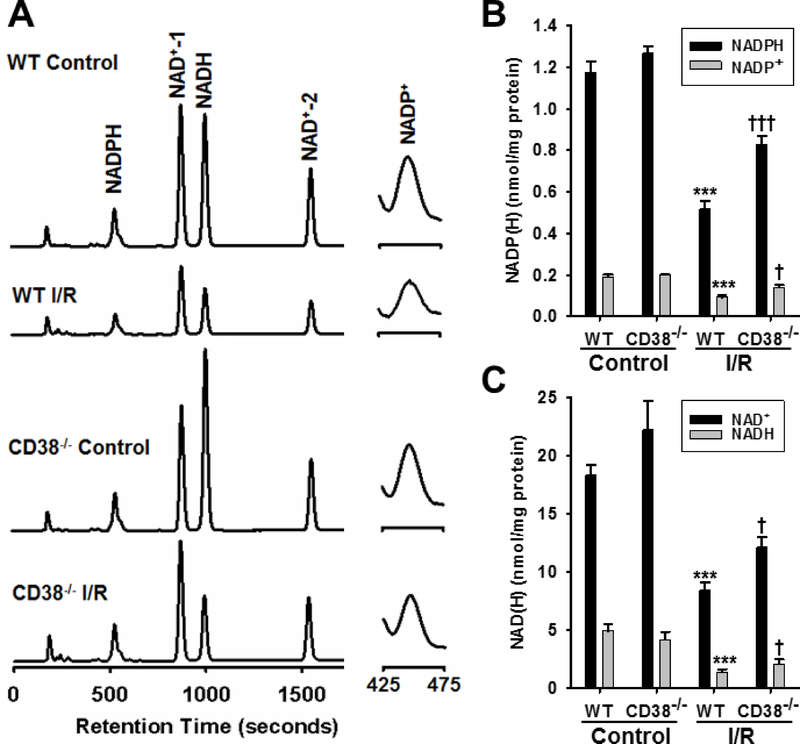
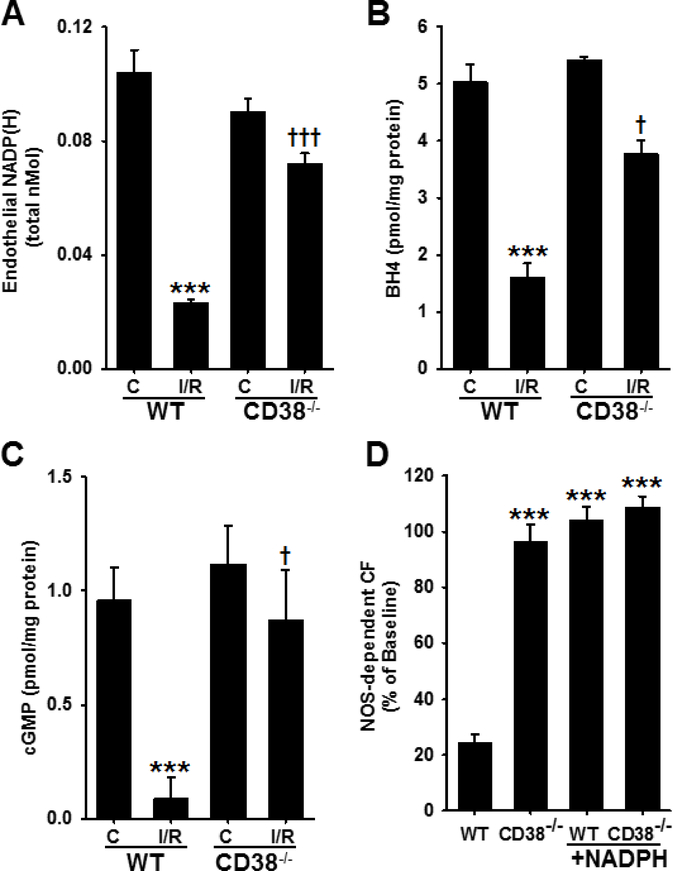
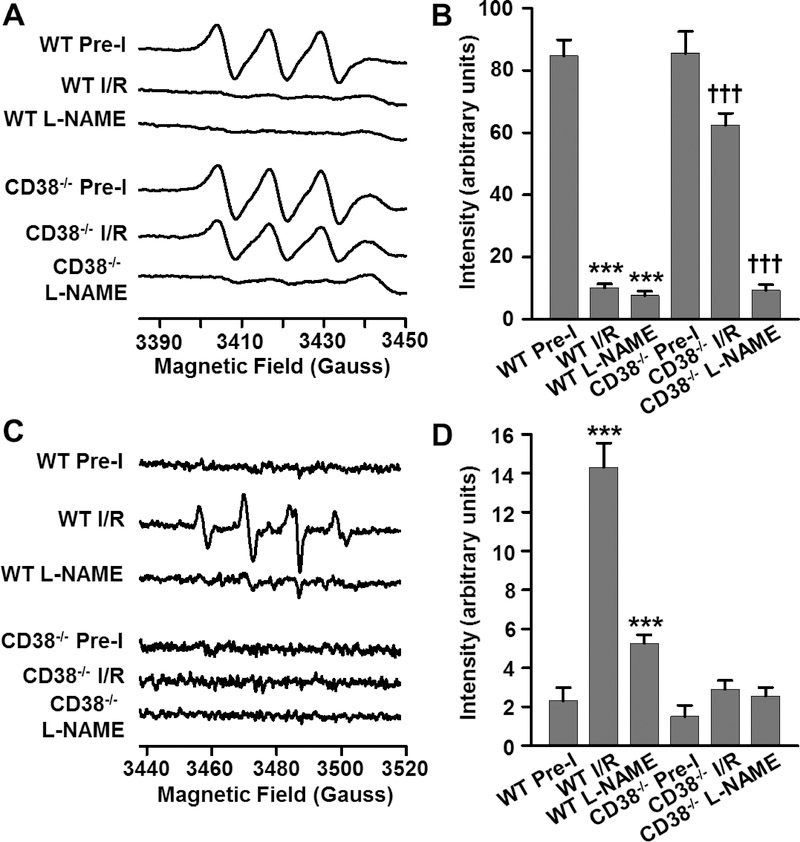
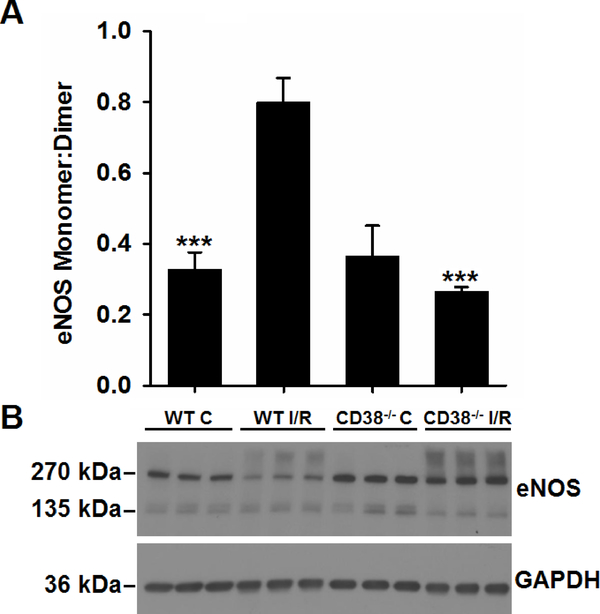
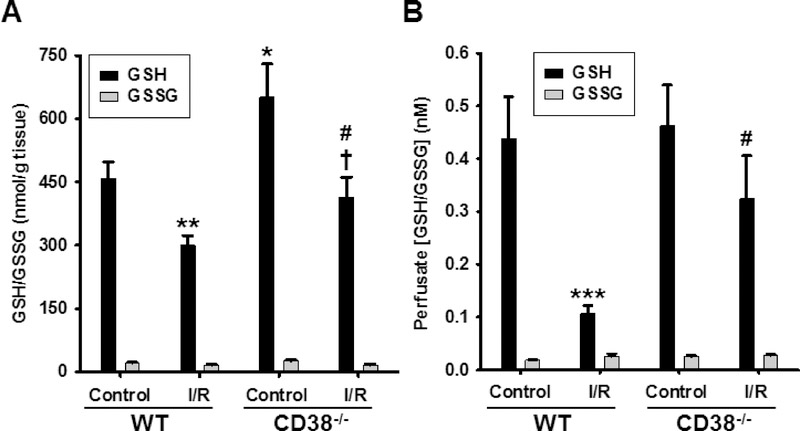
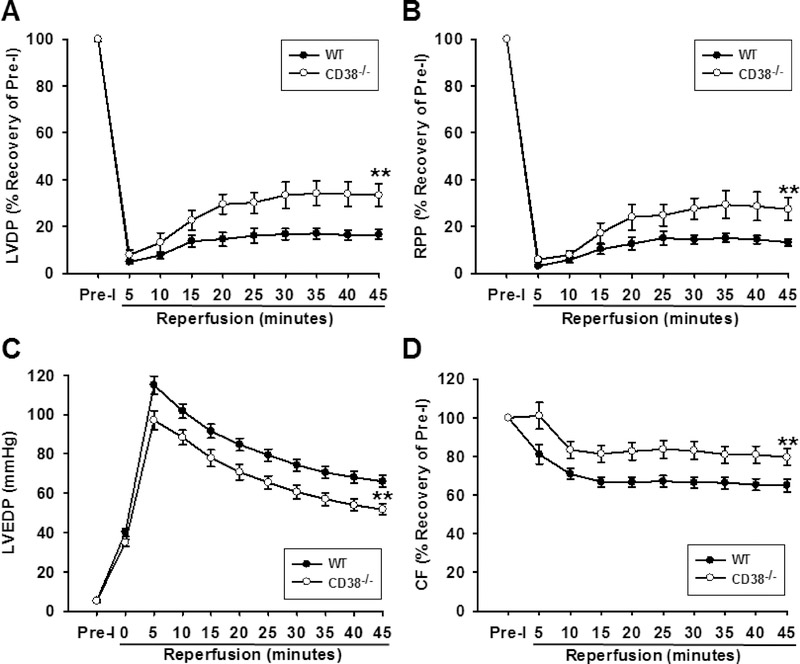
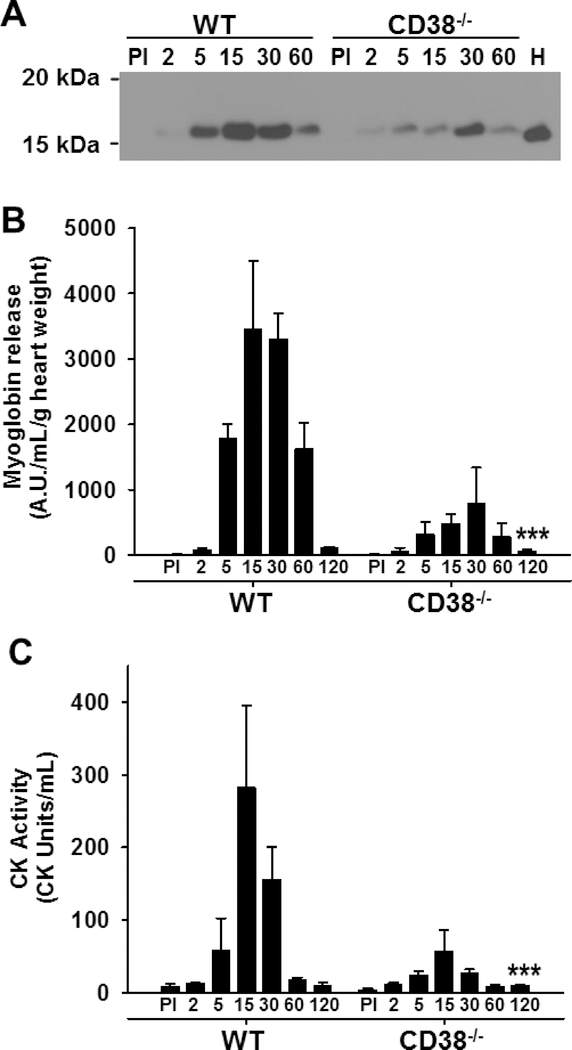
Following the onset of ischemia/reperfusion (I/R), CD38 activation occurs and is associated with depletion of NAD(P)(H) in the heart as well as myocardial injury and endothelial dysfunction. Studies with pharmacological inhibitors suggest that the NADP-hydrolyzing ability of CD38 can deplete the NAD(P)(H) pools. However, there is a need for more specific studies on the importance of CD38 and its role in the process of endothelial dysfunction and myocardial injury in the post-ischemic heart. Therefore, experiments were performed in hearts of mice with global gene knockout of CD38. Isolated perfused CD38 and wild type (WT) mouse hearts were studied to determine the link between CD38 activation, the levels of NADP(H), endothelial dysfunction, and myocardial injury after I/R. Genetic deletion of CD38 preserves the myocardial and endothelial NADP(H) pools compared to WT. Whole heart BH levels in CD38 hearts were also preserved. Post-ischemic levels of cGMP were greatly depleted in WT hearts, but preserved to near baseline levels in CD38 hearts. The preservation of these metabolite pools in CD38 hearts was accompanied by near full recovery of NOS-dependent coronary flow, while in WT hearts, severe impairment of endothelial function and NOS uncoupling occurred with decreased NO and enhanced superoxide generation. CD38 hearts also exhibited marked protection against I/R with preserved glutathione levels, increased recovery of left ventricular contractile function, decreased myocyte enzyme release, and decreased infarct size. Thus, CD38 activation causes post-ischemic depletion of NADP(H) within the heart, with severe depletion from the endothelium, resulting in endothelial dysfunction and myocardial injury.
在缺血/再灌注(I/R)发生后,CD38 被激活,并伴有心脏中 NAD(P)(H)的耗竭以及心肌损伤和内皮功能障碍。药理学抑制剂的研究表明,CD38 的 NADP 水解能力可以耗尽 NAD(P)(H)池。然而,需要进行更具体的研究,以了解 CD38 的重要性及其在缺血后心脏内皮功能障碍和心肌损伤过程中的作用。因此,在 CD38 基因全局敲除的小鼠心脏中进行了实验。研究了分离灌注的 CD38 和野生型(WT)小鼠心脏,以确定 CD38 激活、NADP(H)水平、内皮功能障碍和 I/R 后心肌损伤之间的联系。与 WT 相比,CD38 基因缺失可保留心肌和内皮 NADP(H)池。CD38 心脏的整体 BH 水平也得到了保留。WT 心脏中 cGMP 的缺血后水平大大耗竭,但在 CD38 心脏中保持在接近基线水平。这些代谢物池在 CD38 心脏中的保留伴随着 NOS 依赖性冠状动脉流量的近乎完全恢复,而在 WT 心脏中,内皮功能障碍和 NOS 解偶联严重受损,导致 NO 减少和超氧化物生成增强。CD38 心脏还表现出对 I/R 的显著保护作用,谷胱甘肽水平保持不变,左心室收缩功能恢复增加,心肌酶释放减少,梗死面积减小。因此,CD38 激活导致心脏内 NAD(P)(H)的缺血后耗竭,内皮细胞严重耗竭,导致内皮功能障碍和心肌损伤。