Charité Centrum 11, Depart. of Cardiology, Campus Benjamin Franklin, Charité University Medicine Berlin, Hindenburgdamm 30, 12200, Berlin, Germany.
Institute of Microbiology and Infection Immunology, Charité University Medicine Berlin, Berlin, Germany.
Cardiovasc Diabetol. 2018 Feb 24;17(1):34. doi: 10.1186/s12933-018-0678-z.
Diabetes mellitus is characterized by chronic vascular disorder and presents a main risk factor for cardiovascular mortality. In particular, hyperglycaemia and inflammatory cytokines induce vascular circulating tissue factor (TF) that promotes pro-thrombotic conditions in diabetes. It has recently become evident that alterations of the post-transcriptional regulation of TF via specific microRNA(miR)s, such as miR-126, contribute to the pathogenesis of diabetes and its complications. The endothelial miR-19a is involved in vascular homeostasis and atheroprotection. However, its role in diabetes-related thrombogenicity is unknown. Understanding miR-networks regulating procoagulability in diabetes may help to develop new treatment options preventing vascular complications.
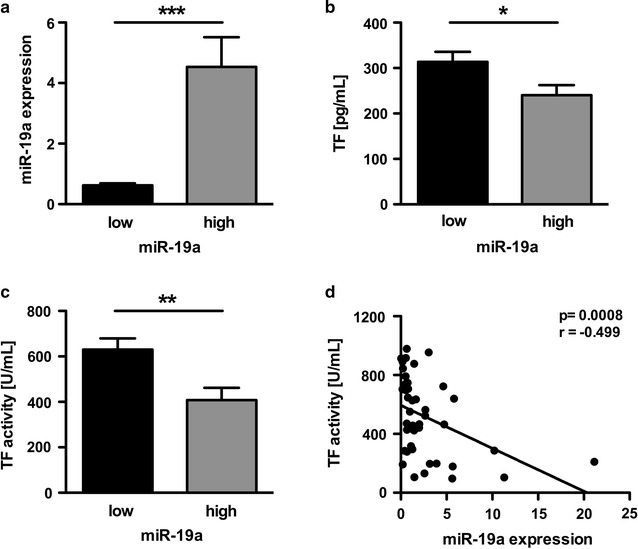
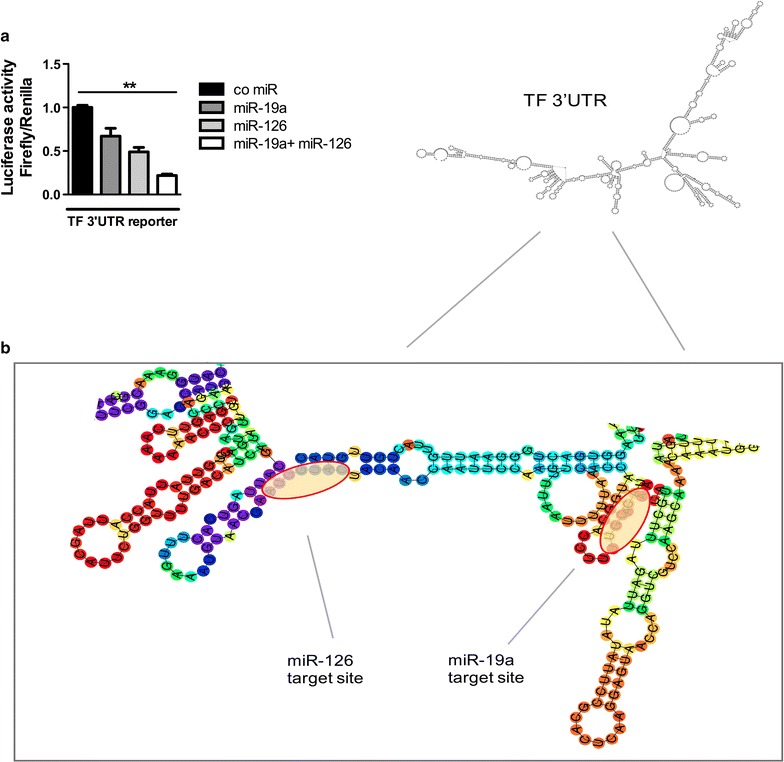
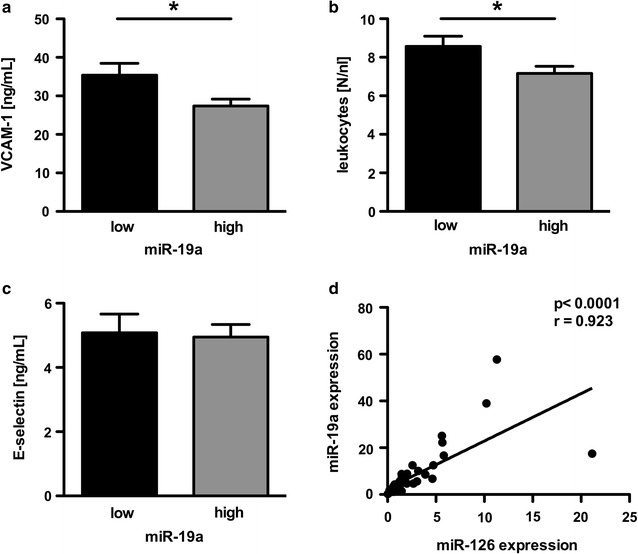
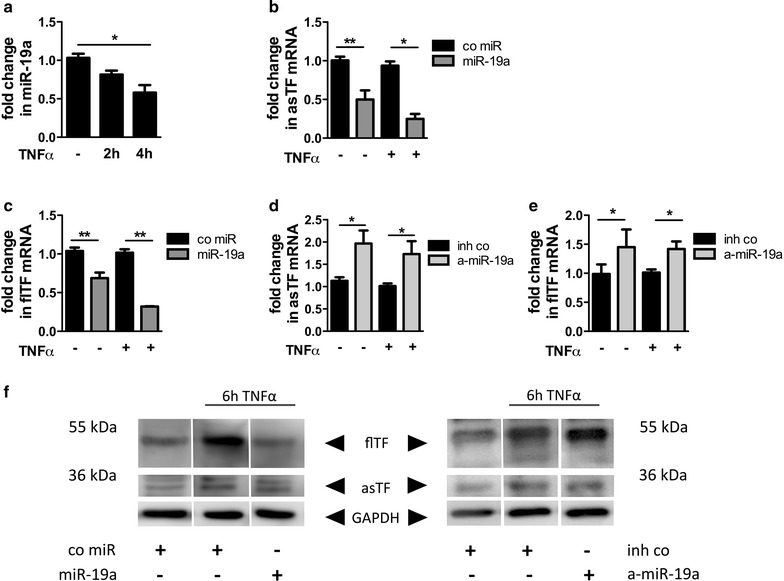
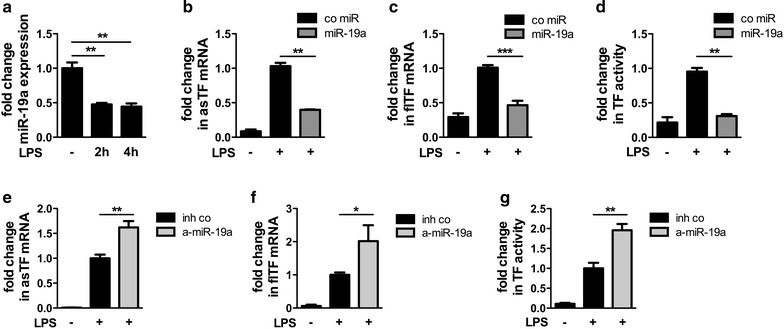
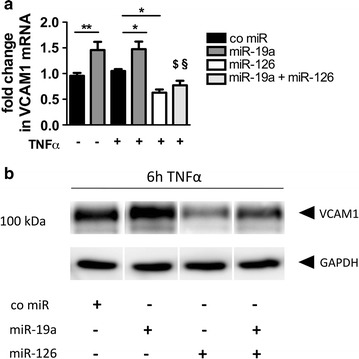
Plasma of 44 patients with known diabetes was assessed for the expression of miR-19a, TF protein, TF activity, and markers for vascular inflammation. High miR-19a expression was associated with reduced TF protein, TF-mediated procoagulability, and vascular inflammation based on expression of vascular adhesion molecule-1 and leukocyte count. We found plasma expression of miR-19a to strongly correlate with miR-126. miR-19a reduced the TF expression on mRNA and protein level in human microvascular endothelial cells (HMEC) as well as TF activity in human monocytes (THP-1), while anti-miR-19a increased the TF expression. Interestingly, miR-19a induced VCAM expression in HMEC. However, miR-19a and miR-126 co-transfection reduced total endothelial VCAM expression and exhibited additive inhibition of a luciferase reporter construct containing the F3 3'UTR.
While both miRs have differential functions on endothelial VCAM expression, miR-19a and miR-126 cooperate to exhibit anti-thrombotic properties via regulating vascular TF expression. Modulating the post-transcriptional control of TF in diabetes may provide a future anti-thrombotic and anti-inflammatory therapy.
糖尿病的特征是慢性血管紊乱,并呈现心血管死亡率的主要危险因素。具体而言,高血糖和炎性细胞因子诱导血管循环组织因子(TF),促进糖尿病中的促血栓形成状态。最近已经明显的是,通过特定的 microRNA(miR),例如 miR-126,对 TF 的转录后调节的改变导致糖尿病及其并发症的发病机制。内皮细胞 miR-19a 参与血管稳态和抗动脉粥样硬化保护。然而,其在与糖尿病相关的血栓形成中的作用尚不清楚。了解调节糖尿病中促凝性的 miR 网络可能有助于开发预防血管并发症的新治疗选择。
评估了 44 名已知糖尿病患者的血浆中 miR-19a、TF 蛋白、TF 活性和血管炎症标志物的表达。高 miR-19a 表达与 TF 蛋白、TF 介导的促凝性和血管炎症标志物(基于血管细胞粘附分子-1 和白细胞计数的表达)降低相关。我们发现,miR-19a 的血浆表达与 miR-126 强烈相关。miR-19a 降低了人微血管内皮细胞(HMEC)中的 TF 表达和蛋白水平,以及人单核细胞(THP-1)中的 TF 活性,而抗 miR-19a 则增加了 TF 的表达。有趣的是,miR-19a 诱导了 HMEC 中的 VCAM 表达。然而,miR-19a 和 miR-126 共转染降低了内皮 VCAM 的总表达,并表现出对包含 F3 3'UTR 的荧光素酶报告构建体的加性抑制。
尽管这两种 miR 对内皮 VCAM 表达具有不同的功能,但 miR-19a 和 miR-126 通过调节血管 TF 表达而协同表现出抗血栓形成特性。调节糖尿病中 TF 的转录后控制可能为未来的抗血栓形成和抗炎治疗提供一种选择。