University of Regensburg, Regensburg, Germany; University of British Columbia, Vancouver, BC, Canada.
University of Regensburg, Regensburg, Germany.
Neuropharmacology. 2018 May 1;133:440-450. doi: 10.1016/j.neuropharm.2018.02.019. Epub 2018 Mar 2.
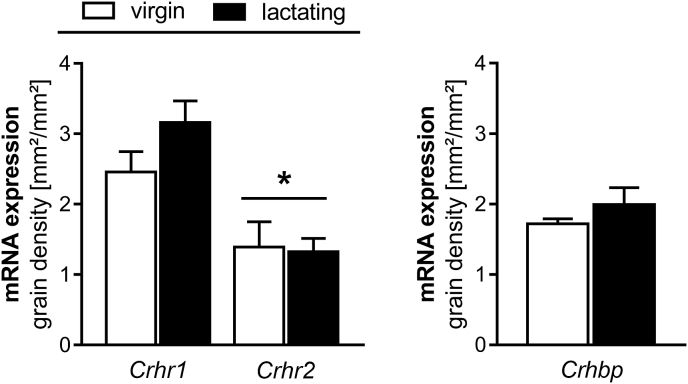
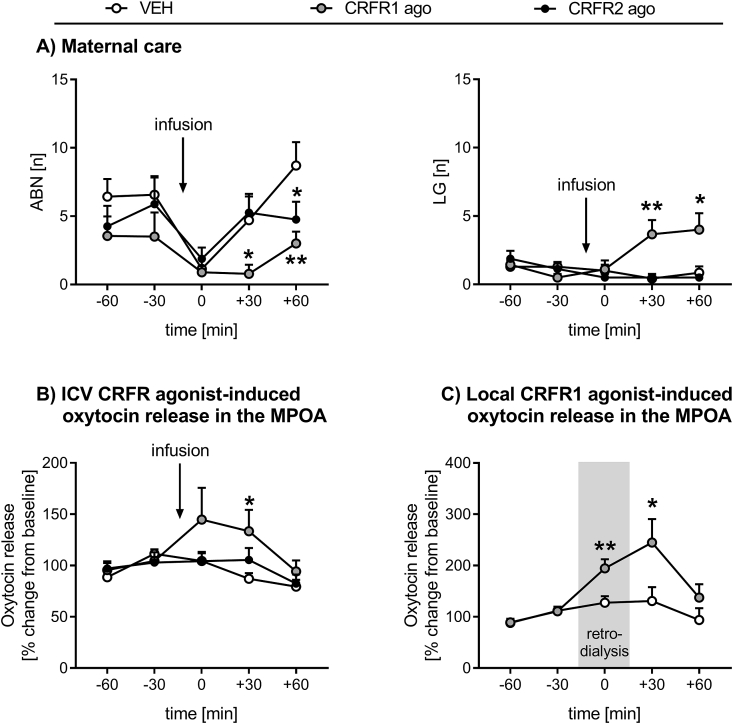
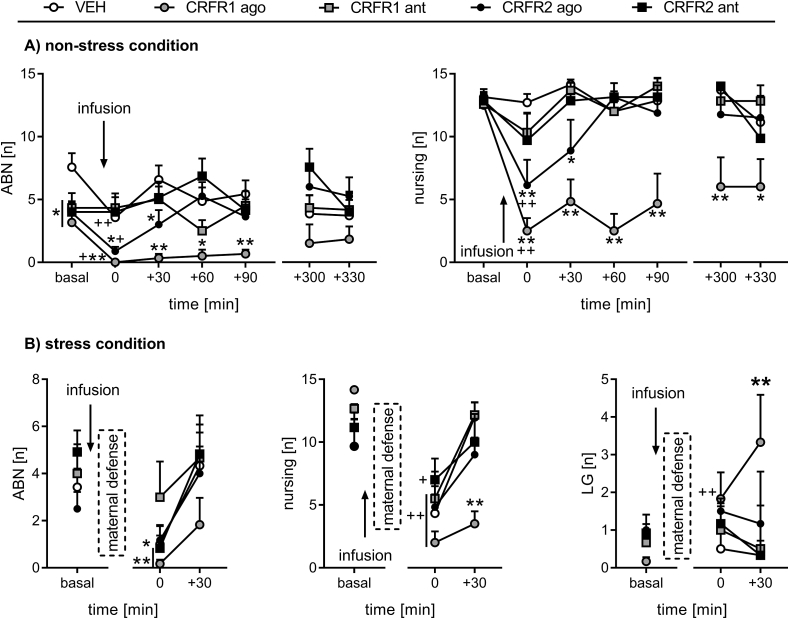
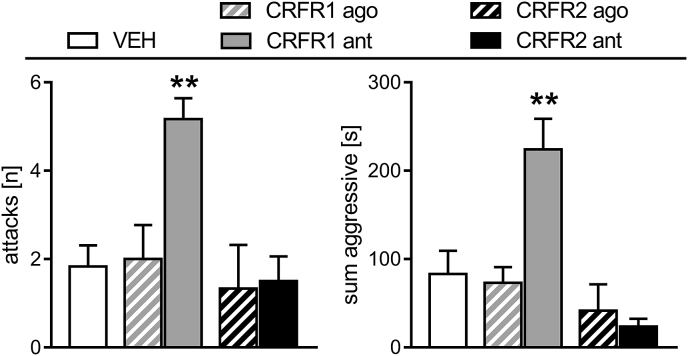
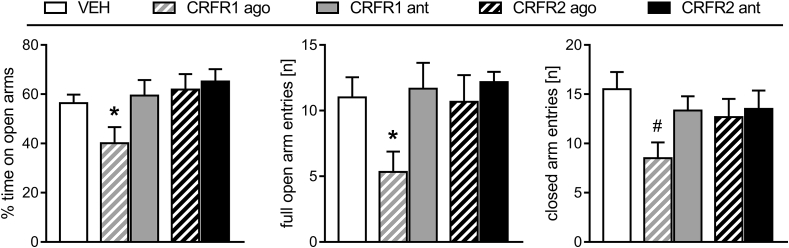
Maternal behavior and anxiety are potently modulated by the brain corticotropin-releasing factor (CRF) system postpartum. Downregulation of CRF in limbic brain regions is essential for appropriate maternal behavior and an adaptive anxiety response. Here, we focus our attention on arguably the most important brain region for maternal behavior, the hypothalamic medial preoptic area (MPOA). Within the MPOA, mRNA for CRF receptor subtype 1 (protein: CRFR1, gene: Crhr1) was more abundantly expressed than for subtype 2 (protein: CRFR2, gene: Crhr2), however expression of Crhr1, Crhr2 and CRF-binding protein (protein: CRFBP, gene: Crhbp) mRNA was similar between virgin and lactating rats. Subtype-specific activation of CRFR, predominantly CRFR1, in the MPOA decreased arched back nursing and total nursing under non-stress conditions. Following acute stressor exposure, only CRFR1 inhibition rescued the stress-induced reduction in arched back nursing while CRFR1 activation prolonged the decline in nursing. Furthermore, inhibition of CRFR1 strongly increased maternal aggression in the maternal defense test. CRFR1 activation had anxiogenic actions and reduced locomotion on the elevated plus-maze, however neither CRFR1 nor R2 manipulation affected maternal motivation. In addition, activation of CRFR1, either centrally or locally in the MPOA, increased local oxytocin release. Finally, inhibition of CRFBP (a potent regulator of CRFR activity) in the MPOA did not affect any of the maternal parameters investigated. In conclusion, activity of CRFR in the MPOA, particularly of subtype 1, needs to be dampened during lactation to ensure appropriate maternal behavior. Furthermore, oxytocin release in the MPOA may provide a regulatory mechanism to counteract the negative impact of CRFR activation on maternal behavior.
产后大脑促肾上腺皮质释放因子 (CRF) 系统可强烈调节母性行为和焦虑。边缘脑区 CRF 的下调对于适当的母性行为和适应性焦虑反应至关重要。在这里,我们将注意力集中在可能对母性行为最重要的脑区,即下丘脑视前正中区(MPOA)。在 MPOA 中,CRF 受体亚型 1(蛋白:CRFR1,基因:Crhr1)的 mRNA 表达量比亚型 2(蛋白:CRFR2,基因:Crhr2)更为丰富,然而,在哺乳期和非哺乳期大鼠中,Crhr1、Crhr2 和 CRF 结合蛋白(蛋白:CRFBP,基因:Crhbp)的 mRNA 表达相似。MPOA 中 CRFR 的亚型特异性激活(主要是 CRFR1)会降低非应激条件下的拱形背部哺乳和总哺乳次数。在急性应激源暴露后,只有 CRFR1 抑制作用才能挽救应激引起的拱形背部哺乳减少,而 CRFR1 激活作用延长了哺乳次数的减少。此外,CRFR1 抑制作用强烈增加了母性行为防御测试中的母性行为攻击。CRFR1 激活作用具有焦虑作用,并减少高架十字迷宫上的运动,但 CRFR1 或 R2 操作均不影响母性行为动机。此外,CRFR1 的激活作用无论是在中枢还是局部在 MPOA 中,都增加了局部催产素的释放。最后,MPOA 中 CRFBP(CRFR 活性的有效调节剂)的抑制作用不会影响任何所研究的母性行为参数。总之,哺乳期 MPOA 中 CRFR 的活性,特别是 1 型,需要减弱,以确保适当的母性行为。此外,MPOA 中的催产素释放可能提供了一种调节机制,以抵消 CRFR 激活对母性行为的负面影响。