Watanabe Takao, Imamura Takeshi, Hiasa Yoichi
Department of Gastroenterology and Metabology, Ehime University Graduate School of Medicine, Toon, Japan.
Department of Molecular Medicine for Pathogenesis, Ehime University Graduate School of Medicine, Toon, Ehime, Japan.
Cancer Sci. 2018 Apr;109(4):919-925. doi: 10.1111/cas.13551. Epub 2018 Mar 23.
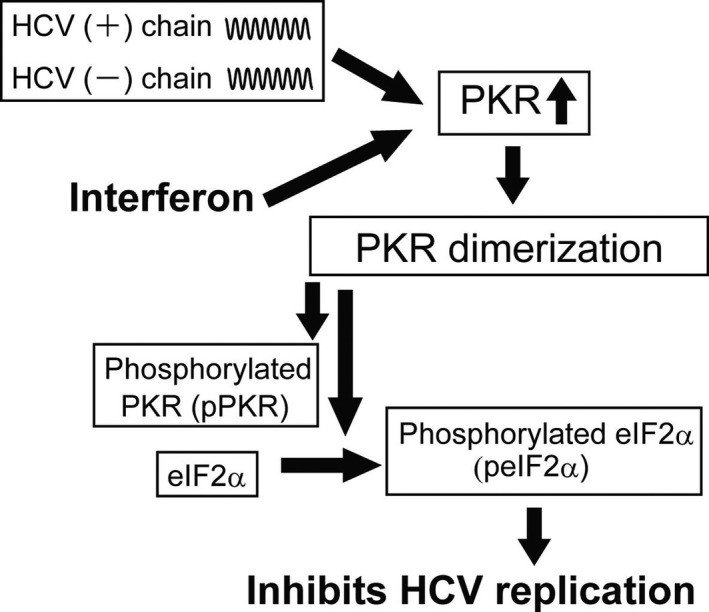
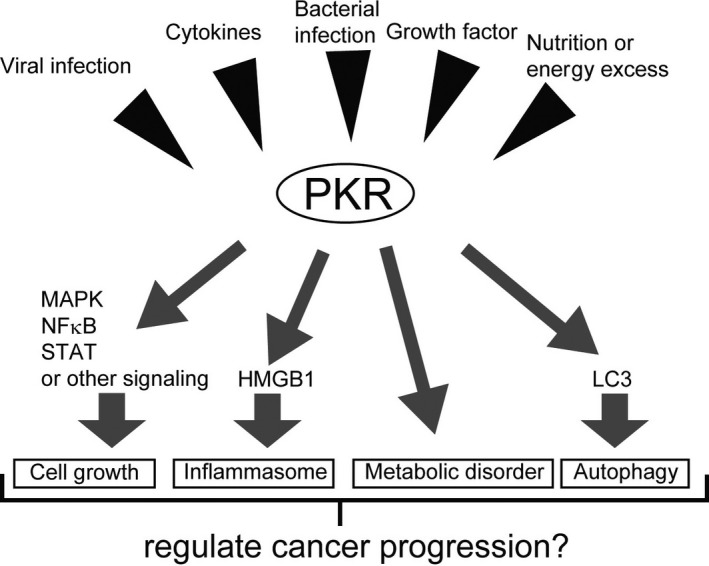
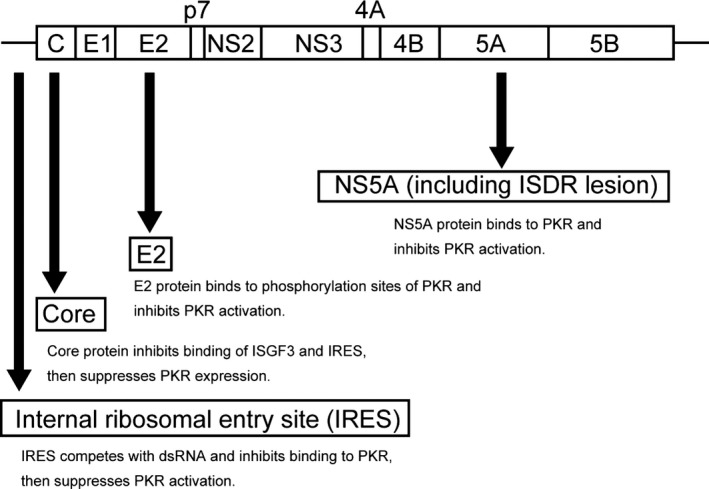
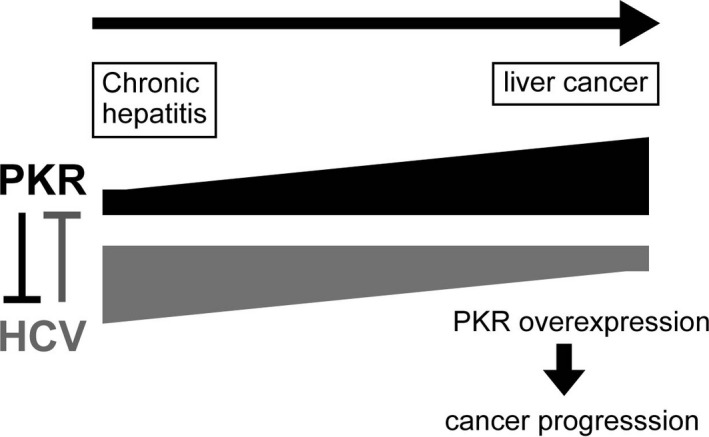
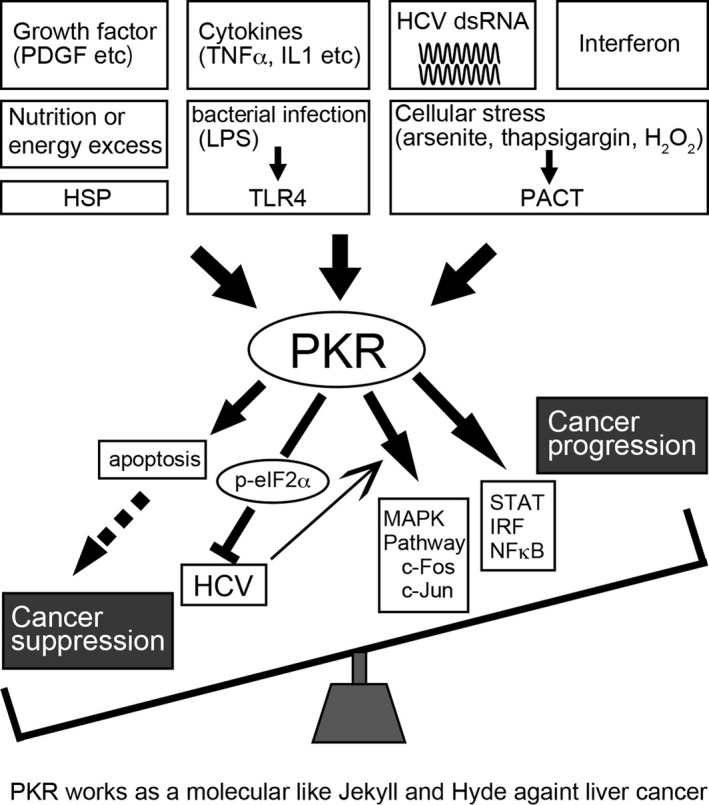
Double-stranded (ds) RNA-dependent protein kinase (PKR) is a ubiquitously expressed serine/threonine protein kinase. It was initially identified as an innate immune antiviral protein induced by interferon (IFN) and activated by dsRNA. PKR is recognized as a key executor of antiviral host defense. Moreover, it contributes to inflammation and immune regulation through several signaling pathways. In addition to IFN and dsRNA, PKR is activated by multiple stimuli and regulates various signaling pathways including the mitogen-activated protein kinase (MAPK) and nuclear factor kappa-light-chain-enhancer of activated B cells pathways. PKR was initially thought to be a tumor suppressor as a result of its ability to suppress cell growth and interact with major tumor suppressor genes. However, in several types of malignant disease, such as colon and breast cancers, its role remains controversial. In hepatocellular carcinoma, hepatitis C virus (HCV) is the main cause of liver cancer, and PKR inhibits HCV replication, indicating its role as a tumor suppressor. However, PKR is overexpressed in cirrhotic patients, and acts as a tumor promoter through enhancement of cancer cell growth by mediating MAPK or signal transducer and activator of transcription pathways. Moreover, PKR is reportedly required for the activation of inflammasomes and influences metabolic disorders. In the present review, we introduce the multifaceted roles of PKR such as antiviral function, tumor cell growth, regulation of inflammatory immune responses, and maintaining metabolic homeostasis; and discuss future perspectives on PKR biology including its potential as a therapeutic target for liver cancer.
双链(ds)RNA依赖性蛋白激酶(PKR)是一种广泛表达的丝氨酸/苏氨酸蛋白激酶。它最初被鉴定为一种由干扰素(IFN)诱导并由dsRNA激活的先天性免疫抗病毒蛋白。PKR被认为是抗病毒宿主防御的关键执行者。此外,它通过多种信号通路参与炎症和免疫调节。除了IFN和dsRNA外,PKR还可被多种刺激激活,并调节包括丝裂原活化蛋白激酶(MAPK)和活化B细胞核因子κ轻链增强子通路在内的各种信号通路。PKR最初被认为是一种肿瘤抑制因子,因为它具有抑制细胞生长并与主要肿瘤抑制基因相互作用的能力。然而,在几种恶性疾病中,如结肠癌和乳腺癌,其作用仍存在争议。在肝细胞癌中,丙型肝炎病毒(HCV)是肝癌的主要病因,PKR可抑制HCV复制,表明其作为肿瘤抑制因子的作用。然而,PKR在肝硬化患者中过度表达,并通过介导MAPK或信号转导和转录激活因子通路促进癌细胞生长,从而起到肿瘤促进作用。此外,据报道PKR是炎性小体激活所必需的,并影响代谢紊乱。在本综述中,我们介绍了PKR的多方面作用,如抗病毒功能、肿瘤细胞生长、炎症免疫反应调节和维持代谢稳态;并讨论了PKR生物学的未来前景,包括其作为肝癌治疗靶点的潜力。