Petit-Jentreau L, Glover C, Coombes J L
Department of Infection Biology, Institute of Infection and Global Health, University of Liverpool, Liverpool, UK.
Parasite Immunol. 2018 Apr;40(4):e12522. doi: 10.1111/pim.12522. Epub 2018 Mar 25.
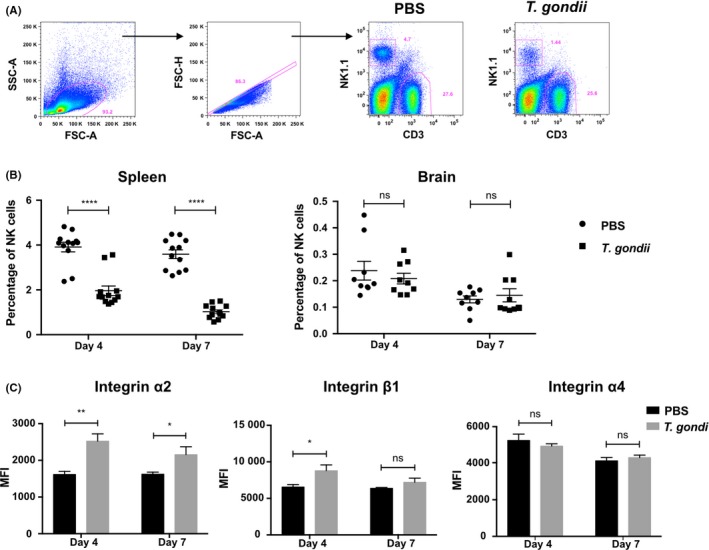
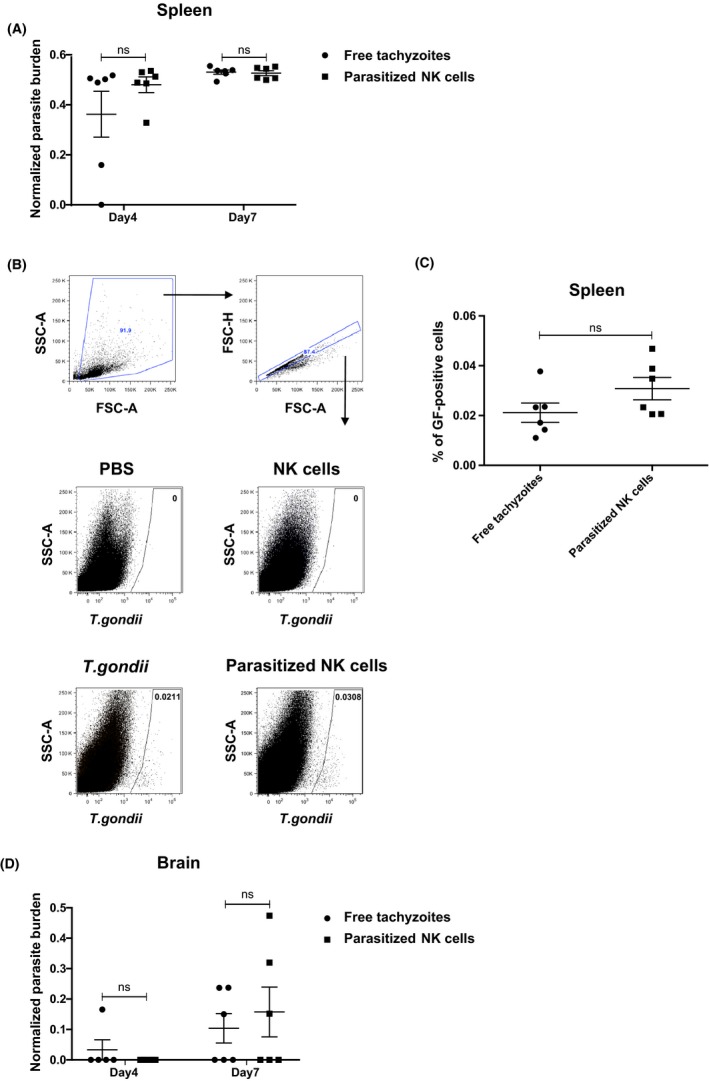
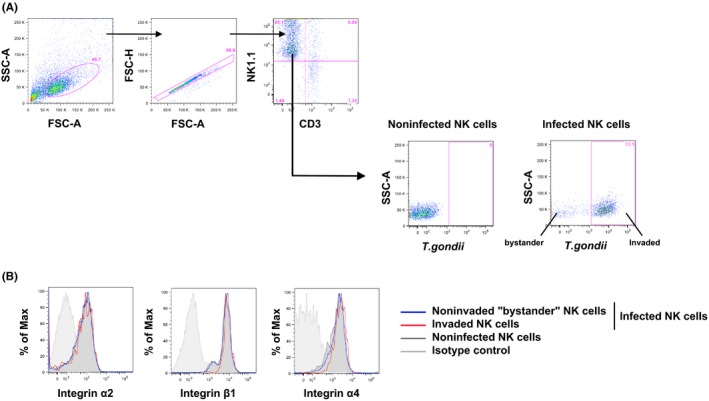
Toxoplasma gondii is a protozoan parasite capable of invading immune cells and co-opting their migratory pathways to disseminate through the host. Natural Killer (NK) cells can be directly invaded by the parasite and this invasion alters NK cell migration, producing a hypermotile phenotype. However, the consequences of this hypermotile phenotype for the dissemination of T. gondii to the brain remain unknown. To address this, C57BL6/J mice were infected with freshly egressed tachyzoites (type IIPrugniaud strain) or with parasitized NK cells. Under both conditions, parasite loads in the brain were comparable, indicating that parasitized NK cells were not able to facilitate spread of T. gondii to the brain. Consistent with this, we found no evidence for the recruitment of endogenous NK cells to the brain at early time points post-infection, nor any changes in the expression of α4β1 integrin, involved in recruitment of NK cells to the brain. We therefore found no evidence for a role for hypermotile NK cells in delivery of parasites to the brain during acute infection with T. gondii.
刚地弓形虫是一种原生动物寄生虫,能够侵入免疫细胞并利用其迁移途径在宿主体内传播。自然杀伤(NK)细胞可被该寄生虫直接侵入,这种侵入会改变NK细胞的迁移,产生一种运动性增强的表型。然而,这种运动性增强的表型对刚地弓形虫向脑部传播的影响尚不清楚。为了解决这个问题,将C57BL6/J小鼠感染新鲜逸出的速殖子(IIPrugniaud株I型)或感染被寄生的NK细胞。在这两种情况下,脑部的寄生虫负荷相当,这表明被寄生的NK细胞无法促进刚地弓形虫向脑部的传播。与此一致的是,我们发现在感染后早期没有证据表明内源性NK细胞被募集到脑部,也没有发现参与NK细胞向脑部募集的α4β1整合素表达有任何变化。因此,我们没有发现证据表明在刚地弓形虫急性感染期间,运动性增强的NK细胞在将寄生虫输送到脑部方面发挥作用。