INSERM UMR 1188 DéTROI (Diabète Athérothrombose Thérapies Réunion Océan Indien) Université de La Réunion, Saint Denis de La Réunion, France
Centre d'Investigation Clinique, CHU de La Réunion, Saint Denis de La Réunion, France.
J Am Heart Assoc. 2018 Feb 25;7(5):e007397. doi: 10.1161/JAHA.117.007397.
Despite pathophysiological relevance and promising experimental data, the usefulness of biomarkers of oxidative stress for cardiac risk prediction is unclear. The aim of our study was to investigate the prognostic value of 6 biomarkers exploring different pathways of oxidative stress for predicting adverse cardiovascular outcomes in patients with type 2 diabetes mellitus beyond established risk factors.
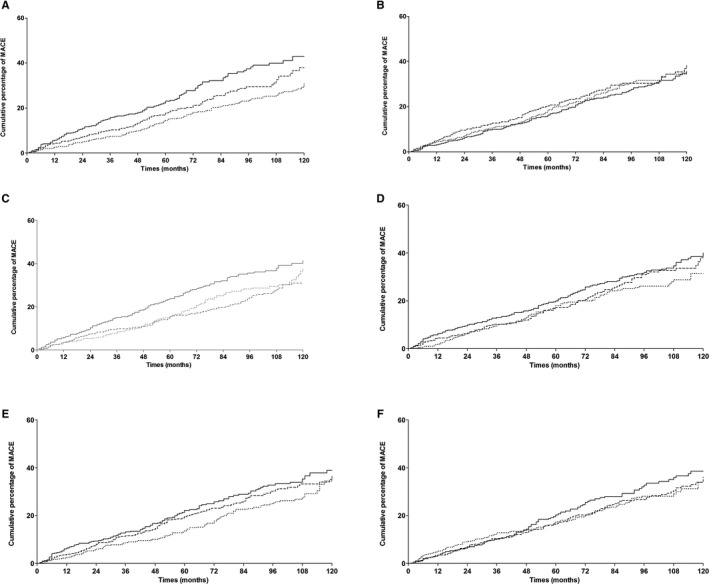
The SURDIAGENE (Survie, Diabete de type 2 et Genetique) prospective cohort study consecutively recruited 1468 patients with type 2 diabetes mellitus. Assays were performed at baseline, and incident cases of major adverse cardiovascular events (MACE)-first occurrence of cardiovascular death, nonfatal myocardial infarction, or stroke-were recorded during a median of 64 months. Advanced oxidation protein products, oxidative hemolysis inhibition assay, ischemia-modified albumin, and total reductive capacity of plasma were not associated with the risk of MACE in univariate analyses. Fluorescent advanced glycation end products and carbonyls were associated with MACE (hazard ratio=1.38 per SD, 95% confidence interval 1.24-1.54, <0.001 and hazard ratio=1.15 per SD, 95% confidence interval 1.04-1.27, =0.006, respectively) in univariate analysis, but when added to a multivariate predictive model including traditional risk factors for MACE, these markers did not significantly improve c-statistics or integrated discrimination index of the model.
These plasma concentrations of 6 markers, which cover a broad spectrum of oxidative processes, were not significantly associated with MACE occurrence and were not able to improve MACE risk discrimination and classification beyond classical risk factors in type 2 diabetes mellitus patients.
尽管氧化应激生物标志物与病理生理学相关,且有有前景的实验数据,但它们在心脏风险预测方面的有用性仍不清楚。我们的研究旨在探讨 6 种不同氧化应激途径的生物标志物的预后价值,以评估其在 2 型糖尿病患者中预测不良心血管结局的价值,这些生物标志物的价值超过了既定的风险因素。
SURDIAGENE(Survie,糖尿病 2 型和遗传学)前瞻性队列研究连续招募了 1468 例 2 型糖尿病患者。在基线时进行检测,并在中位数为 64 个月的时间内记录主要不良心血管事件(MACE)的首发事件,即心血管死亡、非致死性心肌梗死或中风。在单变量分析中,高级氧化蛋白产物、氧化溶血抑制试验、缺血修饰白蛋白和血浆总还原能力与 MACE 风险无关。荧光晚期糖基化终产物和羰基与 MACE 相关(风险比为每个 SD 增加 1.38,95%置信区间为 1.24-1.54,<0.001;风险比为每个 SD 增加 1.15,95%置信区间为 1.04-1.27,=0.006),但当加入包括 MACE 的传统风险因素的多变量预测模型时,这些标志物并不能显著提高模型的 C 统计量或综合判别指数。
这 6 种标志物的血浆浓度涵盖了广泛的氧化过程,但与 MACE 的发生无显著相关性,并且在 2 型糖尿病患者中,不能改善经典风险因素以外的 MACE 风险判别和分类。