The Marshall Centre for Infectious Diseases Research and Training, The University of Western Australia, Crawley, Australia.
School of Biomedical Sciences, Faculty of Health and Medical Sciences, The University of Western Australia, Crawley, Australia.
BMC Genomics. 2018 Feb 27;19(1):165. doi: 10.1186/s12864-018-4557-5.
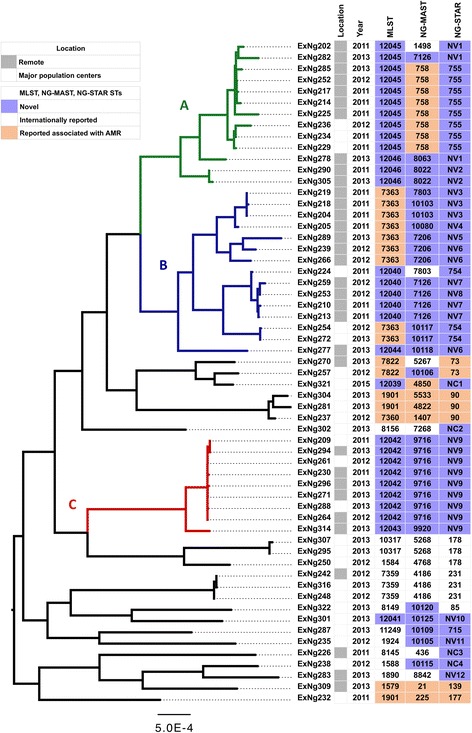
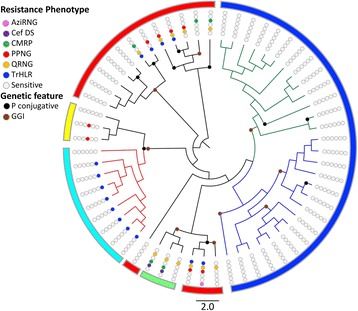
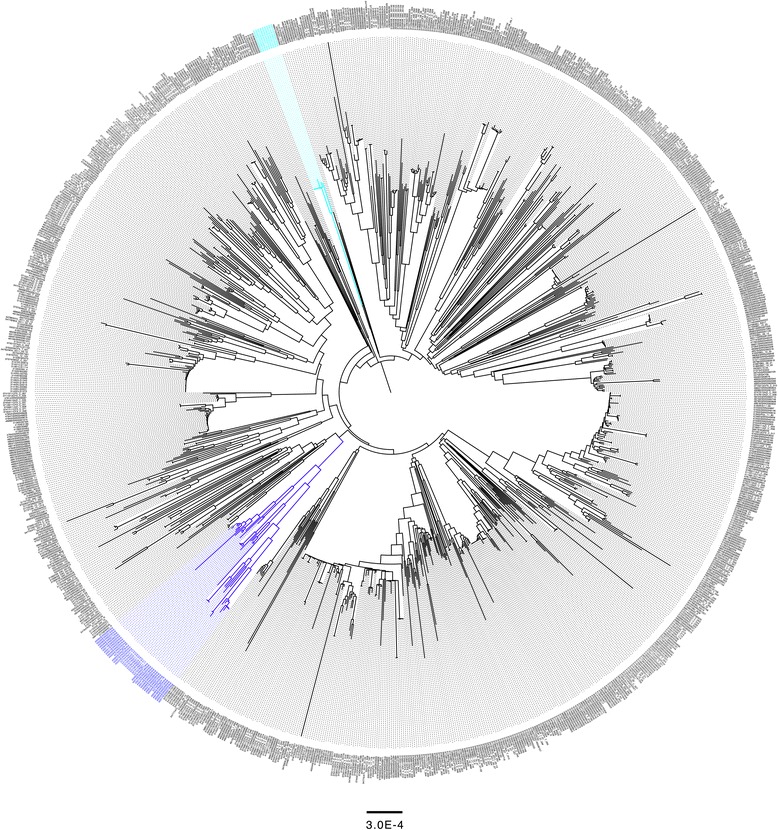
Neisseria gonorrhoeae causes gonorrhoea, the second most commonly notified sexually transmitted infection in Australia. One of the highest notification rates of gonorrhoea is found in the remote regions of Western Australia (WA). Unlike isolates from the major Australian population centres, the remote community isolates have low rates of antimicrobial resistance (AMR). Population structure and whole-genome comparison of 59 isolates from the Western Australian N. gonorrhoeae collection were used to investigate relatedness of isolates cultured in the metropolitan and remote areas. Core genome phylogeny, multilocus sequencing typing (MLST), N. gonorrhoeae multi-antigen sequence typing (NG-MAST) and N. gonorrhoeae sequence typing for antimicrobial resistance (NG-STAR) in addition to hierarchical clustering of sequences were used to characterize the isolates.
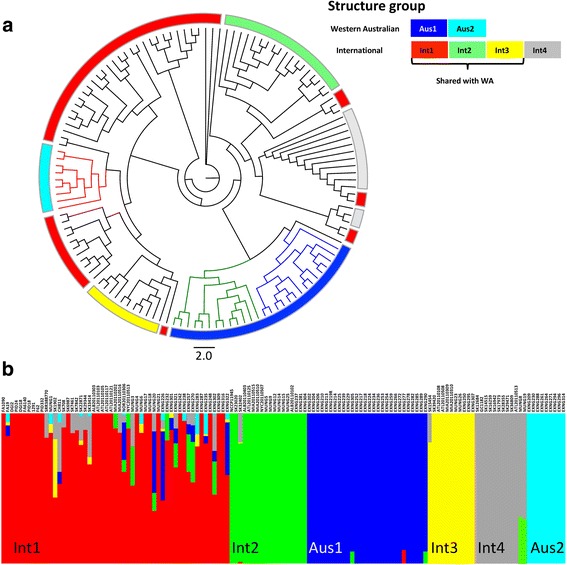
Population structure analysis of the 59 isolates together with 72 isolates from an international collection, revealed six population groups suggesting that N. gonorrhoeae is a weakly clonal species. Two distinct population groups, Aus1 and Aus2, represented 63% of WA isolates and were mostly composed of the remote community isolates that carried no chromosomal AMR genotypes. In contrast, the Western Australian metropolitan isolates were frequently multi-drug resistant and belonged to population groups found in the international database, suggesting international transmission of the isolates.
Our study suggests that the population structure of N. gonorrhoeae is distinct between the communities in remote and metropolitan WA. Given the high rate of AMR in metropolitan regions, ongoing surveillance is essential to ensure the enduring efficacy of the empiric gonorrhoea treatment in remote WA.
淋病奈瑟菌引起淋病,是澳大利亚第二大常见的性传播感染疾病。西澳大利亚州(WA)偏远地区的淋病发病率最高。与澳大利亚主要人口中心的分离株不同,偏远社区的分离株具有较低的抗生素耐药率(AMR)。对来自西澳大利亚淋病奈瑟菌收集的 59 个分离株的种群结构和全基因组比较,用于研究培养于大都市和偏远地区的分离株的相关性。核心基因组系统发育、多位点测序分型(MLST)、淋病奈瑟菌多抗原序列分型(NG-MAST)和淋病奈瑟菌抗生素耐药序列分型(NG-STAR)以及序列的层次聚类,用于对分离株进行特征描述。
对 59 个分离株的种群结构分析,以及对来自国际数据库的 72 个分离株的分析,揭示了六个种群组,表明淋病奈瑟菌是一种弱克隆种。两个不同的种群组,Aus1 和 Aus2,代表了 63%的西澳大利亚分离株,主要由携带无染色体 AMR 基因型的偏远社区分离株组成。相比之下,西澳大利亚大都市的分离株经常是多药耐药的,并且属于国际数据库中发现的种群组,表明这些分离株存在国际传播。
我们的研究表明,西澳大利亚偏远和大都市社区的淋病奈瑟菌种群结构存在明显差异。鉴于大都市地区的 AMR 率较高,需要持续监测,以确保在西澳大利亚偏远地区经验性淋病治疗的持久疗效。