Department of Medicine, Kolling Institute, University of Sydney, Sydney, Australia
Department of Diabetes, Endocrinology and Metabolism, Royal North Shore Hospital, St Leonards, NSW 2065, Australia.
Biosci Rep. 2018 Mar 29;38(2). doi: 10.1042/BSR20180050. Print 2018 Apr 27.
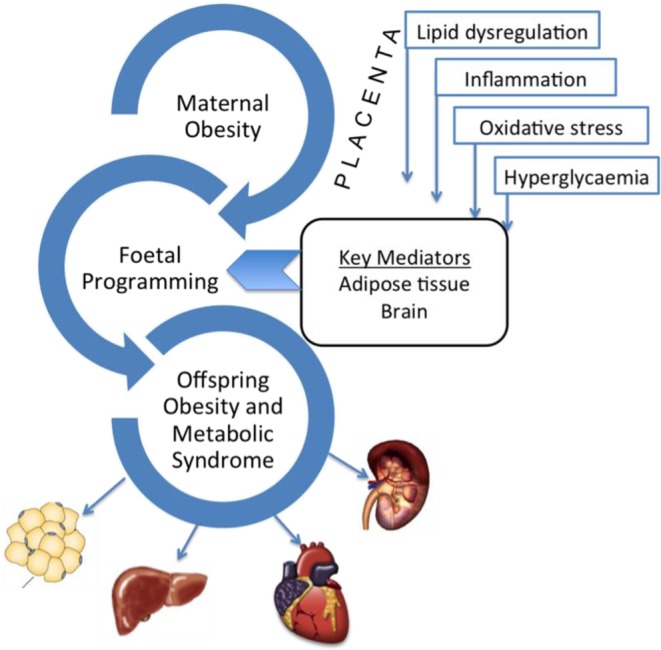
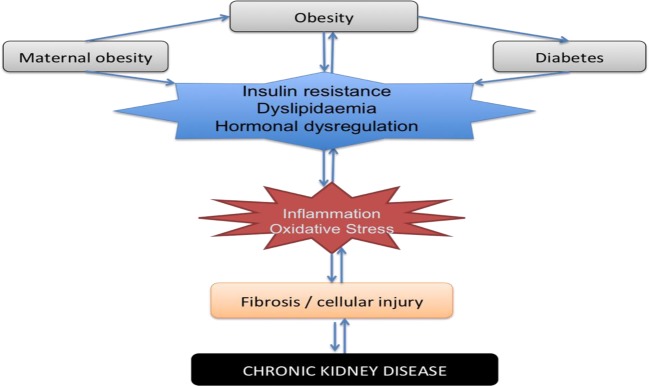
Obesity, together with insulin resistance, promotes multiple metabolic abnormalities and is strongly associated with an increased risk of chronic disease including type 2 diabetes (T2D), hypertension, cardiovascular disease, non-alcoholic fatty liver disease (NAFLD) and chronic kidney disease (CKD). The incidence of obesity continues to rise in astronomical proportions throughout the world and affects all the different stages of the lifespan. Importantly, the proportion of women of reproductive age who are overweight or obese is increasing at an alarming rate and has potential ramifications for offspring health and disease risk. Evidence suggests a strong link between the intrauterine environment and disease programming. The current review will describe the importance of the intrauterine environment in the development of metabolic disease, including kidney disease. It will detail the known mechanisms of fetal programming, including the role of epigenetic modulation. The evidence for the role of maternal obesity in the developmental programming of CKD is derived mostly from our rodent models which will be described. The clinical implication of such findings will also be discussed.
肥胖症与胰岛素抵抗一起,会导致多种代谢异常,并与包括 2 型糖尿病(T2D)、高血压、心血管疾病、非酒精性脂肪性肝病(NAFLD)和慢性肾脏病(CKD)在内的慢性疾病风险增加密切相关。肥胖症的发病率在全球范围内以惊人的比例持续上升,影响着生命的各个不同阶段。重要的是,超重或肥胖的育龄妇女比例正在以惊人的速度增长,这可能对后代的健康和疾病风险产生影响。有证据表明,子宫内环境与疾病发生之间存在很强的关联。本综述将描述子宫内环境在代谢性疾病(包括肾脏病)发展中的重要性。它将详细介绍胎儿编程的已知机制,包括表观遗传调控的作用。关于母体肥胖在 CKD 发育编程中的作用的证据主要来自于我们的啮齿动物模型,这些模型将在文中描述。还将讨论这些发现的临床意义。