Puglisi Rossella, Bellenghi Maria, Pontecorvi Giada, Gulino Alessandro, Petrini Marina, Felicetti Federica, Bottero Lisabianca, Mattia Gianfranco, Carè Alessandra
Center for Gender-Specific Medicine, Oncology Unit-Istituto Superiore di Sanita', Rome, Italy.
Department of Health Science, Tumor Immunology Unit, Human Pathology Section, Palermo University School of Medicine, Palermo, Italy.
Oncotarget. 2018 Jan 9;9(7):7567-7581. doi: 10.18632/oncotarget.24085. eCollection 2018 Jan 26.
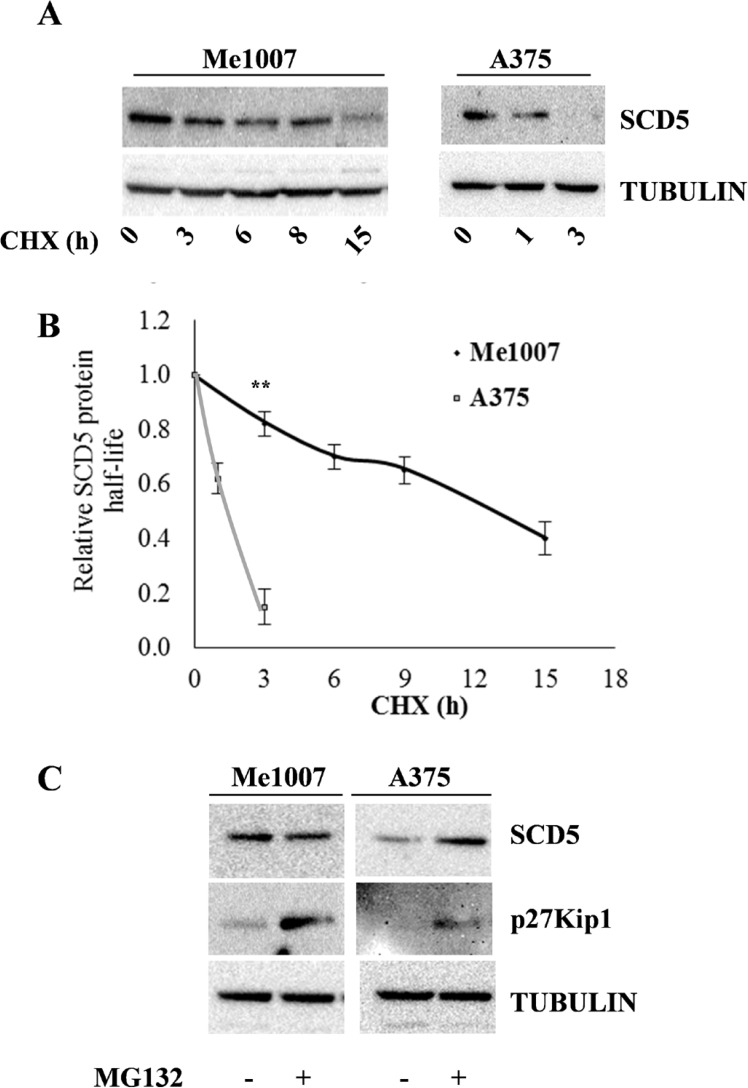
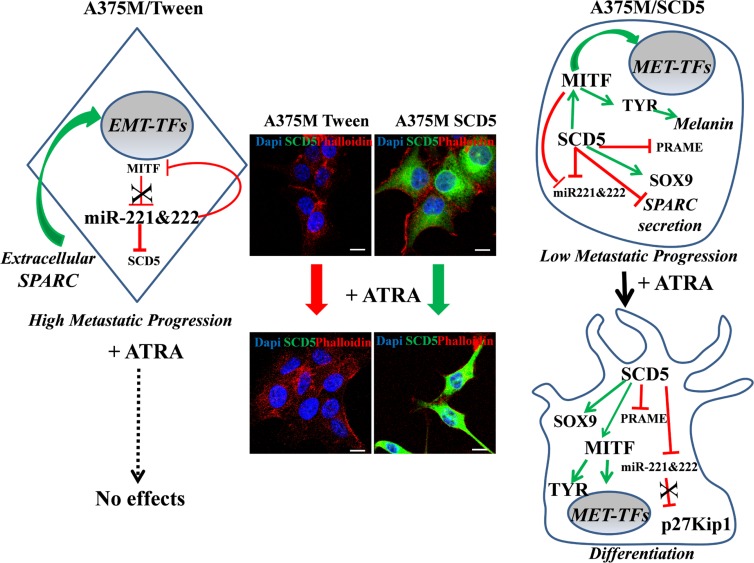
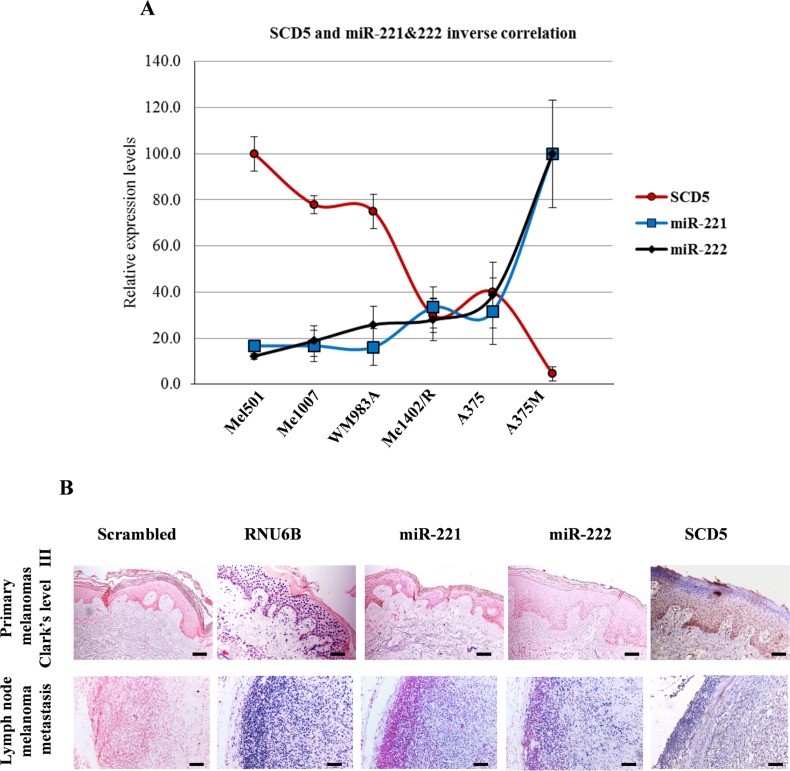
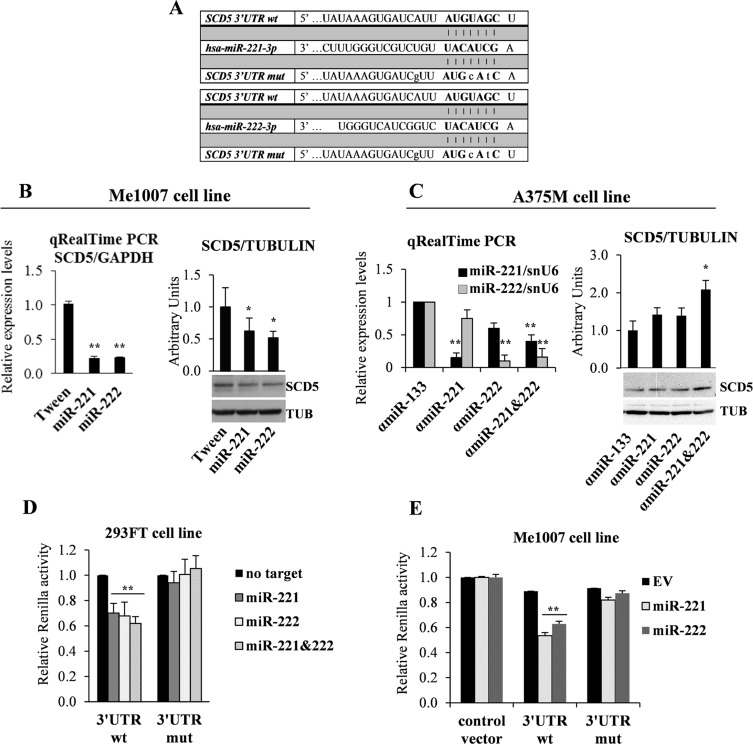
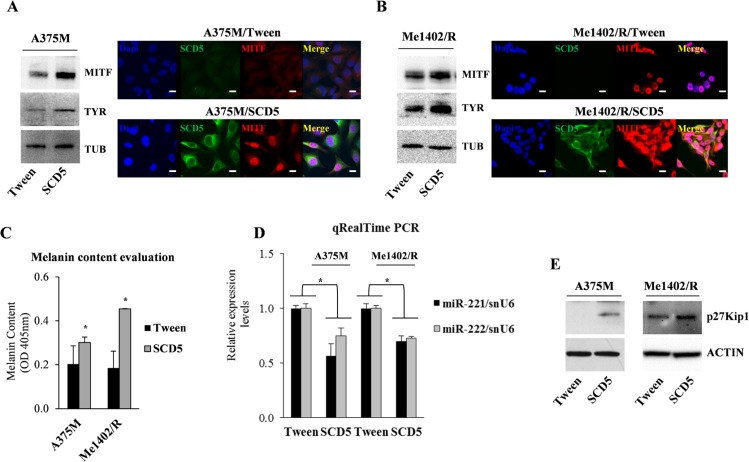
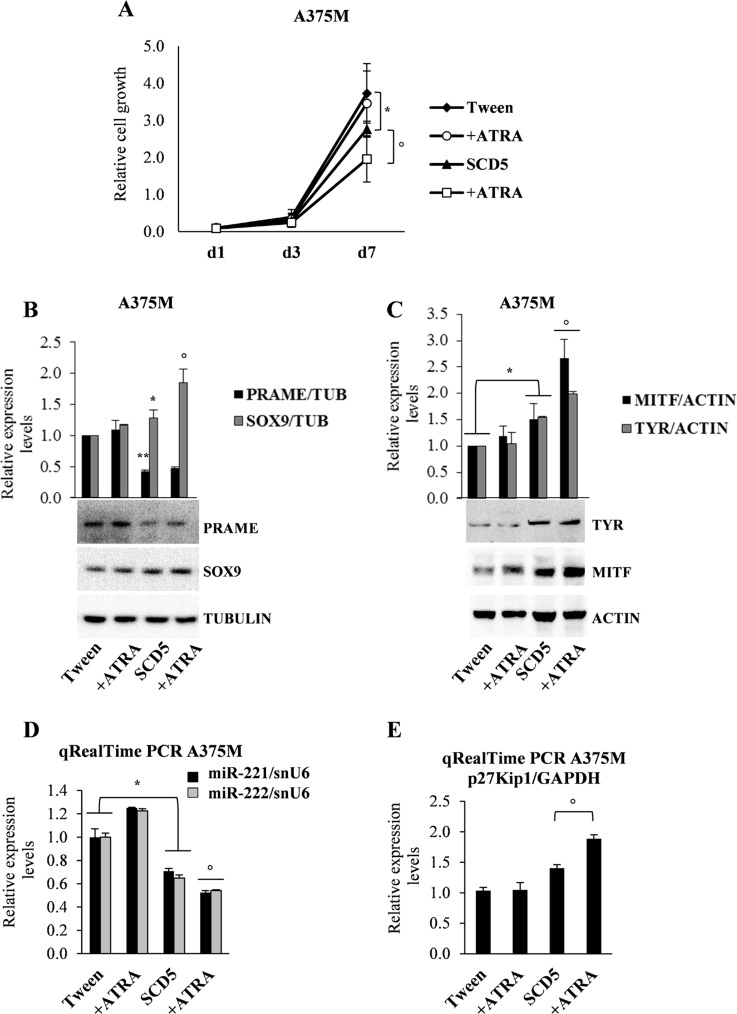
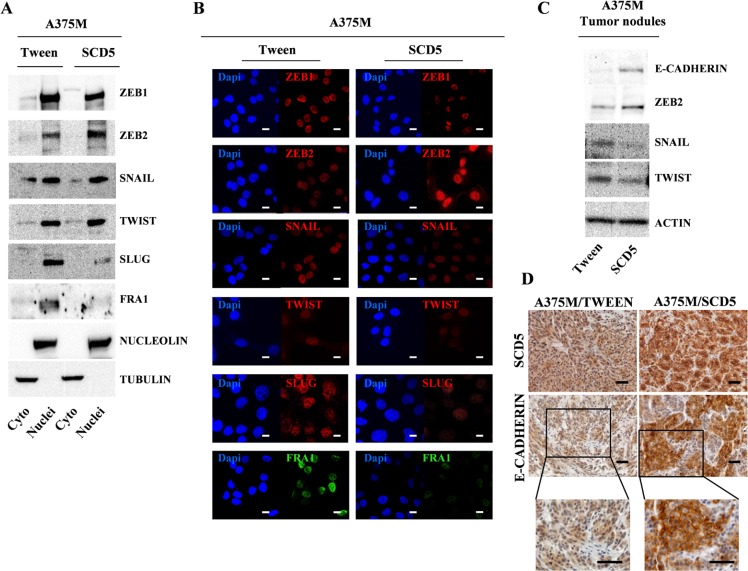
Our previous data supported a role for the Stearoyl-CoA desaturase (SCD5) in protection against malignancy, whereby it appears to functionally modify tumor stroma impairing tumor spread. SCD5 is significantly expressed in primary melanoma, but becomes barely detectable at tumor advanced stages. Looking for the regulatory mechanisms underlying SCD5 reduced expression during melanoma progression, we demonstrated a significantly lower stability of SCD5 protein as well as the direct targeting of SCD5 mRNA by the oncogenic miR-221&222 in metastatic cell lines. Moreover, our results indicated the existence of a negative feedback loop between SCD5 and miR-221&222, in good agreement with their opposite functions. Also, we showed how SCD5 re-expression and the direct supplementation of its main product oleic acid (OA) can drive advanced melanoma cell lines toward differentiation and reversion of the epithelial-mesenchymal (EMT)-like process, eventually inducing a less malignant phenotype. Indeed, SCD5 re-established the sensitivity to all-trans retinoic acid in A375M metastatic melanoma, associated with increased levels of Tyrosinase, melanin production and reduced proliferation. As evidenced by the correct modulation of some key transcription factors, SCD5 managed by favoring a partial mesenchymal-to-epithelial (MET) transition in studies. Interestingly, a more complete MET, including E-cadherin re-expression correctly localized at cell membranes, was obtained in xenograft models, thus indicating the requirement of direct contacts between tumor cells and the surrounding microenvironment as well as the presence of some essential factors for SCD5 complete function.
我们之前的数据支持硬脂酰辅酶A去饱和酶(SCD5)在预防恶性肿瘤中发挥作用,它似乎在功能上修饰肿瘤基质,从而抑制肿瘤扩散。SCD5在原发性黑色素瘤中显著表达,但在肿瘤晚期几乎检测不到。在寻找黑色素瘤进展过程中SCD5表达降低的调控机制时,我们发现转移细胞系中SCD5蛋白稳定性显著降低,并且致癌性miR-221和miR-222直接靶向SCD5 mRNA。此外,我们的结果表明SCD5与miR-221和miR-222之间存在负反馈环,这与其相反的功能高度一致。同时,我们还展示了SCD5的重新表达及其主要产物油酸(OA)的直接补充如何促使晚期黑色素瘤细胞系分化并逆转上皮-间质转化(EMT)样过程,最终诱导出恶性程度较低的表型。事实上,SCD5恢复了A375M转移性黑色素瘤对全反式维甲酸的敏感性,这与酪氨酸酶水平升高、黑色素生成增加以及增殖减少有关。正如一些关键转录因子的正确调节所证明的那样,在研究中SCD5通过促进部分间质向上皮转化(MET)发挥作用。有趣的是,在异种移植模型中获得了更完全的MET,包括E-钙黏蛋白在细胞膜上正确定位的重新表达,这表明肿瘤细胞与周围微环境之间直接接触的必要性以及SCD5完整功能所需的一些关键因子的存在。