Westheim Annemarie J F, Stoffels Lara M, Dubois Ludwig J, van Bergenhenegouwen Jeroen, van Helvoort Ardy, Langen Ramon C J, Shiri-Sverdlov Ronit, Theys Jan
The M-Lab, Department of Precision Medicine, GROW-School for Oncology and Reproduction, Maastricht University, 6229 ER Maastricht, The Netherlands.
Department of Genetics and Cell Biology, NUTRIM-School of Nutrition and Translational Research in Metabolism, Maastricht University, 6229 ER Maastricht, The Netherlands.
Biomedicines. 2023 Jan 19;11(2):280. doi: 10.3390/biomedicines11020280.
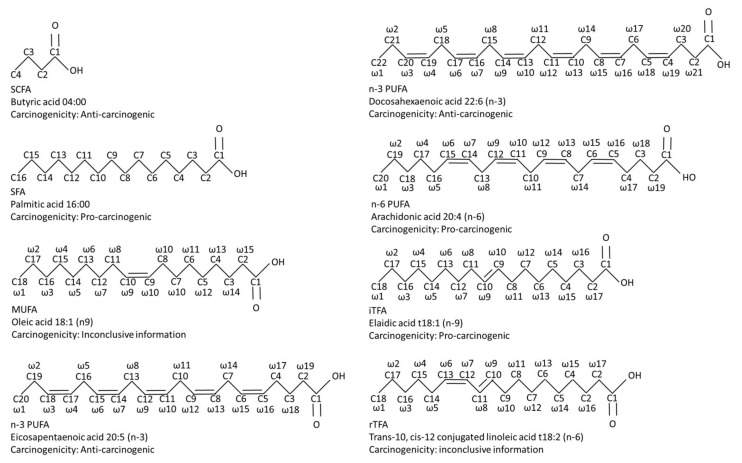
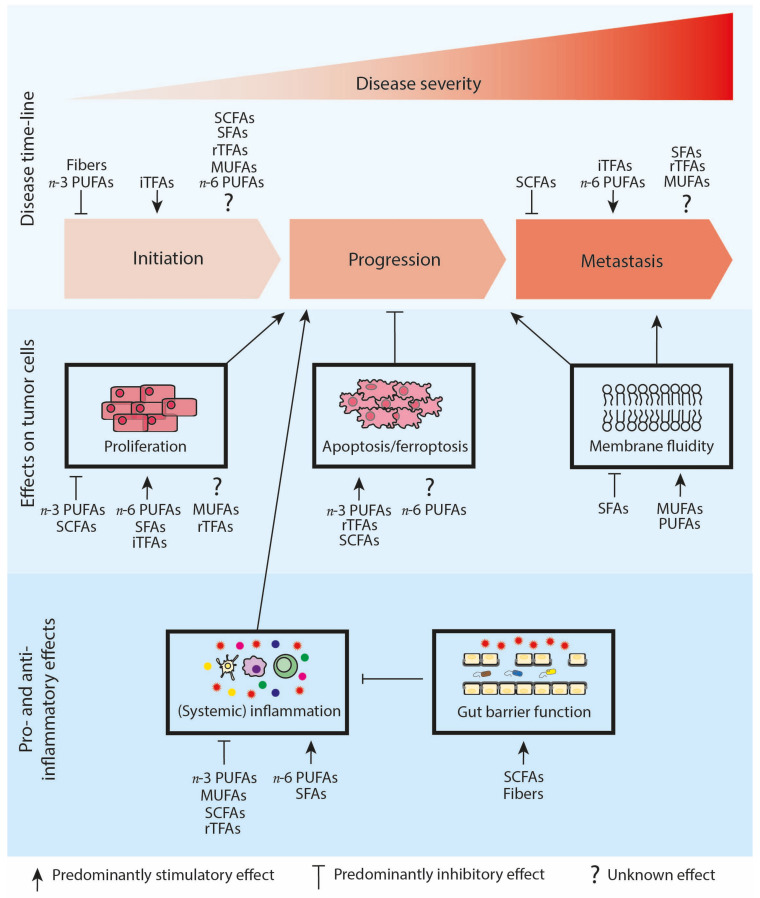
Cancer is the second leading cause of death worldwide and the global cancer burden rises rapidly. The risk factors for cancer development can often be attributed to lifestyle factors, of which an unhealthy diet is a major contributor. Dietary fat is an important macronutrient and therefore a crucial part of a well-balanced and healthy diet, but it is still unclear which specific fatty acids contribute to a healthy and well-balanced diet in the context of cancer risk and prognosis. In this review, we describe epidemiological evidence on the associations between the intake of different classes of fatty acids and the risk of developing cancer, and we provide preclinical evidence on how specific fatty acids can act on tumor cells, thereby modulating tumor progression and metastasis. Moreover, the pro- and anti-inflammatory effects of each of the different groups of fatty acids will be discussed specifically in the context of inflammation-induced cancer progression and we will highlight challenges as well as opportunities for successful application of fatty acid tailored nutritional interventions in the clinic.
癌症是全球第二大死因,全球癌症负担迅速上升。癌症发生的风险因素通常可归因于生活方式因素,其中不健康饮食是主要因素之一。膳食脂肪是一种重要的宏量营养素,因此是均衡健康饮食的关键组成部分,但在癌症风险和预后方面,仍不清楚哪些特定脂肪酸有助于形成健康均衡的饮食。在本综述中,我们描述了不同类别脂肪酸摄入量与患癌风险之间关联的流行病学证据,并提供了关于特定脂肪酸如何作用于肿瘤细胞从而调节肿瘤进展和转移的临床前证据。此外,将在炎症诱导的癌症进展背景下具体讨论不同组脂肪酸各自的促炎和抗炎作用,并且我们将强调在临床成功应用脂肪酸定制营养干预措施所面临的挑战和机遇。