Grant Angeline, Njiru James, Okoth Edgar, Awino Imelda, Briend André, Murage Samuel, Abdirahman Saida, Myatt Mark
Action Against Hunger, One Whitehall St, New York, NY 10004 USA.
Action Against Hunger, Nyangumi Road, PO Box, Nairobi, 39900-00623 Kenya.
Arch Public Health. 2018 Feb 22;76:11. doi: 10.1186/s13690-018-0260-x. eCollection 2018.
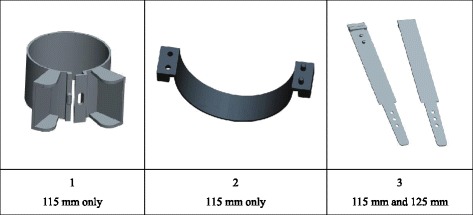
A novel approach for improving community case-detection of acute malnutrition involves mothers/caregivers screening their children for acute malnutrition using a mid-upper arm circumference (MUAC) insertion tape. The objective of this study was to test three simple MUAC classification devices to determine whether they improved the sensitivity of mothers/caregivers at detecting acute malnutrition.
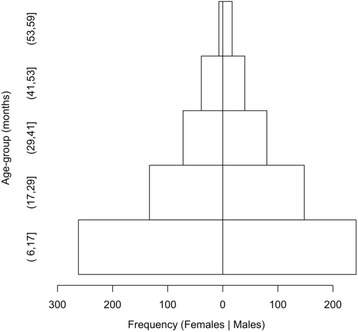
Prospective, non-randomised, partially-blinded, clinical diagnostic trial describing and comparing the performance of three "Click-MUAC" devices and a MUAC insertion tape. The study took place in twenty-one health facilities providing integrated management of acute malnutrition (IMAM) services in Isiolo County, Kenya. Mothers/caregivers classified their child (=1040), aged 6-59 months, using the "Click-MUAC" devices and a MUAC insertion tape. These classifications were compared to a "gold standard" classification (the mean of three measurements taken by a research assistant using the MUAC insertion tape).
The sensitivity of mother/caregiver classifications was high for all devices (>93% for severe acute malnutrition (SAM), defined by MUAC < 115 mm, and > 90% for global acute malnutrition (GAM), defined by MUAC < 125 mm). Mother/caregiver sensitivity for SAM and GAM classification was higher using the MUAC insertion tape (100% sensitivity for SAM and 99% sensitivity for GAM) than using "Click-MUAC" devices. Younden's for SAM classification, and sensitivity for GAM classification, were significantly higher for the MUAC insertion tape (99% and 99% respectively). Specificity was high for all devices (>96%) with no significant difference between the "Click-MUAC" devices and the MUAC insertion tape.
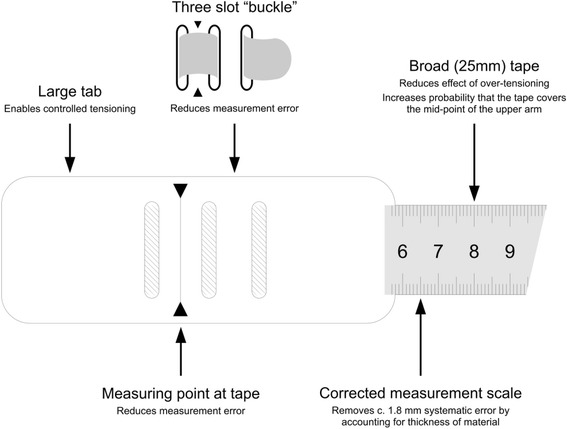
The results of this study indicate that, although the "Click-MUAC" devices performed well, the MUAC insertion tape performed best. The results for sensitivity are higher than found in previous studies. The high sensitivity for both SAM and GAM classification by mothers/caregivers with the MUAC insertion tape could be due to the use of an improved MUAC tape design which has a number of new design features. The one-on-one demonstration provided to mothers/caregivers on the use of the devices may also have helped improve sensitivity. The results of this study provide evidence that mothers/caregivers can perform sensitive and specific classifications of their child's nutritional status using MUAC.
Clinical trials registration number: NCT02833740.
一种改进社区急性营养不良病例检测的新方法是让母亲/照顾者使用上臂中部周长(MUAC)插入式卷尺为孩子筛查急性营养不良。本研究的目的是测试三种简单的MUAC分类装置,以确定它们是否能提高母亲/照顾者检测急性营养不良的敏感性。
一项前瞻性、非随机、部分盲法的临床诊断试验,描述并比较三种“点击式MUAC”装置和一种MUAC插入式卷尺的性能。该研究在肯尼亚伊西奥洛县的21个提供急性营养不良综合管理(IMAM)服务的卫生设施中进行。母亲/照顾者使用“点击式MUAC”装置和MUAC插入式卷尺对其6至59个月大的孩子(=1040名)进行分类。将这些分类结果与“金标准”分类(由研究助理使用MUAC插入式卷尺进行的三次测量的平均值)进行比较。
所有装置中母亲/照顾者分类的敏感性都很高(严重急性营养不良(SAM),定义为MUAC<115毫米,敏感性>93%;全球急性营养不良(GAM),定义为MUAC<125毫米,敏感性>90%)。母亲/照顾者使用MUAC插入式卷尺对SAM和GAM分类的敏感性(SAM敏感性为100%,GAM敏感性为99%)高于使用“点击式MUAC”装置。对于SAM分类,MUAC插入式卷尺的约登指数以及GAM分类的敏感性显著更高(分别为99%和99%)。所有装置的特异性都很高(>96%),“点击式MUAC”装置和MUAC插入式卷尺之间没有显著差异。
本研究结果表明,尽管“点击式MUAC”装置表现良好,但MUAC插入式卷尺表现最佳。敏感性结果高于以往研究。母亲/照顾者使用MUAC插入式卷尺对SAM和GAM分类的高敏感性可能是由于使用了改进的MUAC卷尺设计,该设计有许多新的设计特点。向母亲/照顾者提供的关于装置使用的一对一示范也可能有助于提高敏感性。本研究结果提供了证据,证明母亲/照顾者可以使用MUAC对孩子的营养状况进行敏感且特异的分类。
临床试验注册号:NCT02833740。