Badawy Abdulla A-B
Cardiff School of Health Sciences, Cardiff Metropolitan University, Cardiff, UK.
Int J Tryptophan Res. 2018 Feb 19;11:1178646917753422. doi: 10.1177/1178646917753422. eCollection 2018.
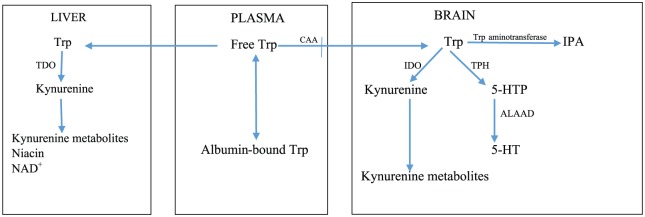
Modulation of tryptophan (Trp) metabolism may underpin the behavioral effects of androgenic-anabolic steroids (AAS) and associated image and performance enhancers. Euphoria, arousal, and decreased anxiety observed with moderate use and exercise may involve enhanced cerebral serotonin synthesis and function by increased release of albumin-bound Trp and estrogen-mediated liver Trp 2,3-dioxygenase (TDO) inhibition and enhancement of serotonin function. Aggression, anxiety, depression, personality disorders, and psychosis, observed on withdrawal of AAS or with use of large doses, can be caused by decreased serotonin synthesis due to TDO induction on withdrawal, excess Trp inhibiting the 2 enzymes of serotonin synthesis, and increased cerebral levels of neuroactive kynurenines. Exercise and excessive protein and branched-chain amino acid intakes may aggravate the effects of large AAS dosage. The hypothesis is testable in humans and experimental animals by measuring parameters of Trp metabolism and disposition and related metabolic processes.
色氨酸(Trp)代谢的调节可能是雄激素同化类固醇(AAS)及相关形象和性能增强剂产生行为效应的基础。适度使用和锻炼时观察到的欣快感、觉醒及焦虑减轻,可能涉及通过增加白蛋白结合型Trp的释放以及雌激素介导的肝脏色氨酸2,3-双加氧酶(TDO)抑制和5-羟色胺功能增强来增强大脑5-羟色胺的合成和功能。在停用AAS或使用大剂量AAS时观察到的攻击行为、焦虑、抑郁、人格障碍和精神病,可能是由于停药时TDO诱导导致5-羟色胺合成减少、过量Trp抑制5-羟色胺合成的两种酶以及大脑中神经活性犬尿氨酸水平升高所致。运动以及过量摄入蛋白质和支链氨基酸可能会加重大剂量AAS的影响。该假设可通过测量Trp代谢和处置参数以及相关代谢过程在人类和实验动物中进行验证。