Atherosclerosis Research Unit, Division of Cardiovascular Medicine, Department of Medicine, Vanderbilt University School of Medicine, Nashville, TN, United States.
Front Immunol. 2018 Feb 13;9:215. doi: 10.3389/fimmu.2018.00215. eCollection 2018.
Rictor is an essential component of mammalian target of rapamycin (mTOR) complex 2 (mTORC2), a conserved serine/threonine kinase that may play a role in cell proliferation, survival and innate or adaptive immune responses. Genetic loss of inactivates mTORC2, which directly activates Akt S phosphorylation and promotes pro-survival cell signaling and proliferation.
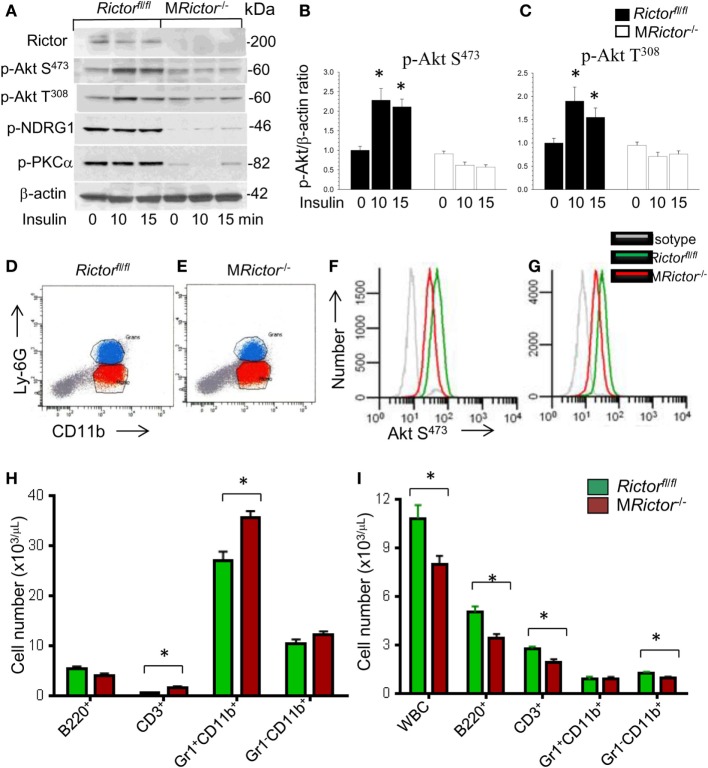
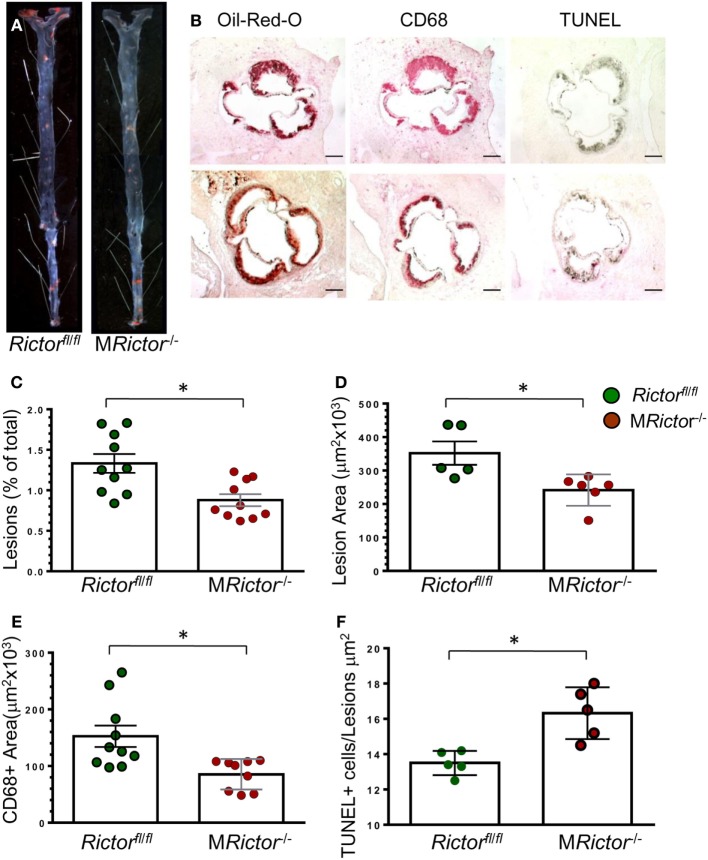
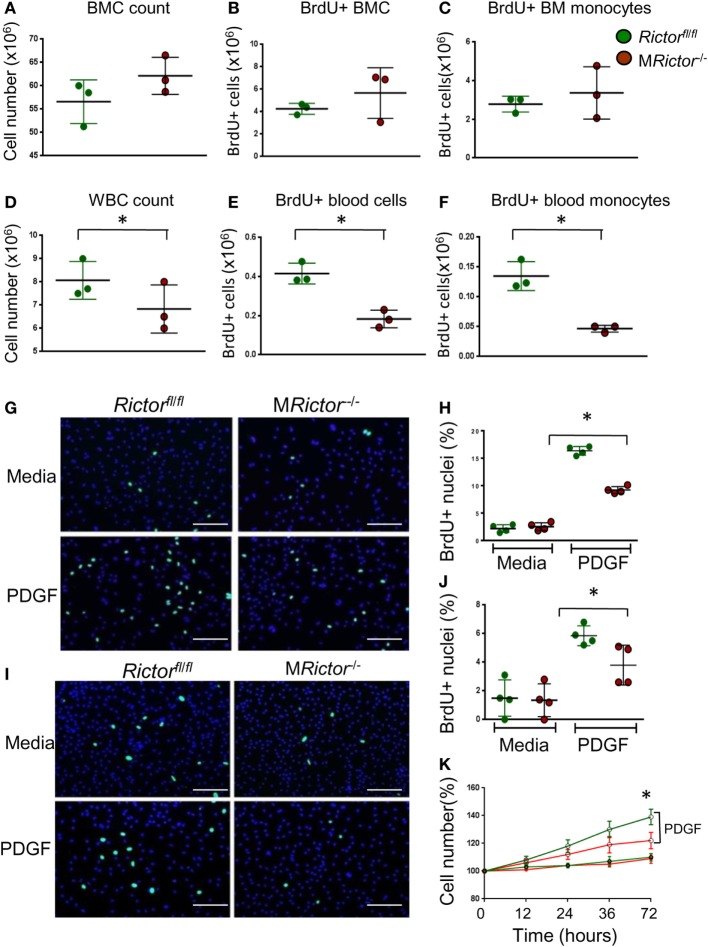
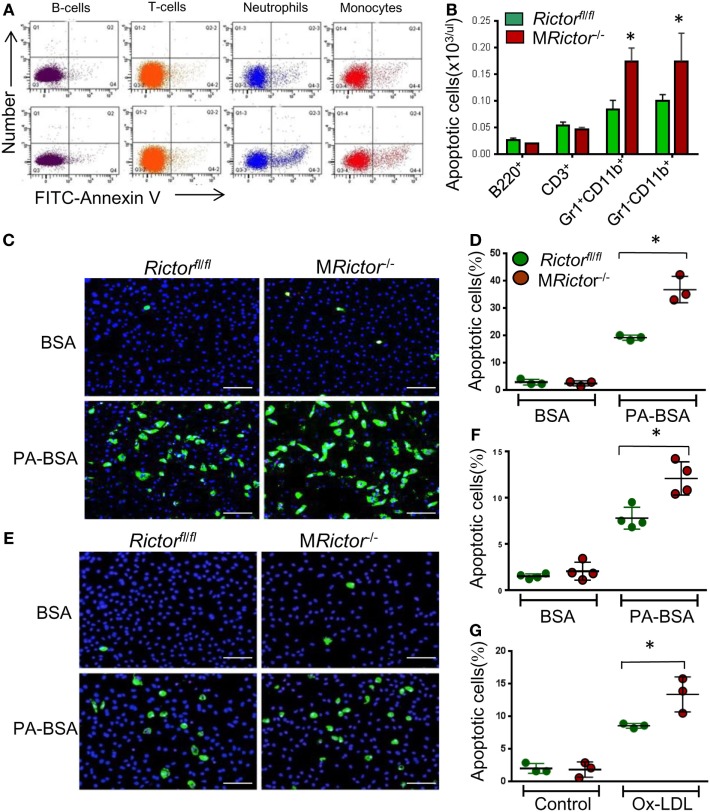
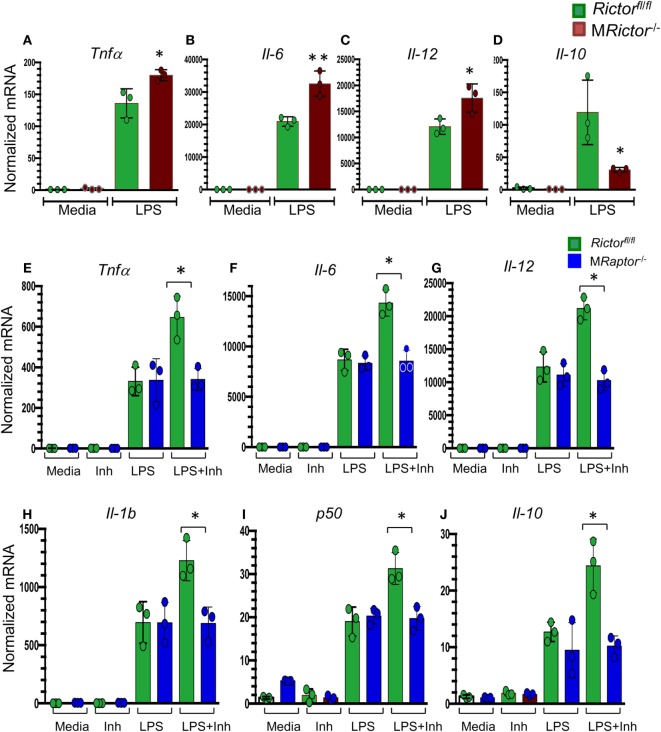
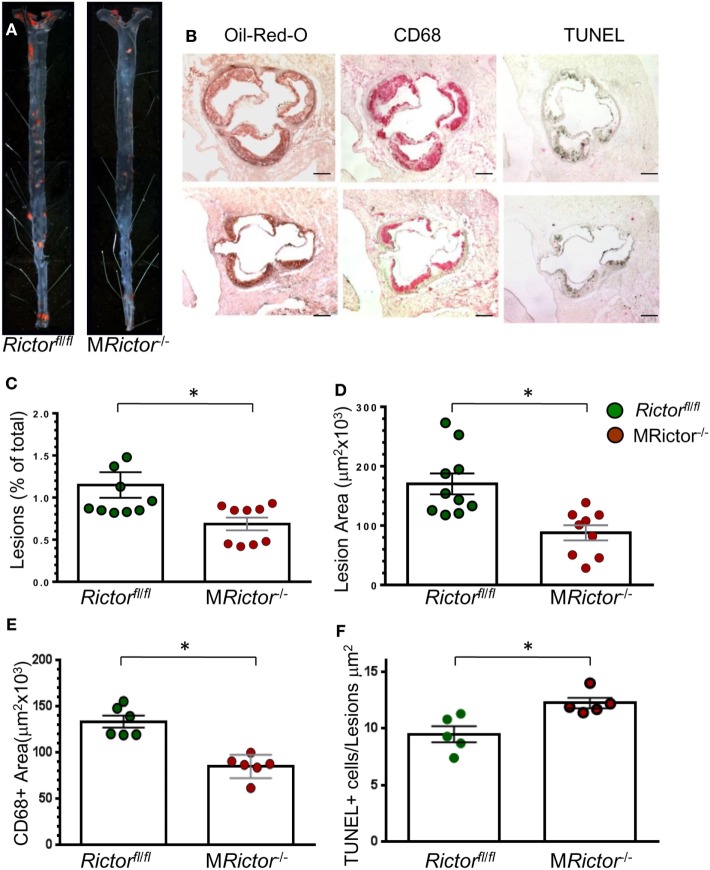
To study the role of mTORC2 signaling in monocytes and macrophages, we generated mice with myeloid lineage-specific deletion (M). These M mice exhibited dramatic reductions of white blood cells, B-cells, T-cells, and monocytes but had similar levels of neutrophils compared to control flox-flox () mice. M bone marrow monocytes and peritoneal macrophages expressed reduced levels of mTORC2 signaling and decreased Akt S phosphorylation, and they displayed significantly less proliferation than control cells. In addition, blood monocytes and peritoneal macrophages isolated from M mice were significantly more sensitive to pro-apoptotic stimuli. In response to LPS, M macrophages exhibited the M1 phenotype with higher levels of pro-inflammatory gene expression and lower levels of gene expression than control cells. Further suppression of LPS-stimulated Akt signaling with a low dose of an Akt inhibitor, increased inflammatory gene expression in macrophages, but genetic inactivation of reversed this rise, indicating that mTORC1 mediates this increase of inflammatory gene expression. Next, to elucidate whether mTORC2 has an impact on atherosclerosis , female and male null mice were reconstituted with bone marrow from M or mice. After 10 weeks of the Western diet, there were no differences between the recipients of the same gender in body weight, blood glucose or plasma lipid levels. However, both female and male M → mice developed smaller atherosclerotic lesions in the distal and proximal aorta. These lesions contained less macrophage area and more apoptosis than lesions of control → mice. Thus, loss of and, consequently, mTORC2 significantly compromised monocyte/macrophage survival, and this markedly diminished early atherosclerosis in mice.
Our results demonstrate that mTORC2 is a key signaling regulator of macrophage survival and its depletion suppresses early atherosclerosis.
Rictor 是哺乳动物雷帕霉素靶蛋白(mTOR)复合物 2(mTORC2)的必需组成部分,mTORC2 是一种保守的丝氨酸/苏氨酸激酶,可能在细胞增殖、存活以及先天或适应性免疫反应中发挥作用。缺失会使 mTORC2 失活,mTORC2 可直接激活 Akt S 磷酸化,促进存活相关的细胞信号转导和增殖。
为了研究 mTORC2 信号在单核细胞和巨噬细胞中的作用,我们生成了骨髓谱系特异性缺失(M)的小鼠。与对照 flox-flox()小鼠相比,这些 M 小鼠的白细胞、B 细胞、T 细胞和单核细胞数量明显减少,但中性粒细胞水平相似。M 骨髓单核细胞和腹腔巨噬细胞表达的 mTORC2 信号和 Akt S 磷酸化水平降低,增殖能力明显低于对照细胞。此外,M 小鼠分离的血液单核细胞和腹腔巨噬细胞对促凋亡刺激更敏感。用 LPS 刺激后,M 巨噬细胞表现出 M1 表型,促炎基因表达水平较高,抗炎基因表达水平较低,而对照细胞则较低。用低剂量 Akt 抑制剂进一步抑制 LPS 刺激的 Akt 信号转导,可增加巨噬细胞中炎症基因的表达,但敲除可逆转这种升高,表明 mTORC1 介导了这种炎症基因表达的升高。接下来,为了阐明 mTORC2 是否对动脉粥样硬化有影响,雌性和雄性缺失小鼠用 M 或缺失小鼠的骨髓进行重建。用西方饮食喂养 10 周后,同性别受体的体重、血糖或血浆脂质水平没有差异。然而,雌性和雄性 M→小鼠的远端和近端主动脉粥样硬化病变较小。这些病变中的巨噬细胞面积较小,凋亡细胞较多,而对照小鼠的病变则较少。因此,缺失和 mTORC2 的缺失显著影响单核细胞/巨噬细胞的存活,从而明显减少了 M 小鼠的早期动脉粥样硬化。
我们的结果表明,mTORC2 是巨噬细胞存活的关键信号调节因子,其缺失可抑制早期动脉粥样硬化。