Chae Young Kwang, Anker Jonathan F, Bais Preeti, Namburi Sandeep, Giles Francis J, Chuang Jeffrey H
Northwestern University Feinberg School of Medicine, Chicago, 60611, IL, USA.
Robert H. Lurie Comprehensive Cancer Center of Northwestern University, Chicago, 60611, IL, USA.
Oncotarget. 2017 Dec 15;9(8):7949-7960. doi: 10.18632/oncotarget.23742. eCollection 2018 Jan 30.
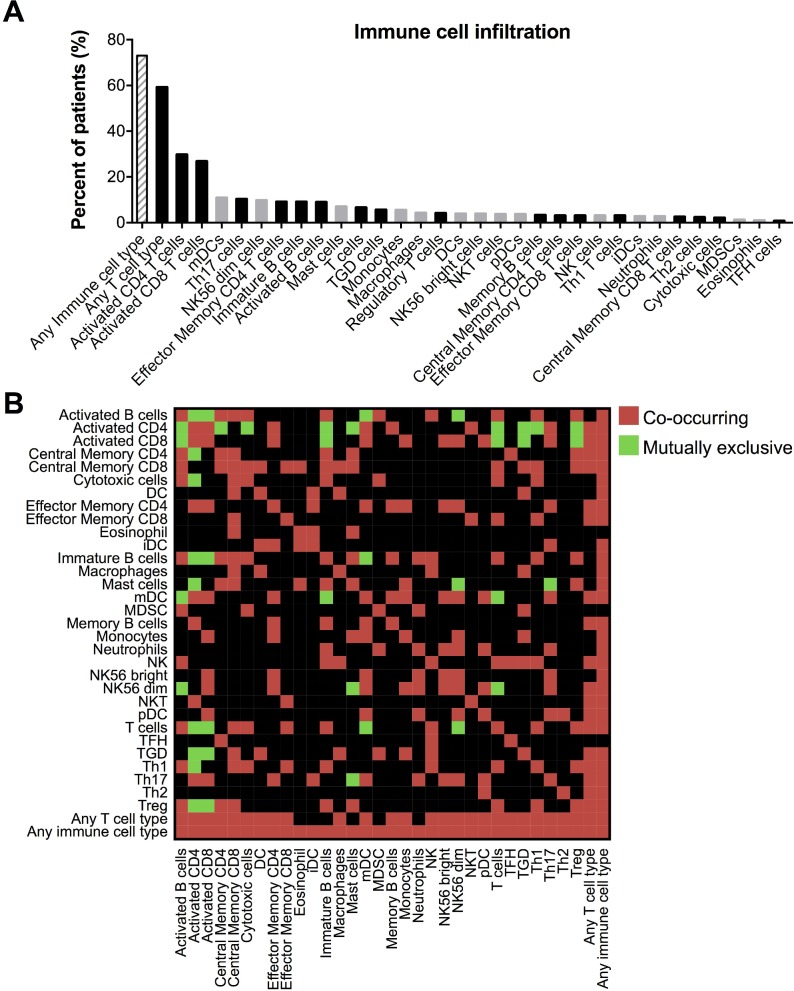
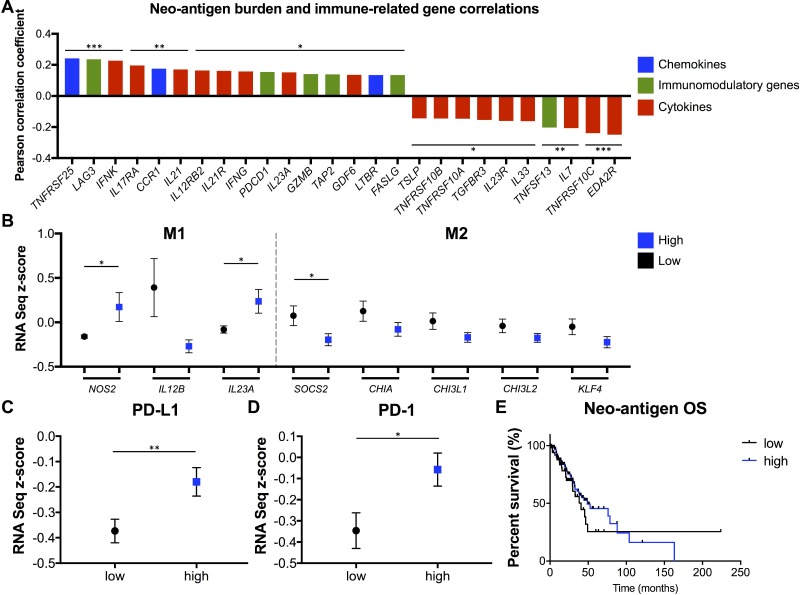
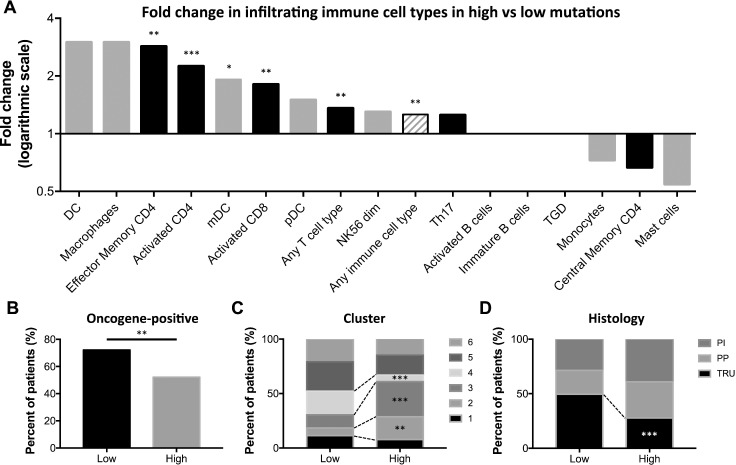
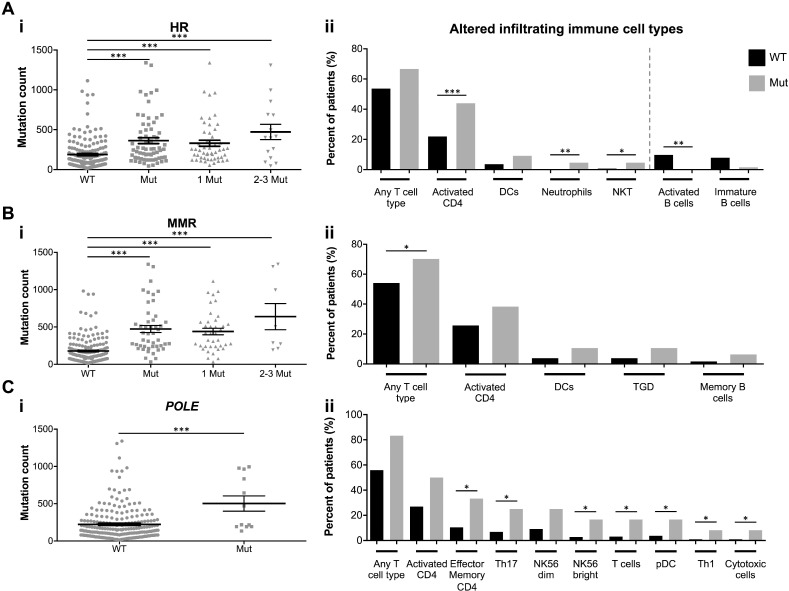
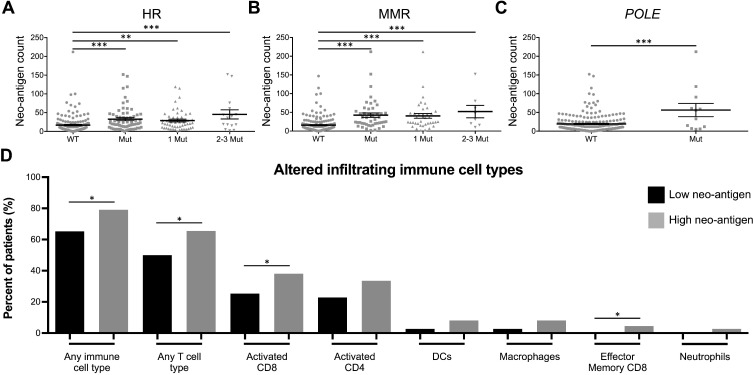
Mutations in DNA repair genes lead to increased genomic instability and mutation frequency. These mutations represent potential biomarkers for cancer immunotherapy efficacy, as high tumor mutational burden has been associated with increased neo-antigens and tumor infiltrating lymphocytes. While mismatch repair mutations have successfully predicted response to anti-PD-1 therapy in colorectal and other cancers, they have not yet been tested for lung cancer, and few have investigated genes from other DNA repair pathways. We utilized TCGA samples to comprehensively immunophenotype lung tumors and analyze the links between DNA repair mutations, neo-antigen and total mutational burden, and tumor immune infiltration. Overall, 73% of lung tumors contained infiltration by at least one T cell subset, with high mutational burden tumors containing significantly increased infiltration by activated CD4 and CD8 T cells. Further, mutations in mismatch repair genes, homologous recombination genes, or POLE accurately predicted increased tumor mutational burden, neo-antigen load, and T cell infiltration. Finally, neo-antigen load correlated with expression of M1-polarized macrophage genes, PD-1, PD-L1, IFNγ, GZMB, and FASLG, among other immune-related genes. Overall, after defining the immune infiltrate in lung tumors, we demonstrate the potential value of utilizing gene mutations from multiple DNA repair pathways as biomarkers for lung cancer immunotherapy.
DNA修复基因的突变会导致基因组不稳定性增加和突变频率升高。这些突变代表了癌症免疫治疗疗效的潜在生物标志物,因为高肿瘤突变负荷与新抗原增加和肿瘤浸润淋巴细胞有关。虽然错配修复突变已成功预测了结直肠癌和其他癌症对抗PD - 1治疗的反应,但尚未在肺癌中进行测试,并且很少有人研究来自其他DNA修复途径的基因。我们利用TCGA样本对肺肿瘤进行全面的免疫表型分析,并分析DNA修复突变、新抗原和总突变负荷以及肿瘤免疫浸润之间的联系。总体而言,73%的肺肿瘤至少有一个T细胞亚群浸润,高突变负荷肿瘤中活化的CD4和CD8 T细胞浸润显著增加。此外,错配修复基因、同源重组基因或POLE中的突变准确预测了肿瘤突变负荷增加、新抗原负荷增加和T细胞浸润增加。最后,新抗原负荷与M1极化巨噬细胞基因、PD - 1、PD - L1、IFNγ、GZMB和FASLG等其他免疫相关基因的表达相关。总体而言,在确定肺肿瘤中的免疫浸润后,我们证明了利用来自多个DNA修复途径的基因突变作为肺癌免疫治疗生物标志物的潜在价值。