Wylde Vikki, Dennis Jane, Gooberman-Hill Rachael, Beswick Andrew David
Musculoskeletal Research Unit, Translational Health Sciences, Bristol Medical School, University of Bristol, Bristol, UK.
National Institute for Health Research Bristol Biomedical Research Centre, University Hospitals Bristol NHS Foundation Trust and University of Bristol, Bristol, UK.
BMJ Open. 2018 Feb 28;8(2):e020368. doi: 10.1136/bmjopen-2017-020368.
Approximately 20% of patients experience chronic pain after total knee replacement (TKR). The aim of this systematic review was to evaluate the effectiveness of postdischarge interventions commenced in the first 3 months after surgery in reducing the severity of chronic pain after TKR.
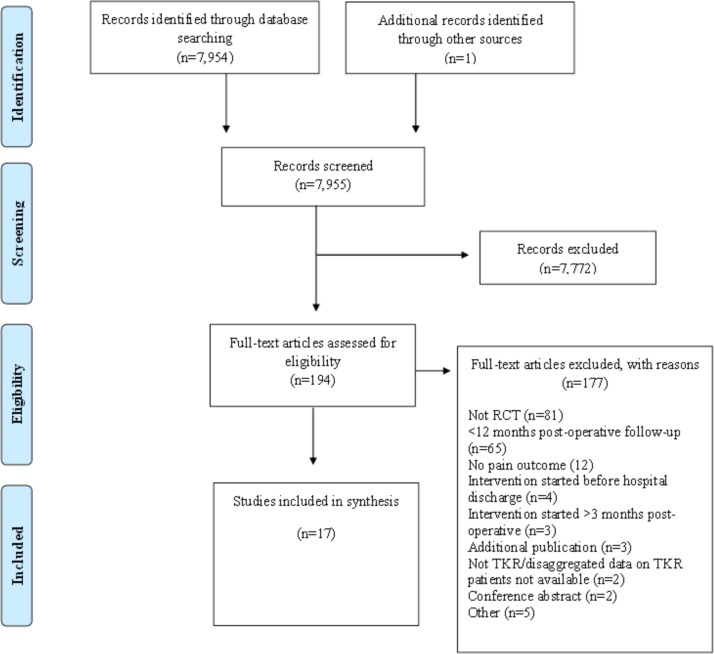
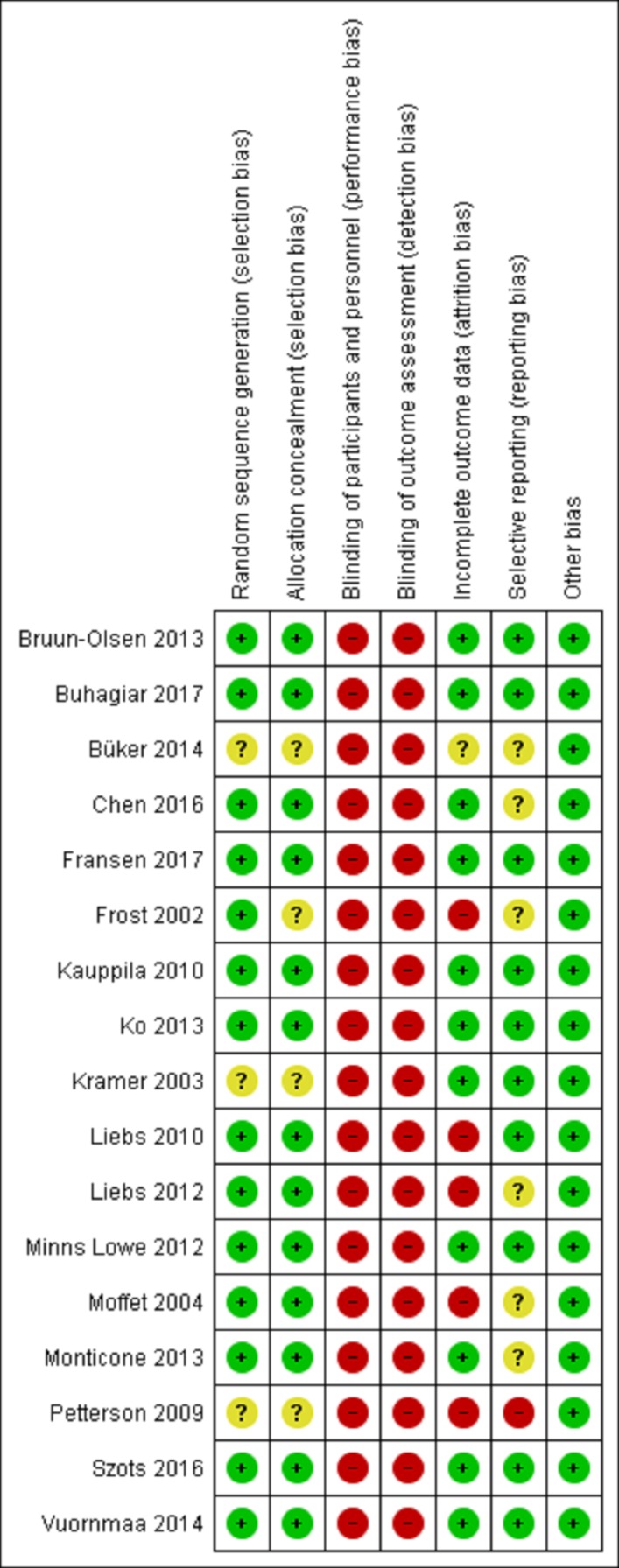
The protocol for this systematic review was registered on PROSPERO (registration number: CRD42017041382). MEDLINE, Embase, CINAHL, PsycINFO and The Cochrane Library were searched from inception to November 2016. Randomised controlled trials of postdischarge intervention which commenced in the first 3 months after TKR surgery were included. The primary outcome of the review was self-reported pain severity at 12 months or longer after TKR. Risk of bias was assessed using the Cochrane risk-of-bias tool.
Seventeen trials with data from 2485 randomised participants were included. The majority of trials evaluated physiotherapy interventions (n=13); other interventions included nurse-led interventions (n=2), neuromuscular electrical stimulation (n=1) and a multidisciplinary intervention (n=1). Opportunities for meta-analysis were limited by heterogeneity. No study found a difference in long-term pain severity between trial arms, with the exception of one trial which found home-based functional exercises aimed at managing kinesiophobia resulted in lower pain severity scores at 12 months postoperatively compared with advice to stay active.
This systematic review and narrative synthesis found no evidence that one type of physiotherapy intervention is more effective than another at reducing the severity of chronic pain after TKR. Further research is needed to evaluate non-physiotherapy interventions, including the provision of care as part of a stratified and multidisciplinary care package.
CRD42017041382.
约20%的患者在全膝关节置换术(TKR)后会经历慢性疼痛。本系统评价的目的是评估术后前3个月开始的出院后干预措施在减轻TKR后慢性疼痛严重程度方面的有效性。
本系统评价的方案已在PROSPERO上注册(注册号:CRD42017041382)。检索了MEDLINE、Embase、CINAHL、PsycINFO和考克兰图书馆,检索时间从建库至2016年11月。纳入了TKR手术后前3个月开始的出院后干预的随机对照试验。该评价的主要结局是TKR术后12个月或更长时间的自我报告疼痛严重程度。使用考克兰偏倚风险工具评估偏倚风险。
纳入了17项试验,共有2485名随机参与者的数据。大多数试验评估了物理治疗干预(n = 13);其他干预包括护士主导的干预(n = 2)、神经肌肉电刺激(n = 1)和多学科干预(n = 1)。荟萃分析的机会因异质性而受限。除一项试验外,没有研究发现试验组之间长期疼痛严重程度存在差异,该试验发现,与建议保持活动相比,旨在管理运动恐惧症的家庭功能锻炼在术后12个月时疼痛严重程度评分更低。
本系统评价和叙述性综合分析未发现证据表明一种物理治疗干预在减轻TKR后慢性疼痛严重程度方面比另一种更有效。需要进一步研究来评估非物理治疗干预措施,包括作为分层多学科护理包的一部分提供护理。
PROSPERO注册号:CRD42017041382。