Caubel Julien J, Cados Troy E, Kirchstetter Thomas W
Department of Mechanical Engineering, University of California, Berkeley, CA 94720, USA.
Energy Technologies Area, Lawrence Berkeley National Laboratory, Berkeley, CA 94720, USA.
Sensors (Basel). 2018 Mar 1;18(3):738. doi: 10.3390/s18030738.
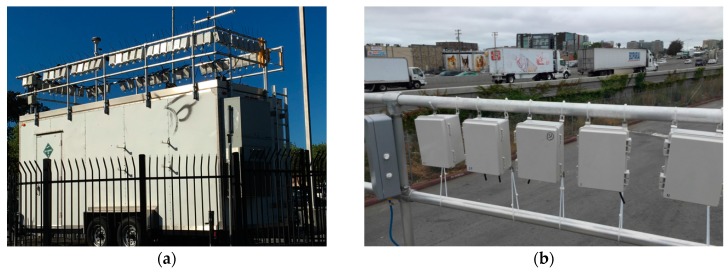
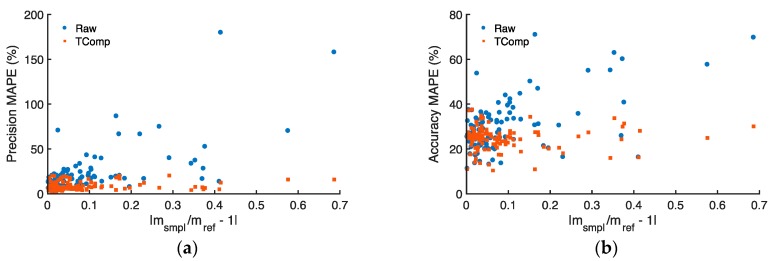
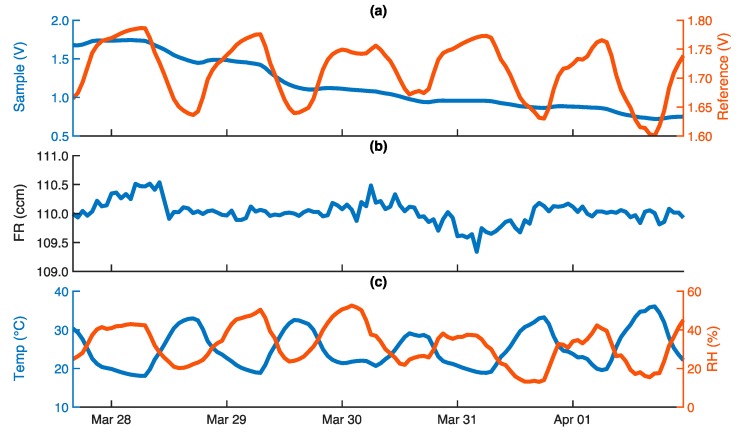
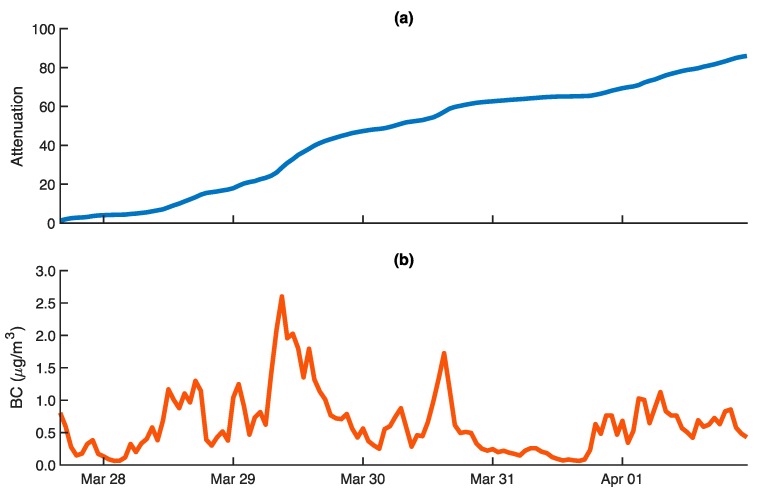
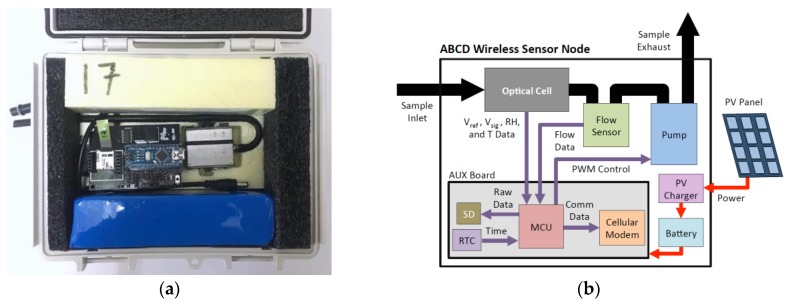
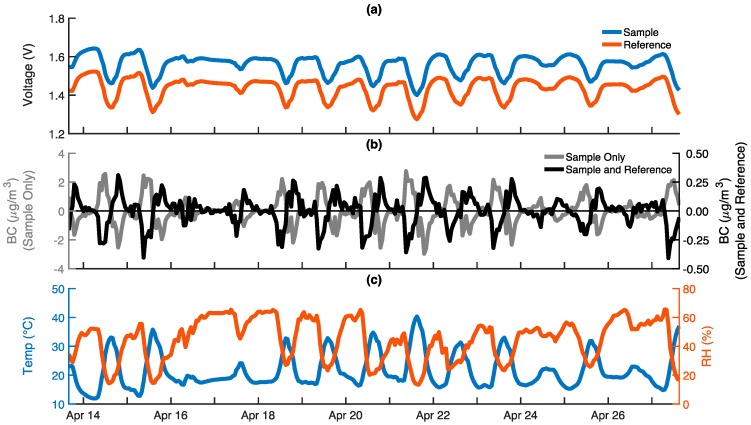
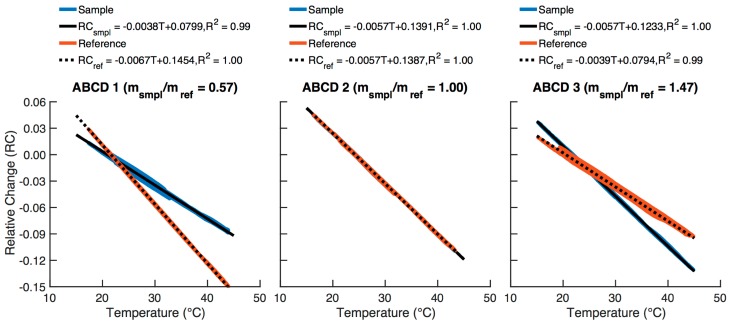
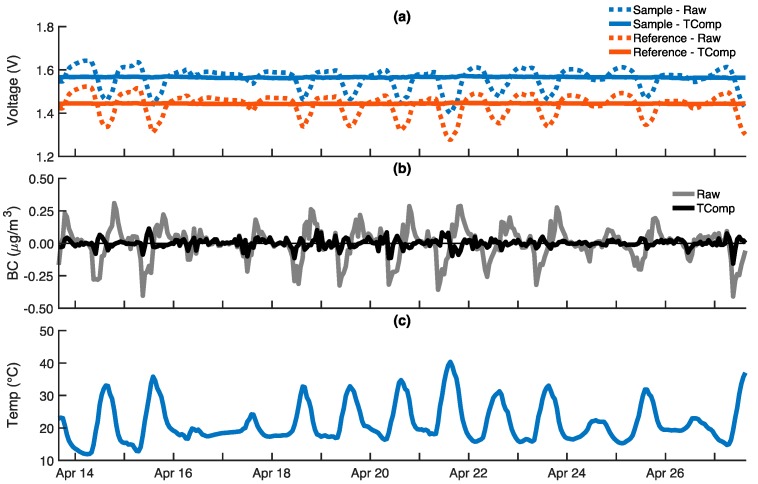
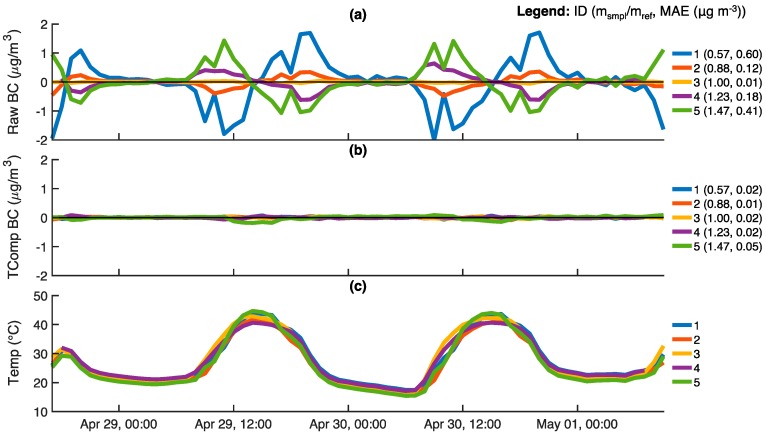
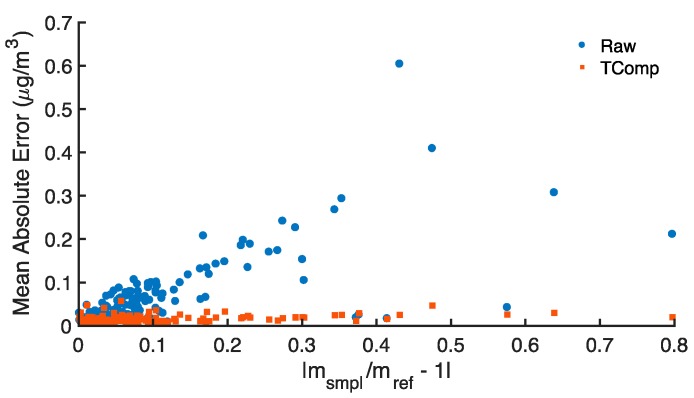
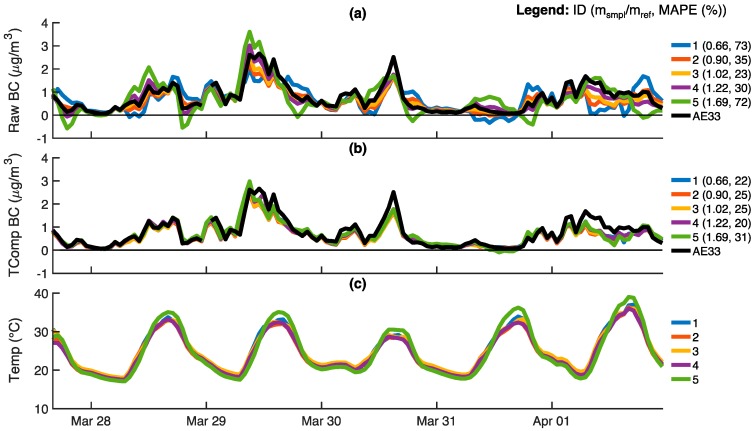
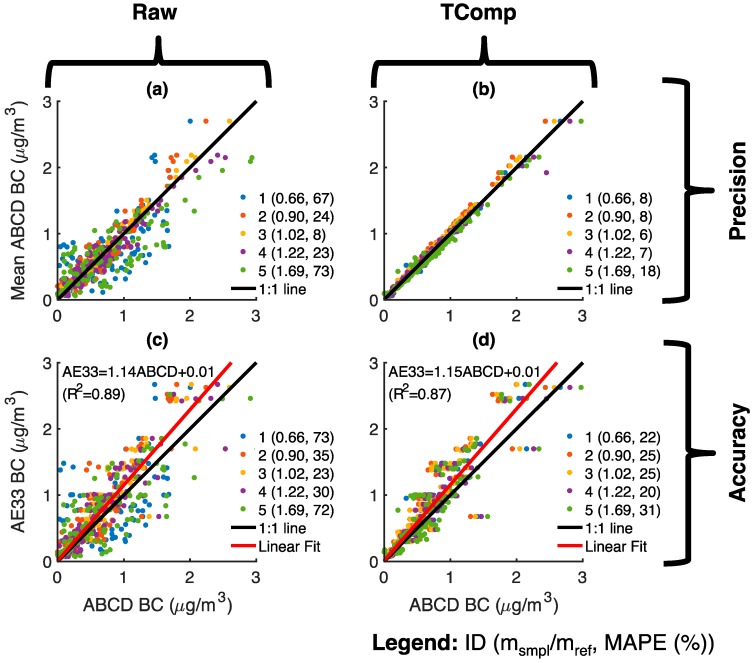
Low-cost air pollution sensors are emerging and increasingly being deployed in densely distributed wireless networks that provide more spatial resolution than is typical in traditional monitoring of ambient air quality. However, a low-cost option to measure black carbon (BC)-a major component of particulate matter pollution associated with adverse human health risks-is missing. This paper presents a new BC sensor designed to fill this gap, the Aerosol Black Carbon Detector (ABCD), which incorporates a compact weatherproof enclosure, solar-powered rechargeable battery, and cellular communication to enable long-term, remote operation. This paper also demonstrates a data processing methodology that reduces the ABCD's sensitivity to ambient temperature fluctuations, and therefore improves measurement performance in unconditioned operating environments (e.g., outdoors). A fleet of over 100 ABCDs was operated outdoors in collocation with a commercial BC instrument (Magee Scientific, Model AE33) housed inside a regulatory air quality monitoring station. The measurement performance of the 105 ABCDs is comparable to the AE33. The fleet-average precision and accuracy, expressed in terms of mean absolute percentage error, are 9.2 ± 0.8% (relative to the fleet average data) and 24.6 ± 0.9% (relative to the AE33 data), respectively (fleet-average ± 90% confidence interval).
低成本空气污染传感器正在兴起,并越来越多地部署在密集分布的无线网络中,这些网络提供了比传统环境空气质量监测更高的空间分辨率。然而,目前缺少一种低成本的测量黑碳(BC)的方法,黑碳是与人类健康风险相关的颗粒物污染的主要成分。本文介绍了一种旨在填补这一空白的新型黑碳传感器——气溶胶黑碳探测器(ABCD),它集成了紧凑的防水外壳、太阳能充电电池和蜂窝通信,以实现长期远程操作。本文还展示了一种数据处理方法,该方法降低了ABCD对环境温度波动的敏感性,从而提高了在非受控操作环境(如户外)中的测量性能。超过100个ABCD组成的监测组在户外运行,与放置在空气质量监测站室内的商用黑碳仪器(Magee Scientific,型号AE33)搭配使用。105个ABCD的测量性能与AE33相当。以平均绝对百分比误差表示的监测组平均精度和准确度分别为9.2±0.8%(相对于监测组平均数据)和24.6±0.9%(相对于AE33数据)(监测组平均±90%置信区间)。