Department of Internal Medicine, São Paulo State University, Botucatu, São Paulo, Brazil.
Mitochondria and Metabolism Center, Department of Anesthesiology & Pain Medicine, University of Washington, Seattle, Washington, United States of America.
PLoS One. 2018 Mar 1;13(3):e0193553. doi: 10.1371/journal.pone.0193553. eCollection 2018.
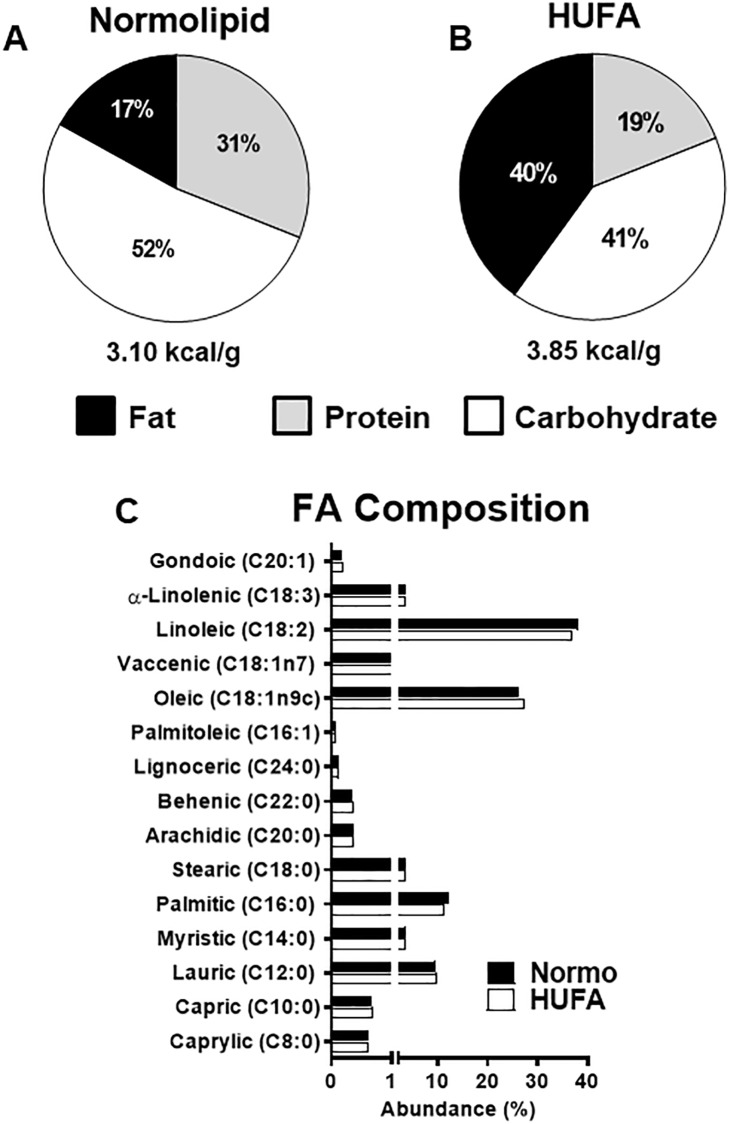
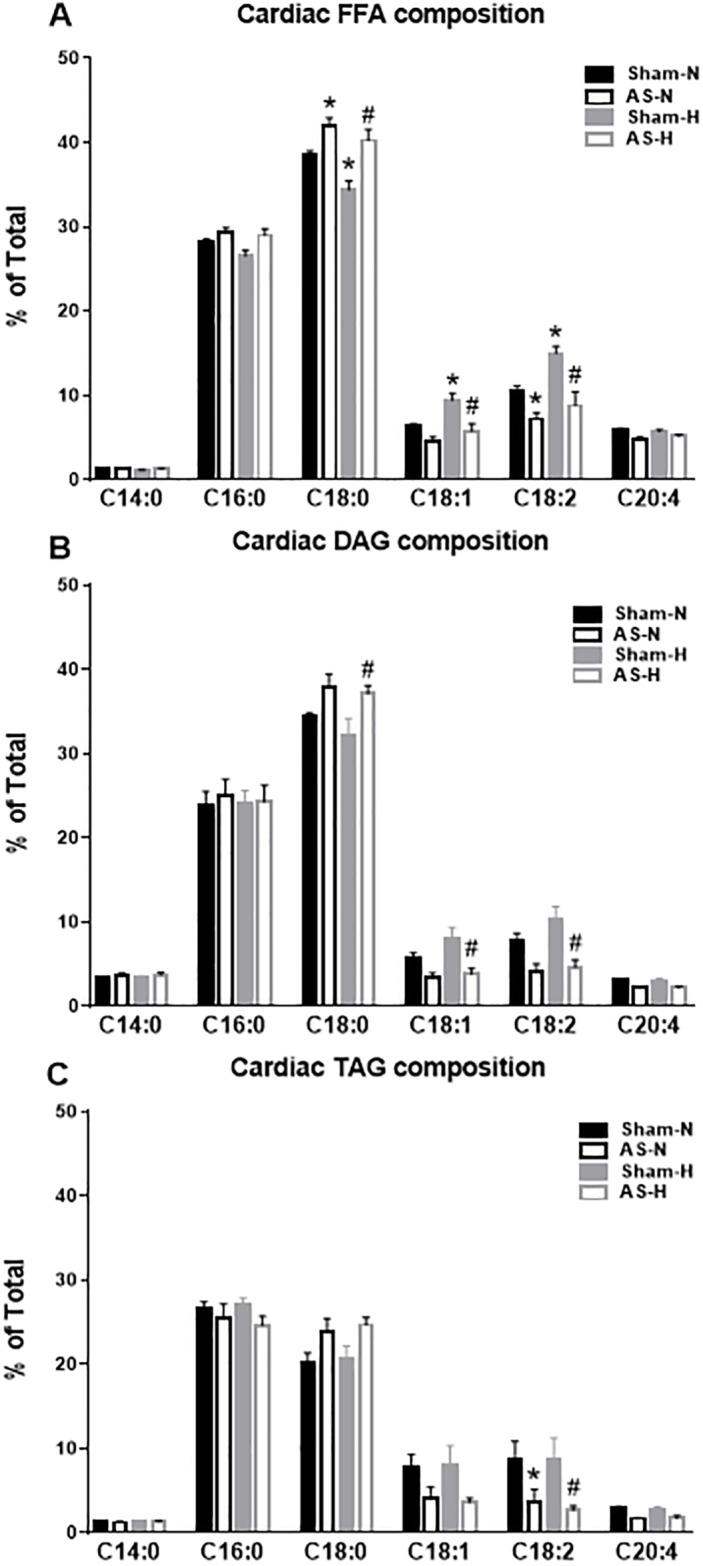
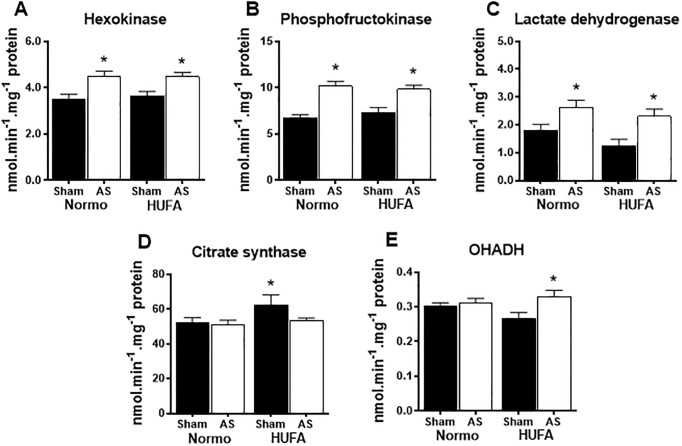
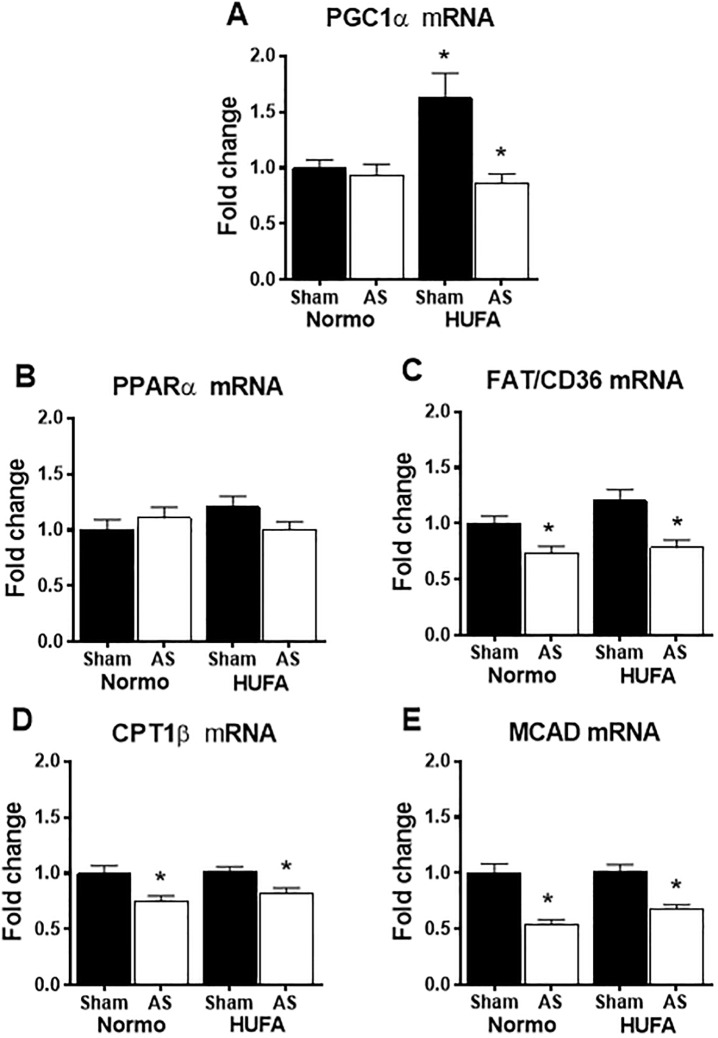
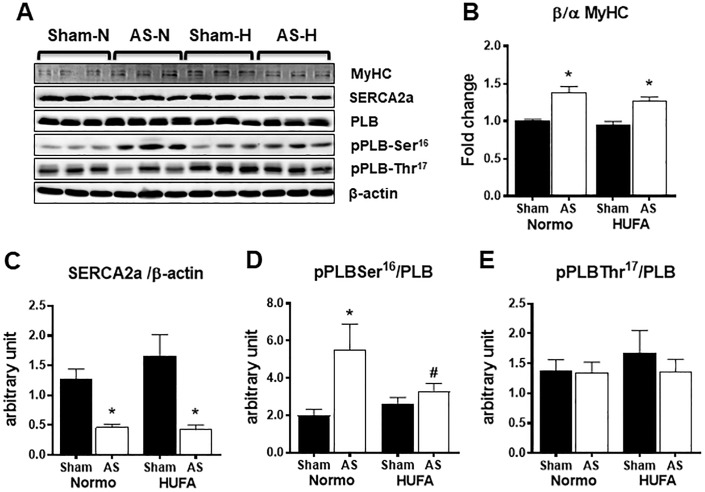
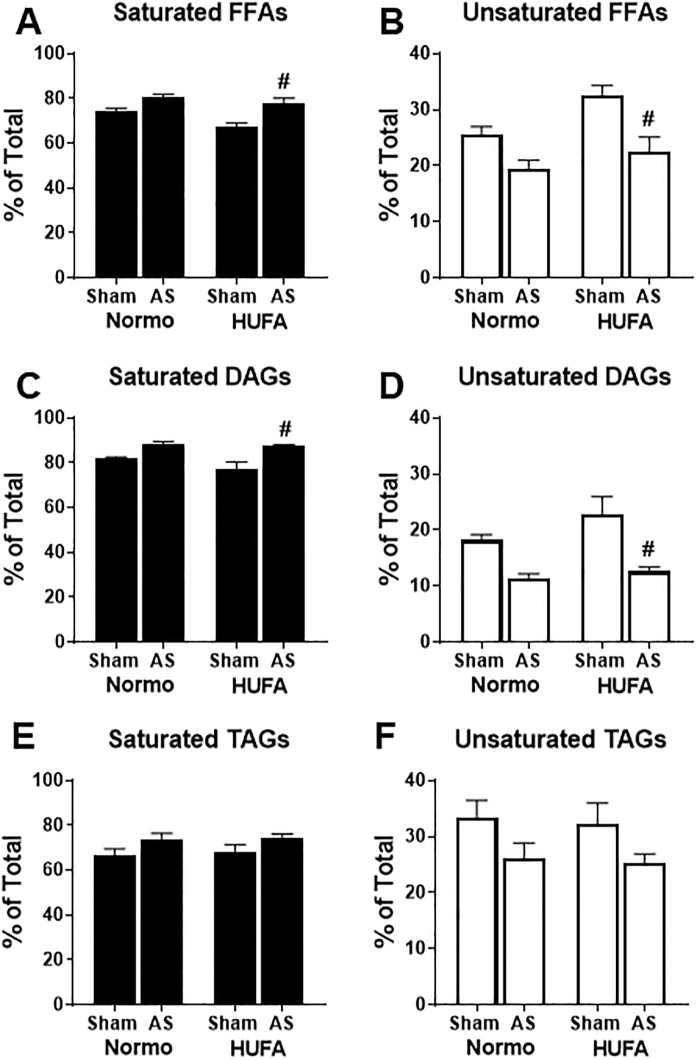
Pathological cardiac hypertrophy leads to derangements in lipid metabolism that may contribute to the development of cardiac dysfunction. Since previous studies, using high saturated fat diets, have yielded inconclusive results, we investigated whether provision of a high-unsaturated fatty acid (HUFA) diet was sufficient to restore impaired lipid metabolism and normalize diastolic dysfunction in the pathologically hypertrophied heart. Male, Wistar rats were subjected to supra-valvar aortic stenosis (SVAS) or sham surgery. After 6 weeks, diastolic dysfunction and pathological hypertrophy was confirmed and both sham and SVAS rats were treated with either normolipidic or HUFA diet. At 18 weeks post-surgery, the HUFA diet failed to normalize decreased E/A ratios or attenuate measures of cardiac hypertrophy in SVAS animals. Enzymatic activity assays and gene expression analysis showed that both normolipidic and HUFA-fed hypertrophied hearts had similar increases in glycolytic enzyme activity and down-regulation of fatty acid oxidation genes. Mass spectrometry analysis revealed depletion of unsaturated fatty acids, primarily linoleate and oleate, within the endogenous lipid pools of normolipidic SVAS hearts. The HUFA diet did not restore linoleate or oleate in the cardiac lipid pools, but did maintain body weight and adipose mass in SVAS animals. Overall, these results suggest that, in addition to decreased fatty acid oxidation, aberrant unsaturated fatty acid metabolism may be a maladaptive signature of the pathologically hypertrophied heart. The HUFA diet is insufficient to reverse metabolic remodeling, diastolic dysfunction, or pathologically hypertrophy, possibly do to preferentially partitioning of unsaturated fatty acids to adipose tissue.
病理性心肌肥厚导致脂质代谢紊乱,可能导致心脏功能障碍的发展。由于之前使用高饱和脂肪饮食的研究得出的结果不一致,我们研究了提供高不饱和脂肪酸(HUFA)饮食是否足以恢复病理性肥厚心脏中受损的脂质代谢并使舒张功能正常化。雄性 Wistar 大鼠接受升主动脉瓣上狭窄(SVAS)或假手术。6 周后,确认舒张功能障碍和病理性肥厚,并对假手术和 SVAS 大鼠分别用低脂或 HUFA 饮食治疗。手术后 18 周,HUFA 饮食未能使 SVAS 动物的降低的 E/A 比值正常化或减轻心脏肥厚的指标。酶活性测定和基因表达分析表明,低脂和 HUFA 喂养的肥厚心脏的糖酵解酶活性均增加,脂肪酸氧化基因下调。质谱分析显示,低脂 SVAS 心脏内源性脂质池中的不饱和脂肪酸,主要是亚油酸和油酸,耗竭。HUFA 饮食并未使心脏脂质池中的亚油酸或油酸恢复,但确实维持了 SVAS 动物的体重和脂肪量。总的来说,这些结果表明,除了脂肪酸氧化减少外,异常的不饱和脂肪酸代谢可能是病理性肥厚心脏的一种适应不良特征。HUFA 饮食不足以逆转代谢重构、舒张功能障碍或病理性肥厚,可能是由于不饱和脂肪酸优先分配到脂肪组织。