Quero Giuseppe, Zito Gianluigi, Managò Stefano, Galeotti Francesco, Pisco Marco, De Luca Anna Chiara, Cusano Andrea
Optoelectronic Division-Engineering Department, University of Sannio, 82100 Benevento, Italy.
Institute of Protein Biochemistry, National Research Council, 80131 Napoli, Italy.
Sensors (Basel). 2018 Feb 25;18(3):680. doi: 10.3390/s18030680.
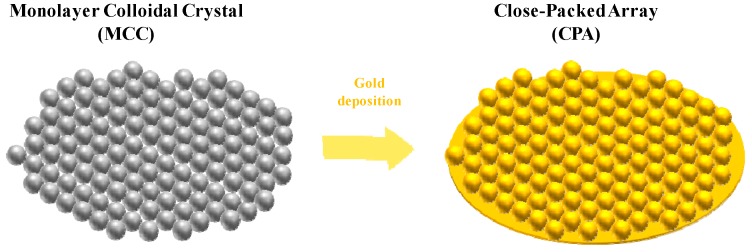
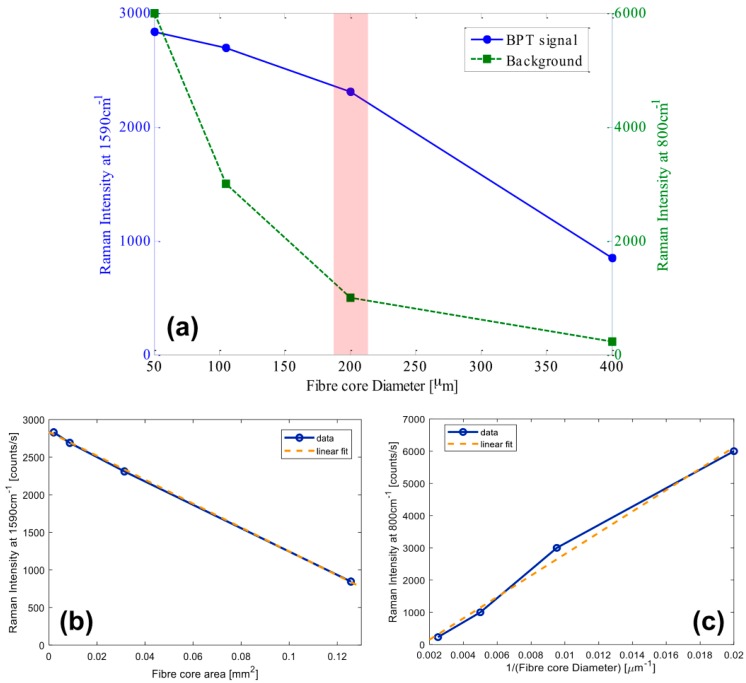
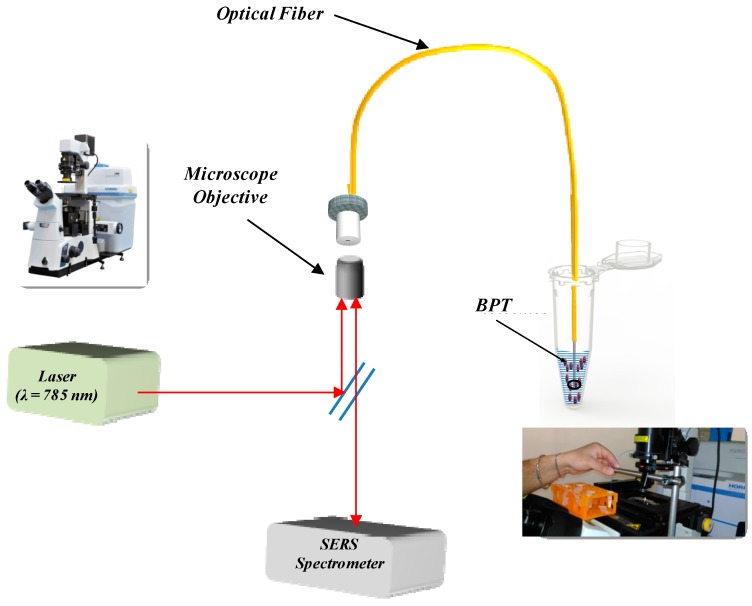
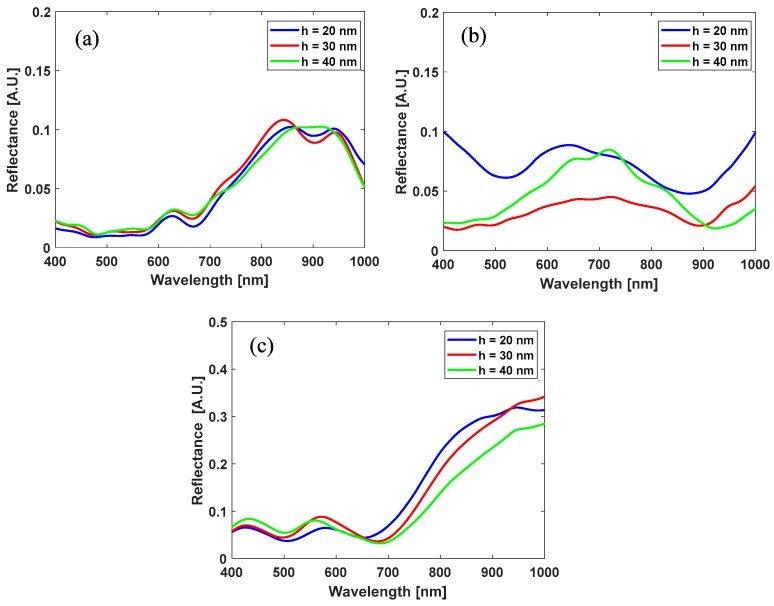
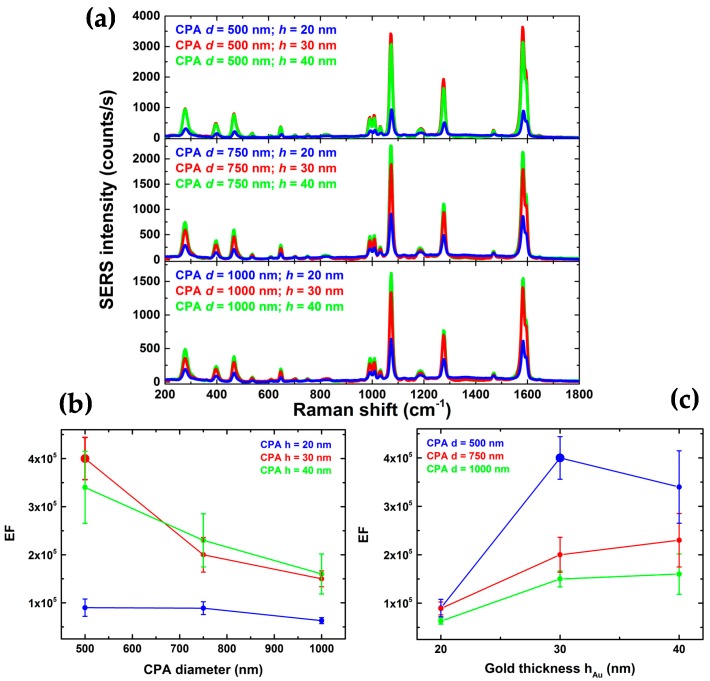
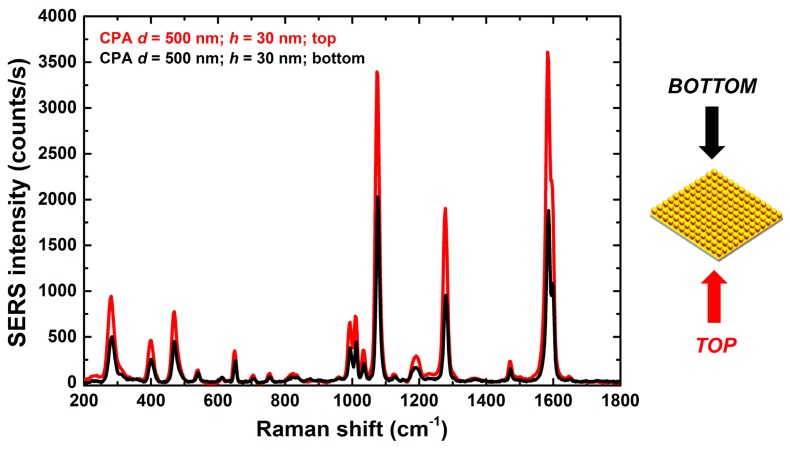
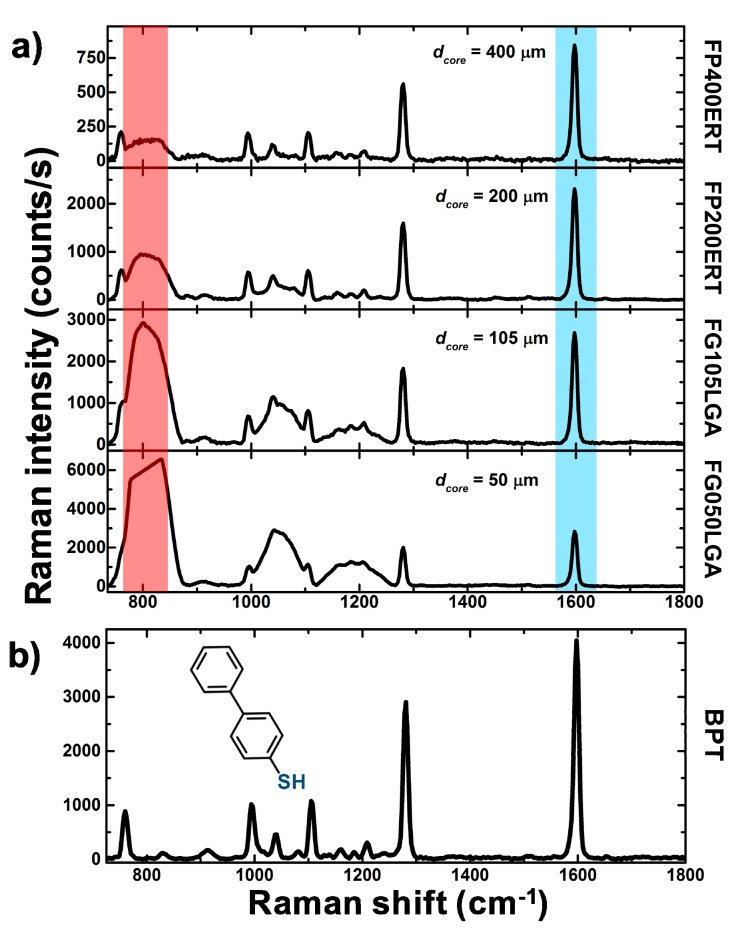
In this paper we report on the engineering of repeatable surface enhanced Raman scattering (SERS) optical fiber sensor devices (optrodes), as realized through nanosphere lithography. The Lab-on-Fiber SERS optrode consists of polystyrene nanospheres in a close-packed arrays configuration covered by a thin film of gold on the optical fiber tip. The SERS surfaces were fabricated by using a nanosphere lithography approach that is already demonstrated as able to produce highly repeatable patterns on the fiber tip. In order to engineer and optimize the SERS probes, we first evaluated and compared the SERS performances in terms of Enhancement Factor (EF) pertaining to different patterns with different nanosphere diameters and gold thicknesses. To this aim, the EF of SERS surfaces with a pitch of 500, 750 and 1000 nm, and gold films of 20, 30 and 40 nm have been retrieved, adopting the SERS signal of a monolayer of biphenyl-4-thiol (BPT) as a reliable benchmark. The analysis allowed us to identify of the most promising SERS platform: for the samples with nanospheres diameter of 500 nm and gold thickness of 30 nm, we measured values of EF of 4 × 10⁵, which is comparable with state-of-the-art SERS EF achievable with highly performing colloidal gold nanoparticles. The reproducibility of the SERS enhancement was thoroughly evaluated. In particular, the SERS intensity revealed intra-sample (i.e., between different spatial regions of a selected substrate) and inter-sample (i.e., between regions of different substrates) repeatability, with a relative standard deviation lower than 9 and 15%, respectively. Finally, in order to determine the most suitable optical fiber probe, in terms of excitation/collection efficiency and Raman background, we selected several commercially available optical fibers and tested them with a BPT solution used as benchmark. A fiber probe with a pure silica core of 200 µm diameter and high numerical aperture (i.e., 0.5) was found to be the most promising fiber platform, providing the best trade-off between high excitation/collection efficiency and low background. This work, thus, poses the basis for realizing reproducible and engineered Lab-on-Fiber SERS optrodes for in-situ trace detection directed toward highly advanced in vivo sensing.
在本文中,我们报道了通过纳米球光刻技术实现的可重复表面增强拉曼散射(SERS)光纤传感装置(光极)的工程设计。光纤上实验室SERS光极由紧密排列的聚苯乙烯纳米球阵列组成,光纤尖端覆盖有一层金薄膜。SERS表面是通过纳米球光刻方法制造的,该方法已被证明能够在光纤尖端产生高度可重复的图案。为了设计和优化SERS探针,我们首先根据与不同纳米球直径和金厚度的不同图案相关的增强因子(EF)评估和比较了SERS性能。为此,采用联苯-4-硫醇(BPT)单层的SERS信号作为可靠基准,获取了间距为500、750和1000 nm以及金膜厚度为20、30和40 nm的SERS表面的EF。分析使我们能够确定最有前途的SERS平台:对于纳米球直径为500 nm且金厚度为30 nm的样品,我们测量的EF值为4×10⁵,这与使用高性能胶体金纳米颗粒可实现的现有技术SERS EF相当。对SERS增强的可重复性进行了全面评估。特别是,SERS强度显示出样品内(即所选基底的不同空间区域之间)和样品间(即不同基底的区域之间)的重复性,相对标准偏差分别低于9%和15%。最后,为了确定在激发/收集效率和拉曼背景方面最合适的光纤探针,我们选择了几种市售光纤,并用用作基准的BPT溶液对它们进行了测试。发现一种直径为200 µm的纯二氧化硅芯且数值孔径高(即0.5)的光纤探针是最有前途的光纤平台,在高激发/收集效率和低背景之间提供最佳平衡。因此,这项工作为实现用于原位痕量检测的可重复且经过工程设计 的光纤上实验室SERS光极奠定了基础,旨在实现高度先进的体内传感。