Laboratory for Neurodegenerative Disease Research, Ann Romney Center for Neurologic Diseases, Brigham & Women's Hospital and Harvard Medical School, Boston, MA 02115, USA.
Laboratory of Neurosciences, National Institute on Aging, NIH, Baltimore, MD 21224, USA.
Int J Mol Sci. 2018 Feb 27;19(3):663. doi: 10.3390/ijms19030663.
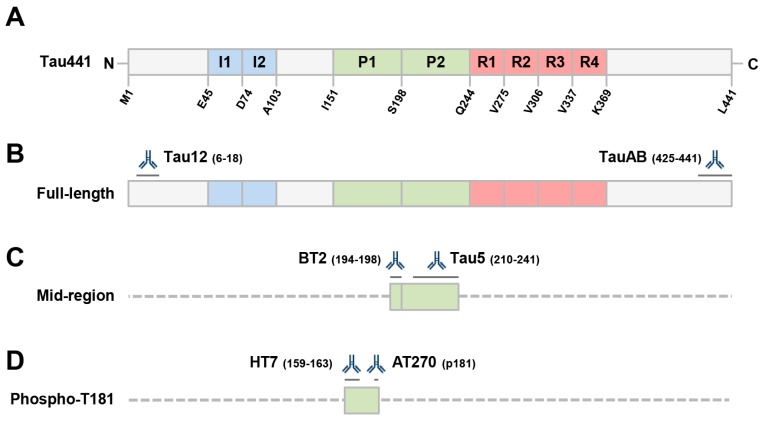
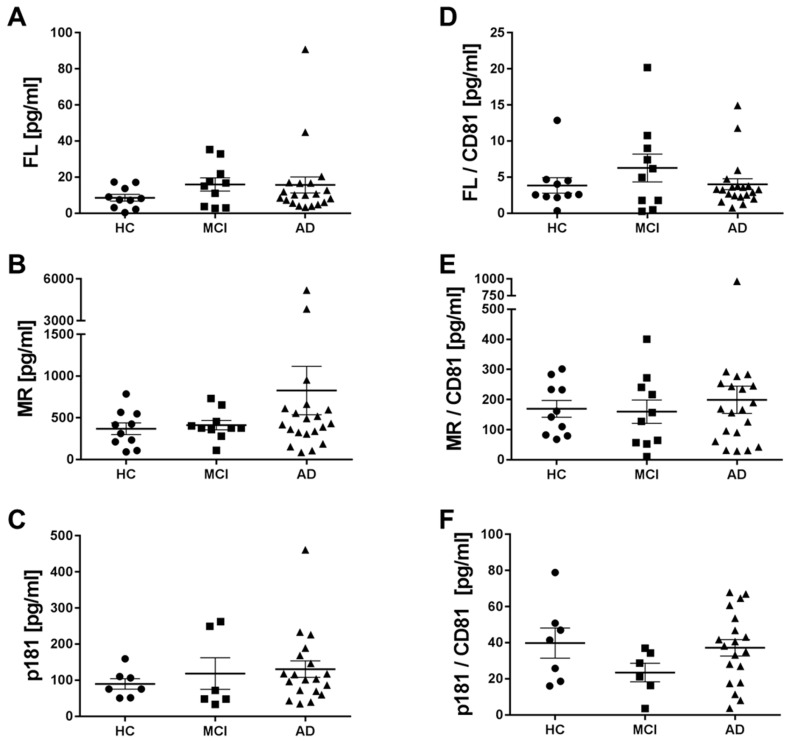
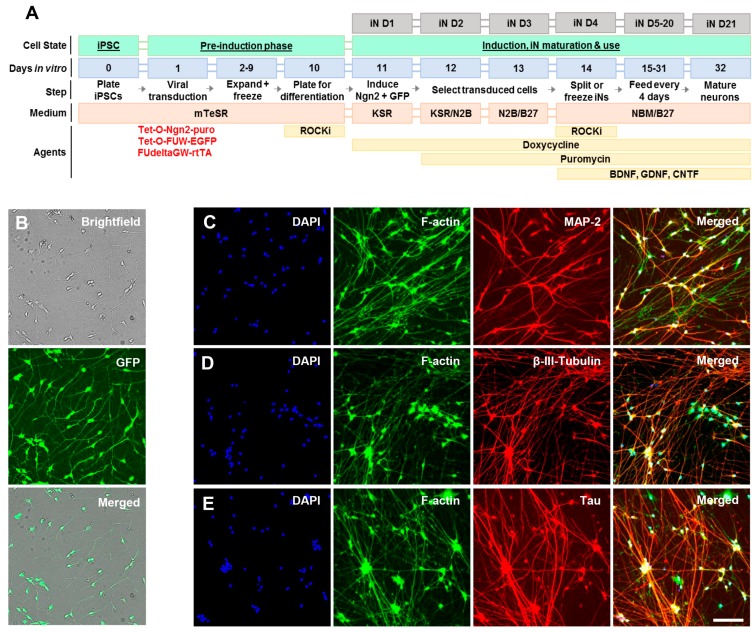
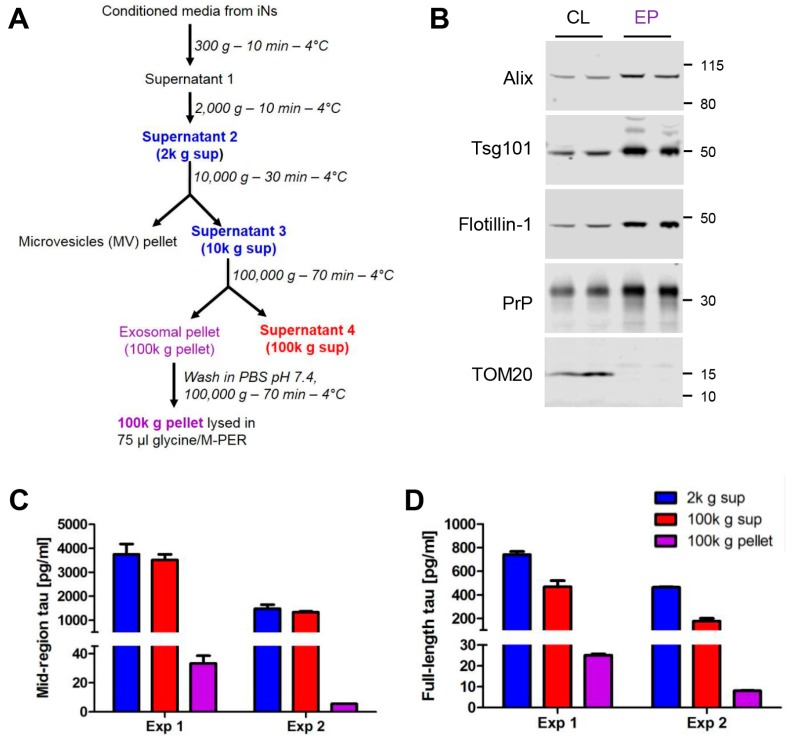
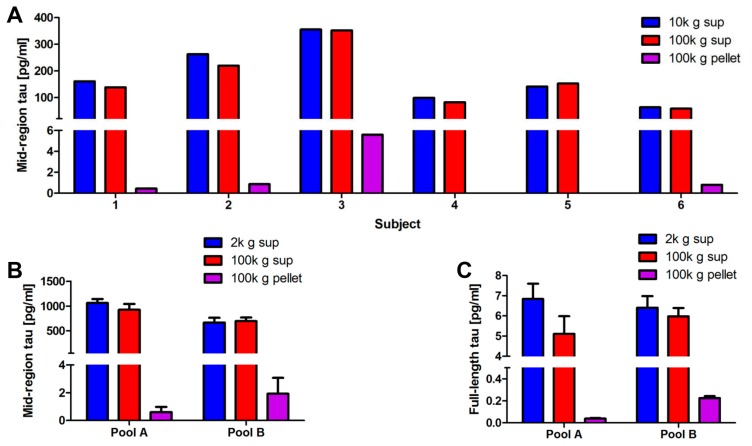
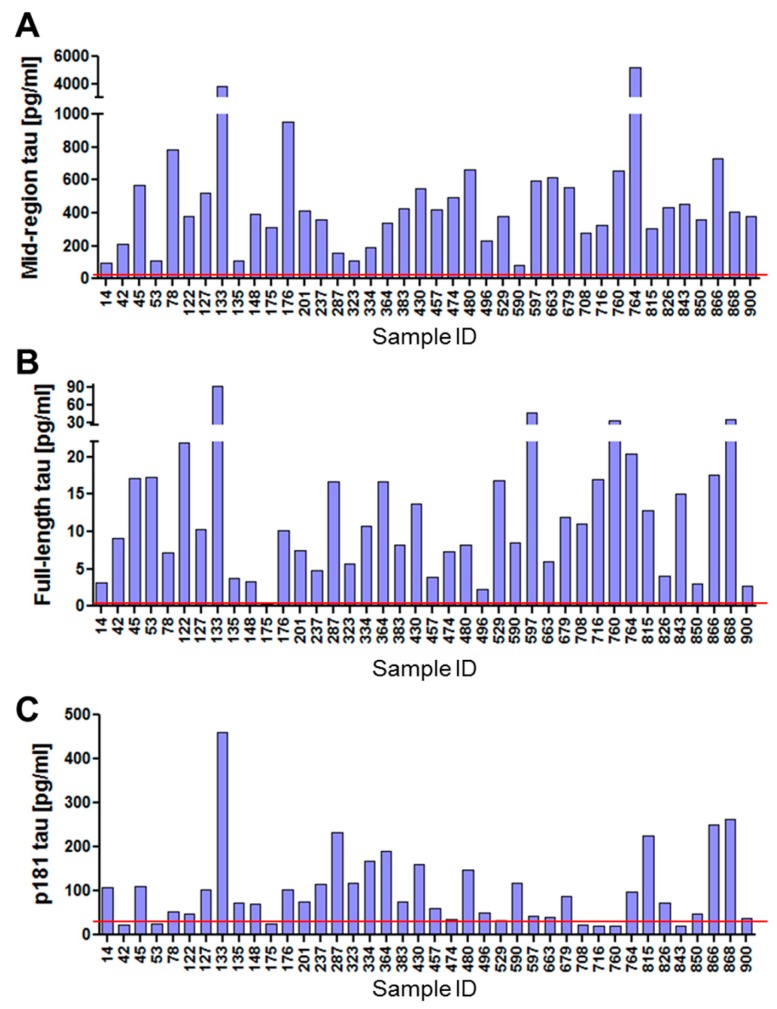
Progressive cerebral accumulation of tau aggregates is a defining feature of Alzheimer's disease (AD). A popular theory that seeks to explain the apparent spread of neurofibrillary tangle pathology proposes that aggregated tau is passed from neuron to neuron. Such a templated seeding process requires that the transferred tau contains the microtubule binding repeat domains that are necessary for aggregation. While it is not clear how a protein such as tau can move from cell to cell, previous reports have suggested that this may involve extracellular vesicles (EVs). Thus, measurement of tau in EVs may both provide insights on the molecular pathology of AD and facilitate biomarker development. Here, we report the use of sensitive immunoassays specific for full-length (FL) tau and mid-region tau, which we applied to analyze EVs from human induced pluripotent stem cell (iPSC)-derived neuron (iN) conditioned media, cerebrospinal fluid (CSF), and plasma. In each case, most tau was free-floating with a small component inside EVs. The majority of free-floating tau detected by the mid-region assay was not detected by our FL assays, indicating that most free-floating tau is truncated. Inside EVs, the mid-region assay also detected more tau than the FL assay, but the ratio of FL-positive to mid-region-positive tau was higher inside exosomes than in free solution. These studies demonstrate the presence of minute amounts of free-floating and exosome-contained FL tau in human biofluids. Given the potential for FL tau to aggregate, we conclude that further investigation of these pools of extracellular tau and how they change during disease is merited.
tau 聚集体在脑中的逐渐积累是阿尔茨海默病(AD)的一个明确特征。一种流行的理论试图解释神经原纤维缠结病理学的明显传播,该理论提出聚集的 tau 从一个神经元传递到另一个神经元。这种模板引发过程需要转移的 tau 包含微管结合重复结构域,这些结构域是聚集所必需的。虽然尚不清楚 tau 等蛋白质如何能够从一个细胞转移到另一个细胞,但先前的报告表明,这可能涉及细胞外囊泡(EVs)。因此,测量 EVs 中的 tau 不仅可以深入了解 AD 的分子病理学,还可以促进生物标志物的开发。在这里,我们报告了使用针对全长(FL)tau 和中间区 tau 的敏感免疫测定法,我们将其应用于分析人诱导多能干细胞(iPSC)衍生神经元(iN)条件培养基、脑脊液(CSF)和血浆中的 EVs。在每种情况下,大多数 tau 都是游离漂浮的,只有一小部分位于 EV 内。中间区测定法检测到的大多数游离 tau 未被我们的 FL 测定法检测到,这表明大多数游离 tau 是截断的。在 EV 内,中间区测定法检测到的 tau 比 FL 测定法多,但 FL 阳性与中间区阳性 tau 的比值在 exosomes 内高于游离溶液。这些研究表明,在人类生物流体中存在微量的游离和 exosome 内包含的 FL tau。鉴于 FL tau 有聚集的潜力,我们得出结论,进一步研究这些细胞外 tau 池以及它们在疾病过程中如何变化是值得的。