Sokolov Mikhail E, Bashirov Farid V, Markosyan Vage A, Povysheva Tatyana V, Fadeev Filip O, Izmailov Andrey A, Kuztetsov Maxim S, Safiullov Zufar Z, Shmarov Maxim M, Naroditskyi Boris S, Palotás András, Islamov Rustem R
Department of Medical Biology and Genetics, Kazan State Medical University, Kazan, Russia.
Gamaleya Research Institute of Epidemiology and Microbiology, Moscow, Russia.
Front Pharmacol. 2018 Feb 15;9:111. doi: 10.3389/fphar.2018.00111. eCollection 2018.
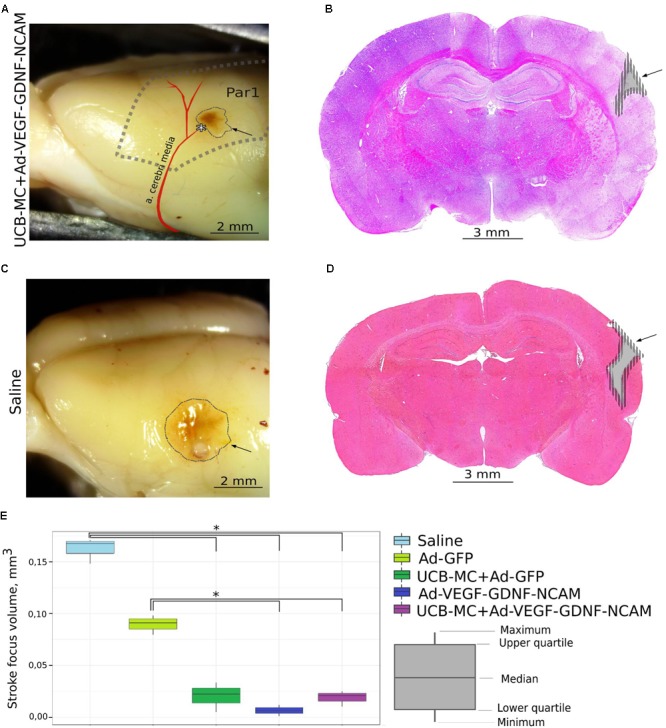
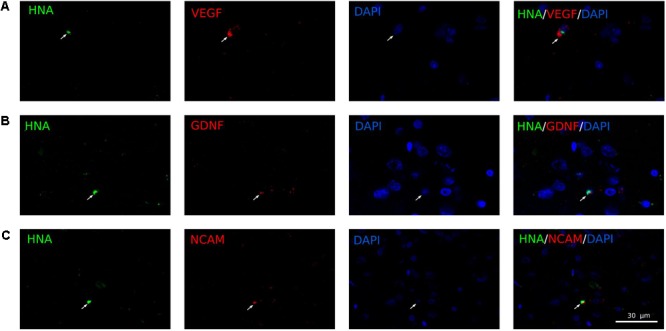
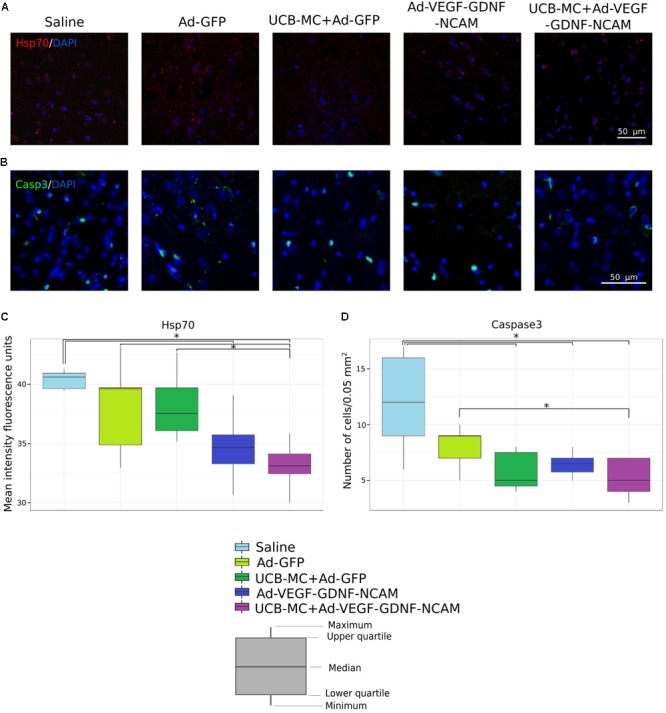
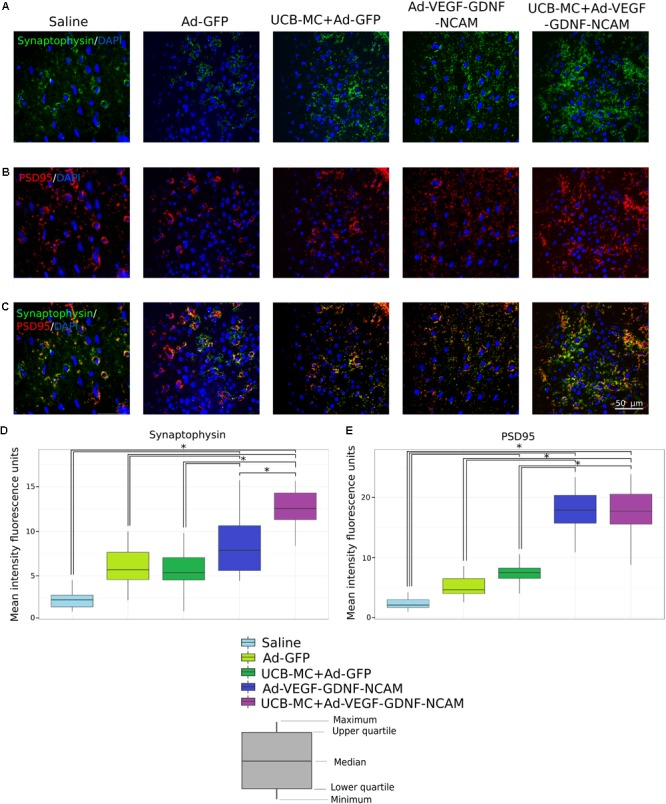
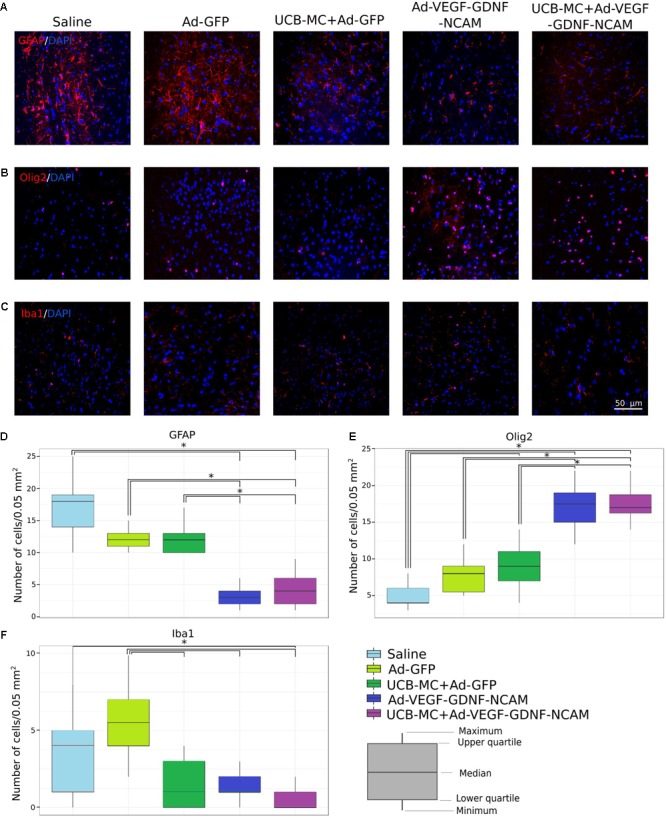
Natural brain repair after stroke is extremely limited, and current therapeutic options are even more scarce with no clinical break-through in sight. Despite restricted regeneration in the central nervous system, we have previously proved that human umbilical cord blood mono-nuclear cells (UCB-MC) transduced with adenoviral vectors carrying genes encoding vascular endothelial growth factor (VEGF), glial cell-derived neurotrophic factor (GDNF), and neural cell adhesion molecule (NCAM) successfully rescued neurons in amyotrophic lateral sclerosis and spinal cord injury. This proof-of-principle project was aimed at evaluating the beneficial effects of the same triple-gene approach in stroke. Rats subjected to distal occlusion of the middle cerebral artery were treated intrathecally with a combination of these genes either directly or using our cell-based (UCB-MC) approach. Various techniques and markers were employed to evaluate brain injury and subsequent recovery after treatment. Brain repair was most prominent when therapeutic genes were delivered via adenoviral vector- or UCB-MC-mediated approach. Remodeling of brain cortex in the stroke area was confirmed by reduction of infarct volume and attenuated neural cell death, depletion of astrocytes and microglial cells, and increase in the number of oligodendroglial cells and synaptic proteins expression. These results imply that intrathecal injection of genetically engineered UCB-MC over-expressing therapeutic molecules (VEGF, GDNF, and NCAM) following cerebral blood vessel occlusion might represent a novel avenue for future research into treating stroke.
中风后大脑的自然修复极其有限,目前的治疗选择更加稀少,且看不到临床突破。尽管中枢神经系统的再生受限,但我们之前已经证明,用携带编码血管内皮生长因子(VEGF)、胶质细胞源性神经营养因子(GDNF)和神经细胞黏附分子(NCAM)基因的腺病毒载体转导的人脐带血单个核细胞(UCB-MC),成功挽救了肌萎缩侧索硬化症和脊髓损伤中的神经元。这个原理验证项目旨在评估相同的三基因方法对中风的有益效果。对大脑中动脉远端闭塞的大鼠,直接或使用我们基于细胞的(UCB-MC)方法鞘内注射这些基因的组合。采用各种技术和标记物来评估治疗后脑损伤及随后的恢复情况。当通过腺病毒载体或UCB-MC介导的方法递送治疗基因时,大脑修复最为显著。通过梗死体积减小、神经细胞死亡减轻、星形胶质细胞和小胶质细胞减少以及少突胶质细胞数量增加和突触蛋白表达增加,证实了中风区域大脑皮质的重塑。这些结果表明,脑血管闭塞后鞘内注射过表达治疗分子(VEGF、GDNF和NCAM)的基因工程UCB-MC可能代表了未来治疗中风研究的一条新途径。