J. Crayton Pruitt Family Department of Biomedical Engineering, University of Florida, Gainesville, FL 32611.
Center for Mind and Brain, University of California, Davis, CA 95618.
eNeuro. 2018 Feb 28;5(1). doi: 10.1523/ENEURO.0445-17.2018. eCollection 2018 Jan-Feb.
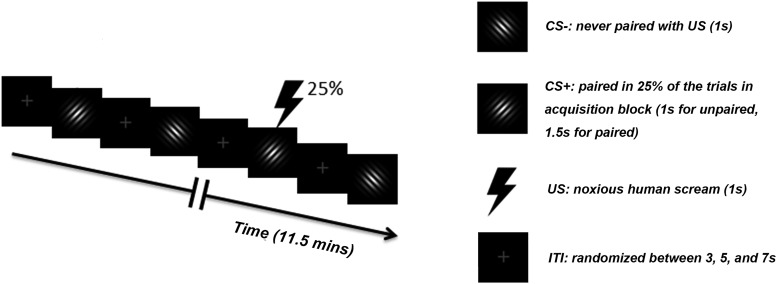
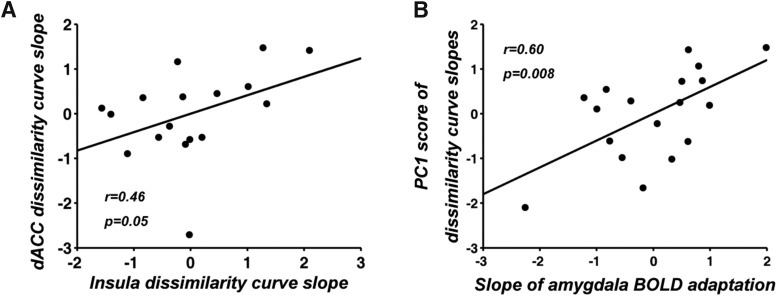
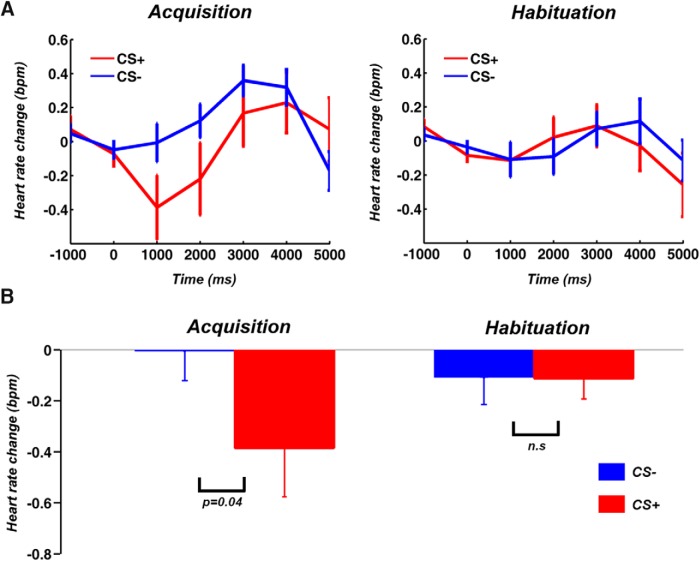
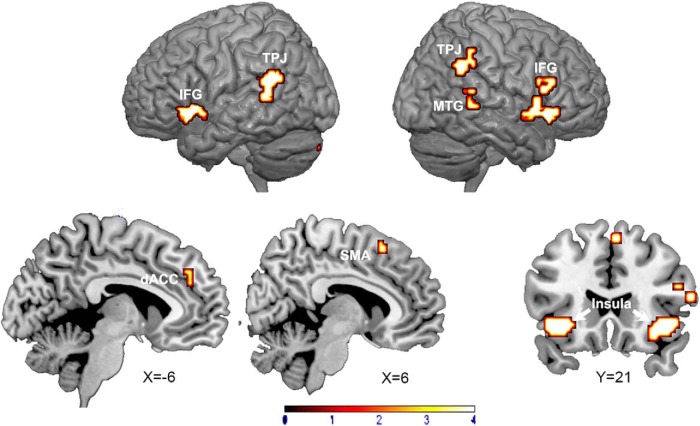
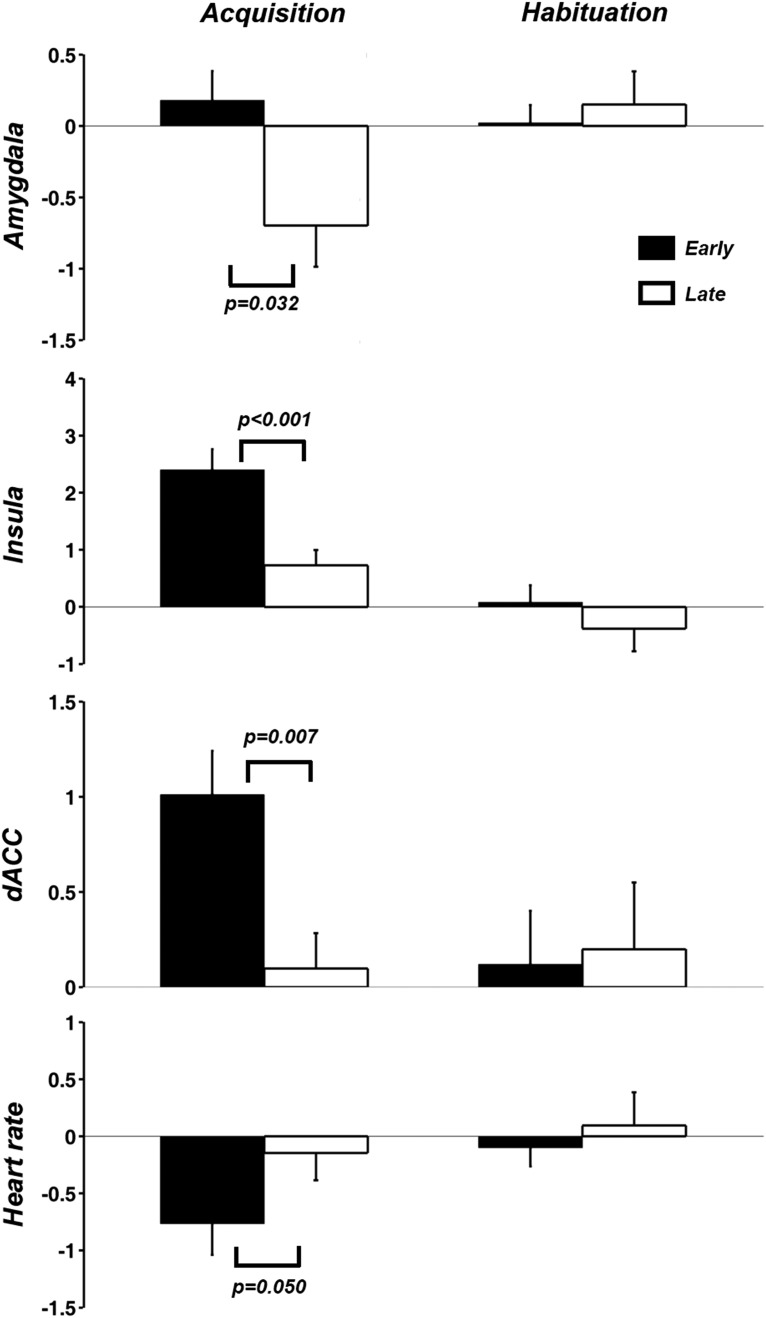
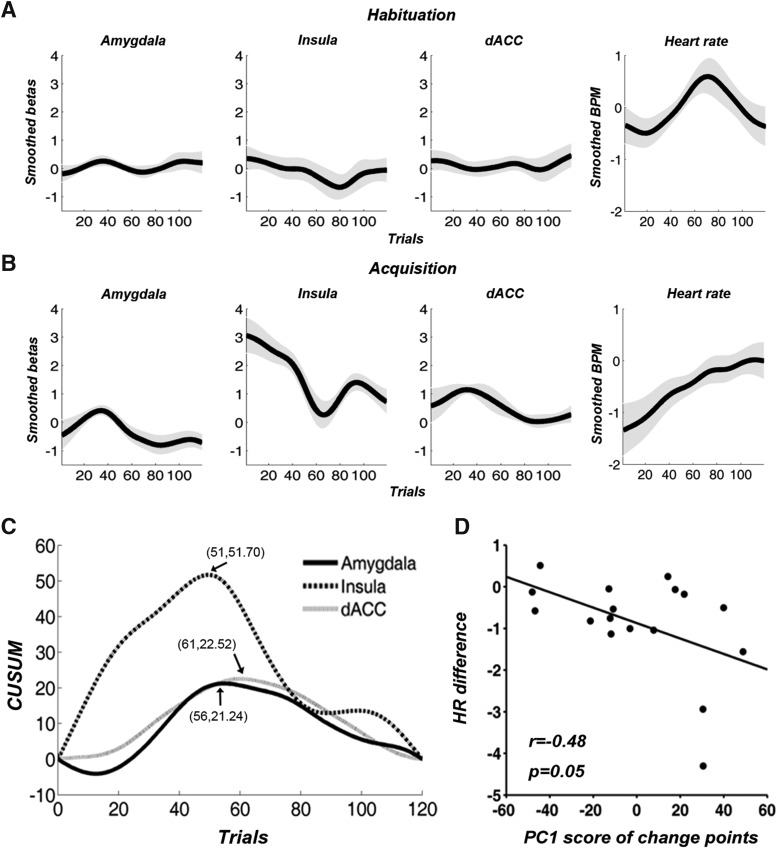
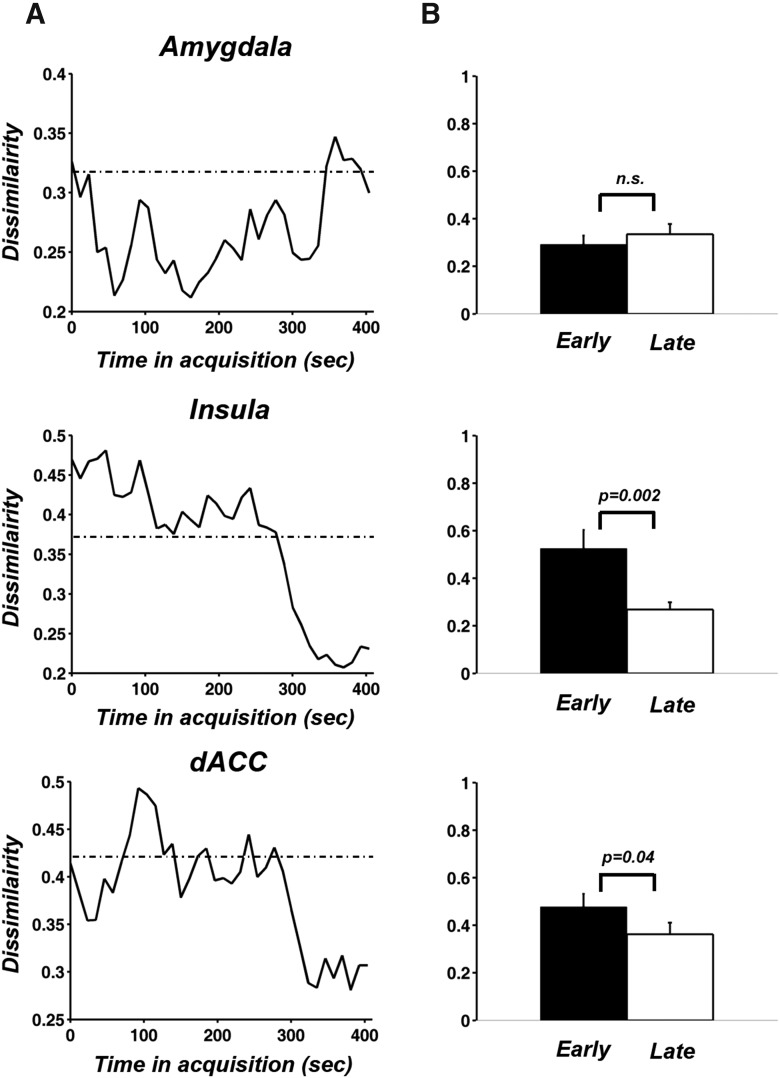
Research in rodents has established the role of the amygdaloid complex in defensive responses to conditioned threat. In human imaging studies, however, activation of the amygdala by conditioned threat cues is often not observed. One hypothesis states that this finding reflects adaptation of amygdaloid responses over time. We tested this hypothesis by estimating single-trial neural responses over a large number of conditioning trials. Functional MRI (fMRI) was recorded from 18 participants during classical differential fear conditioning: Participants viewed oriented grayscale grating stimuli (45° or 135°) presented centrally in random order. In the acquisition block, one grating (the CS+) was paired with a noxious noise, the unconditioned stimulus (US), on 25% of trials. The other grating, denoted CS-, was never paired with the US. Consistent with previous reports, BOLD in dorsal anterior cingulate cortex (dACC) and insula, but not the amygdala, was heightened when viewing CS+ stimuli that were not paired with US compared to CS- stimuli. Trial-by-trial analysis showed that over the course of acquisition, activity in the amygdala attenuated. Interestingly, activity in the dACC and insula also declined. Representational similarity analysis (RSA) corroborated these results, indicating that the voxel patterns evoked by CS+ and CS- in these brain regions became less distinguishable over time. Together, the present findings support the hypothesis that the lack of BOLD differences in the amygdaloid complex in many studies of classical conditioning is due to adaptation, and the adaptation effects may reflect changes in large-scale networks mediating aversive conditioning, particularly the salience network.
在啮齿动物的研究中,已经确定了杏仁核复合体在对条件性威胁的防御反应中的作用。然而,在人类成像研究中,通过条件性威胁线索激活杏仁核的情况并不常见。一种假设认为,这一发现反映了杏仁核反应随时间的适应。我们通过估计大量条件作用试验中的单次试验神经反应来检验这一假设。在经典差异恐惧条件作用期间,从 18 名参与者中记录了功能磁共振成像(fMRI):参与者以随机顺序观看中央呈现的定向灰度光栅刺激(45°或 135°)。在采集块中,一个光栅(CS+)与一个有害噪声(无条件刺激,US)在 25%的试验中配对。另一个光栅,称为 CS-,从未与 US 配对过。与之前的报告一致,当观看与 US 不配对的 CS+刺激时,背侧前扣带皮层(dACC)和岛叶的 BOLD 升高,而不是杏仁核。逐次试验分析显示,在采集过程中,杏仁核的活动减弱。有趣的是,dACC 和岛叶的活动也下降了。代表性相似性分析(RSA)证实了这些结果,表明这些大脑区域中 CS+和 CS-诱发的体素模式随时间变得越来越难以区分。总之,目前的发现支持这样一种假设,即在经典条件作用的许多研究中,杏仁核复合体中缺乏 BOLD 差异是由于适应引起的,而适应效应可能反映了介导厌恶条件作用的大规模网络的变化,特别是显著性网络。