The David and Inez Myers Laboratory for Cancer Research, Department of Human Molecular Genetics and Biochemistry, Sackler School of Medicine, Tel Aviv University, Tel Aviv, Israel.
Cancer Research UK and Medical Research Council Oxford Institute for Radiation Oncology, Department of Oncology, University of Oxford, Oxford, UK.
Mol Cell. 2018 Mar 1;69(5):866-878.e7. doi: 10.1016/j.molcel.2018.02.002.
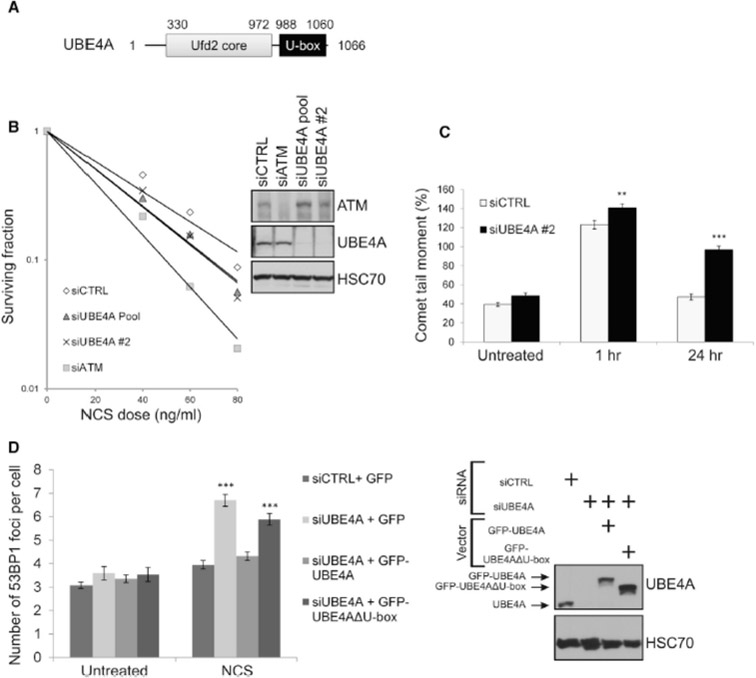
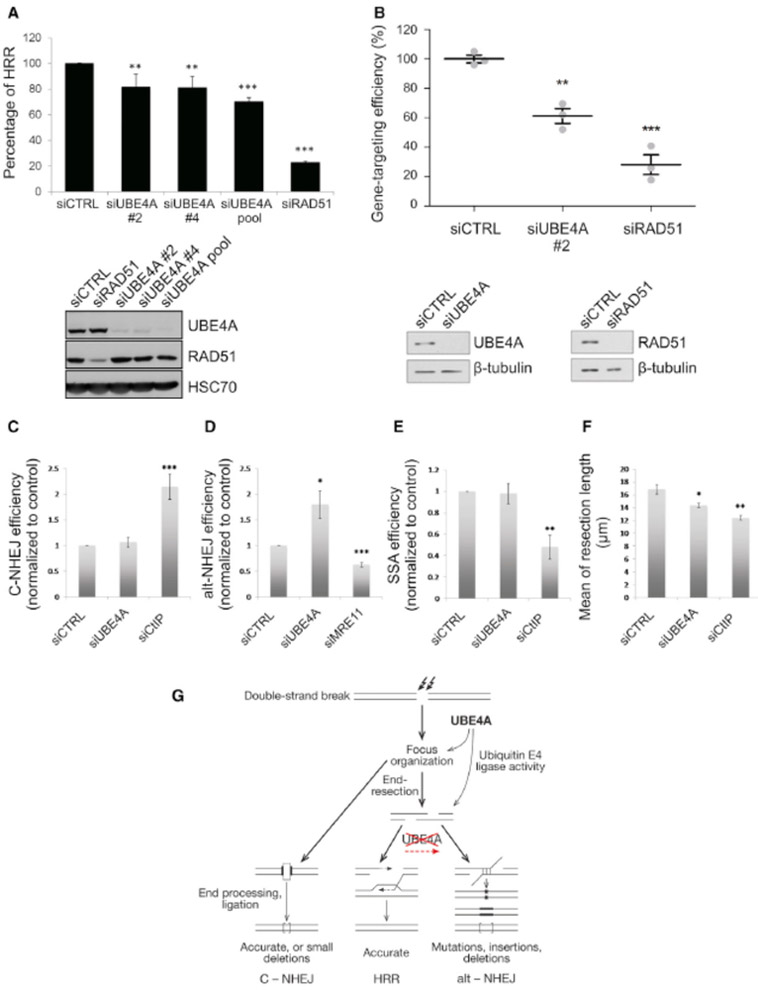
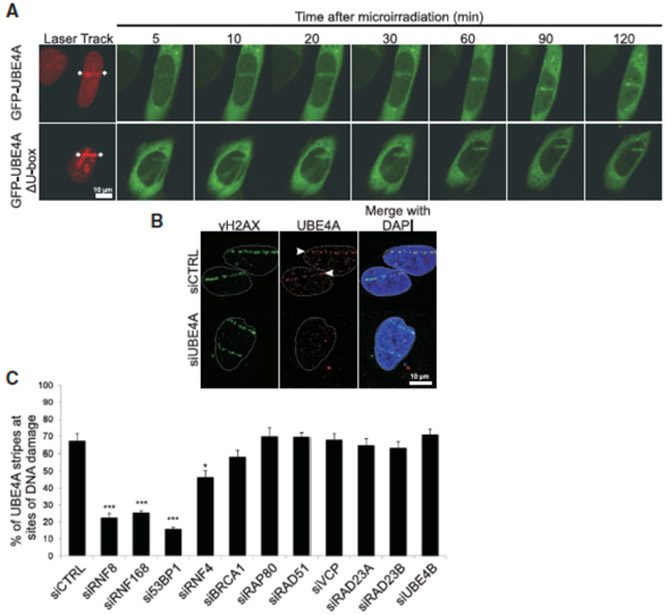
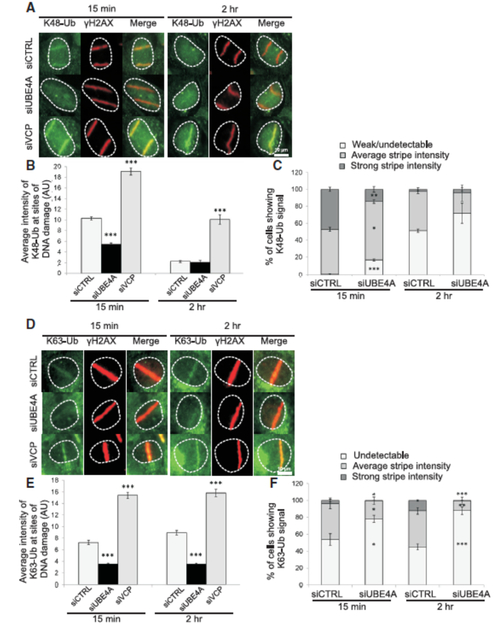
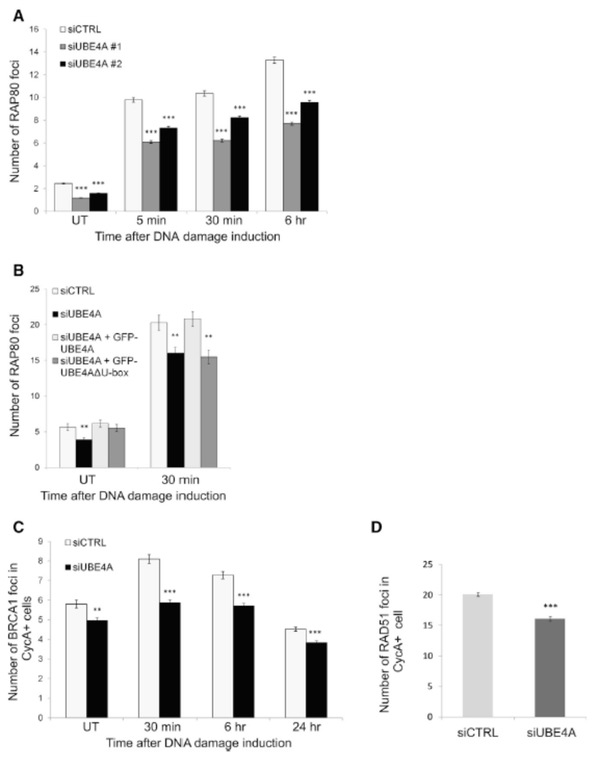
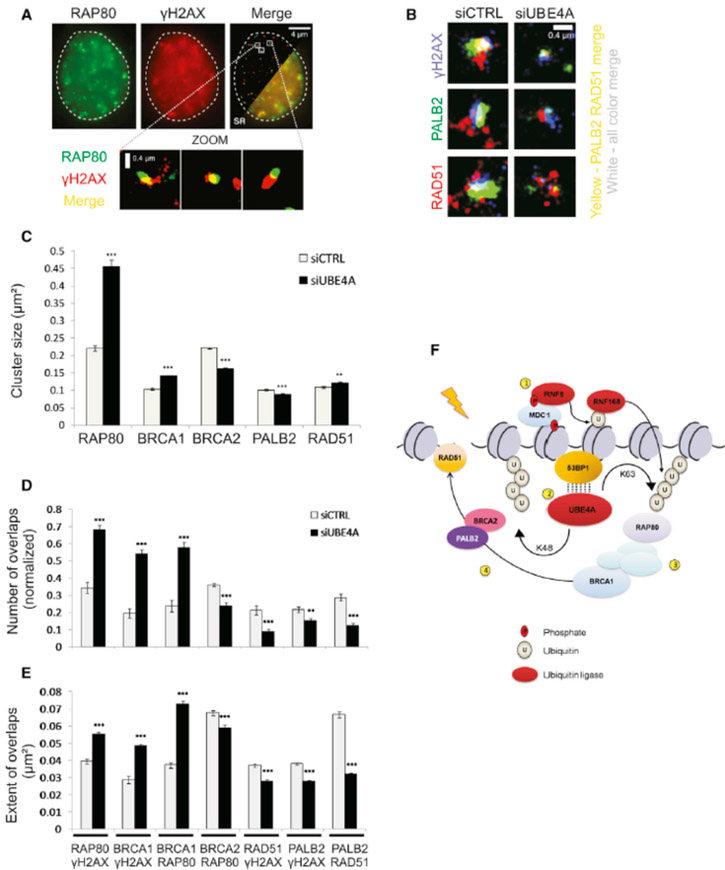
Double-strand breaks (DSBs) are critical DNA lesions that robustly activate the elaborate DNA damage response (DDR) network. We identified a critical player in DDR fine-tuning: the E3/E4 ubiquitin ligase UBE4A. UBE4A's recruitment to sites of DNA damage is dependent on primary E3 ligases in the DDR and promotes enhancement and sustainment of K48- and K63-linked ubiquitin chains at these sites. This step is required for timely recruitment of the RAP80 and BRCA1 proteins and proper organization of RAP80- and BRCA1-associated protein complexes at DSB sites. This pathway is essential for optimal end resection at DSBs, and its abrogation leads to upregulation of the highly mutagenic alternative end-joining repair at the expense of error-free homologous recombination repair. Our data uncover a critical regulatory level in the DSB response and underscore the importance of fine-tuning the complex DDR network for accurate and balanced execution of DSB repair.
双链断裂 (DSBs) 是关键的 DNA 损伤,可强烈激活复杂的 DNA 损伤反应 (DDR) 网络。我们鉴定出 DDR 精细调控中的一个关键因子:E3/E4 泛素连接酶 UBE4A。UBE4A 招募到 DNA 损伤部位依赖于 DDR 中的初级 E3 连接酶,并促进这些部位 K48- 和 K63-连接泛素链的增强和维持。这一步对于 RAP80 和 BRCA1 蛋白的及时招募以及在 DSB 部位正确组织 RAP80 和 BRCA1 相关蛋白复合物是必需的。该途径对于 DSB 处的最佳末端切除至关重要,其缺失会导致高突变的替代性末端连接修复上调,而代价是无错误同源重组修复。我们的数据揭示了 DSB 反应中的一个关键调控水平,并强调了精细调控复杂 DDR 网络对于准确和平衡执行 DSB 修复的重要性。