Tae Woo Suk, Ham Byung Joo, Pyun Sung Bom, Kang Shin Hyuk, Kim Byung Jo
Brain Convergence Research Center, Korea University, Seoul, Korea.
Department of Psychiatry, Korea University College of Medicine, Seoul, Korea.
J Clin Neurol. 2018 Apr;14(2):129-140. doi: 10.3988/jcn.2018.14.2.129. Epub 2018 Feb 28.
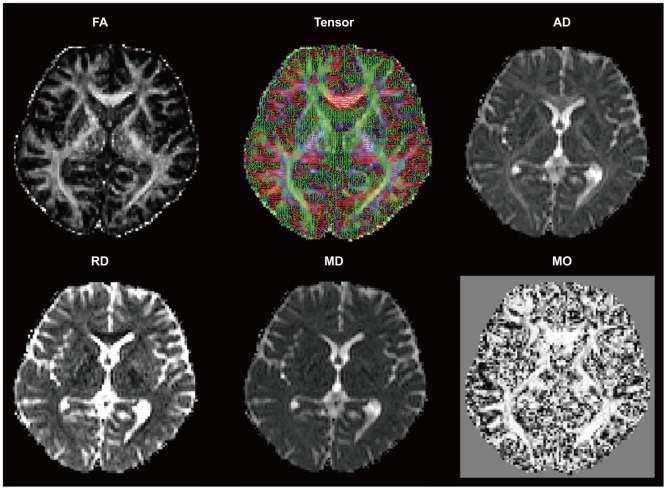
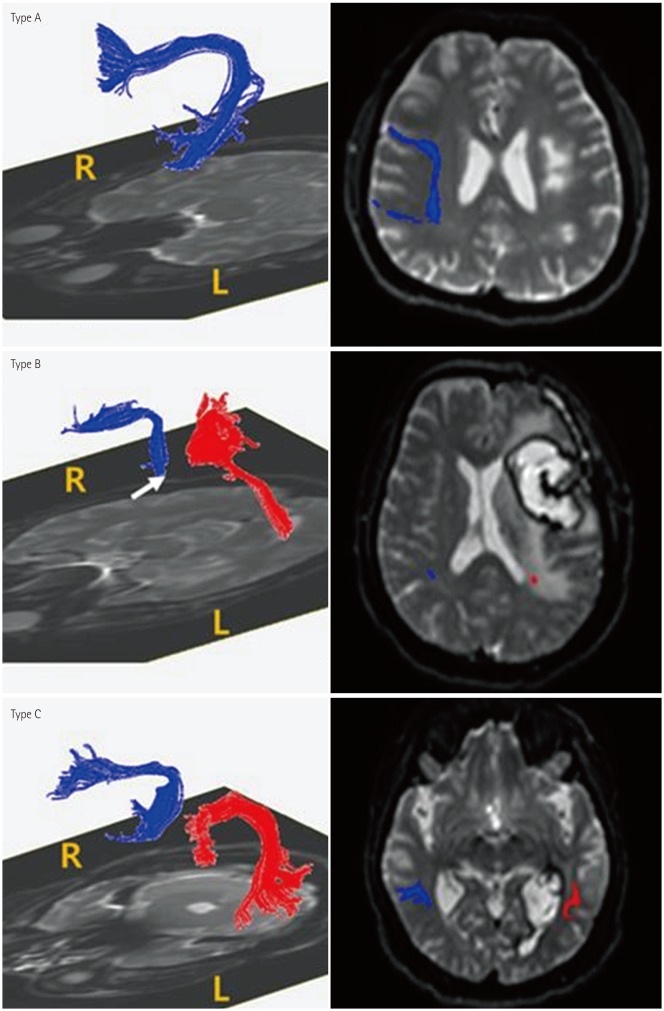
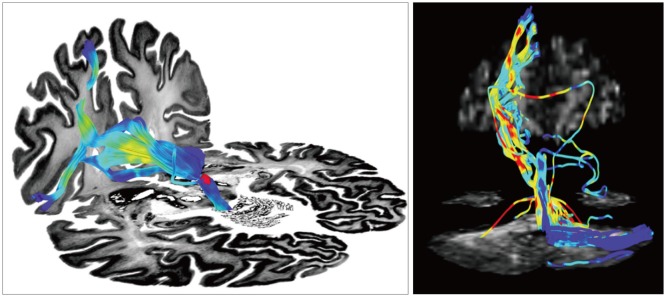
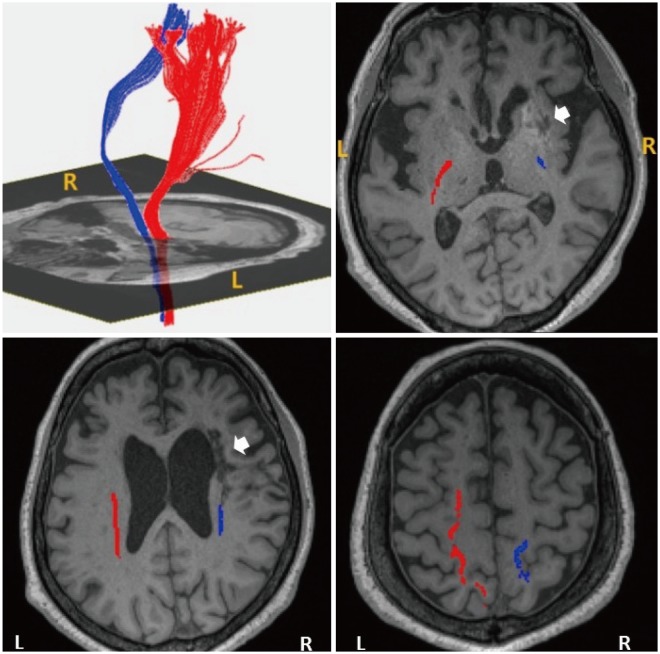
Diffusion-tensor imaging (DTI) is a noninvasive medical imaging tool used to investigate the structure of white matter. The signal contrast in DTI is generated by differences in the Brownian motion of the water molecules in brain tissue. Postprocessed DTI scalars can be used to evaluate changes in the brain tissue caused by disease, disease progression, and treatment responses, which has led to an enormous amount of interest in DTI in clinical research. This review article provides insights into DTI scalars and the biological background of DTI as a relatively new neuroimaging modality. Further, it summarizes the clinical role of DTI in various disease processes such as amyotrophic lateral sclerosis, multiple sclerosis, Parkinson's disease, Alzheimer's dementia, epilepsy, ischemic stroke, stroke with motor or language impairment, traumatic brain injury, spinal cord injury, and depression. Valuable DTI postprocessing tools for clinical research are also introduced.
扩散张量成像(DTI)是一种用于研究白质结构的非侵入性医学成像工具。DTI中的信号对比度是由脑组织中水分子布朗运动的差异产生的。经过后处理的DTI标量可用于评估疾病、疾病进展和治疗反应引起的脑组织变化,这使得DTI在临床研究中引起了极大的关注。这篇综述文章深入探讨了DTI标量以及DTI作为一种相对较新的神经成像方式的生物学背景。此外,它总结了DTI在各种疾病过程中的临床作用,如肌萎缩侧索硬化症、多发性硬化症、帕金森病、阿尔茨海默病性痴呆、癫痫、缺血性中风、伴有运动或语言障碍的中风、创伤性脑损伤、脊髓损伤和抑郁症。还介绍了用于临床研究的有价值的DTI后处理工具。