Yeh Fang-Cheng, Vettel Jean M, Singh Aarti, Poczos Barnabas, Grafton Scott T, Erickson Kirk I, Tseng Wen-Yih I, Verstynen Timothy D
Department of Neurological Surgery, University of Pittsburgh School of Medicine, Pittsburgh, Pennsylvania, United States of America.
U.S. Army Research Laboratory, Aberdeen Proving Ground, Aberdeen, Maryland, United States of America.
PLoS Comput Biol. 2016 Nov 15;12(11):e1005203. doi: 10.1371/journal.pcbi.1005203. eCollection 2016 Nov.
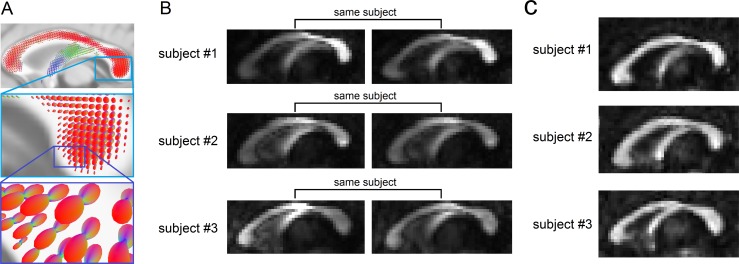
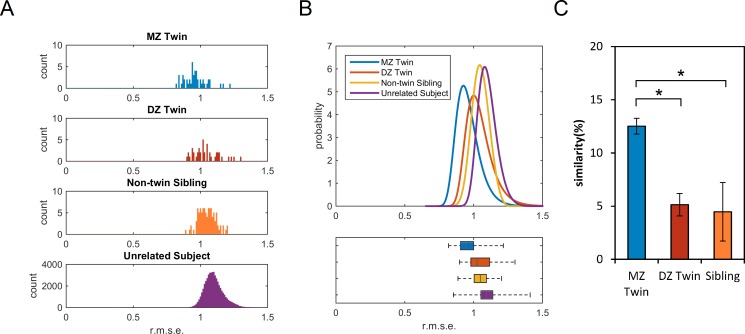
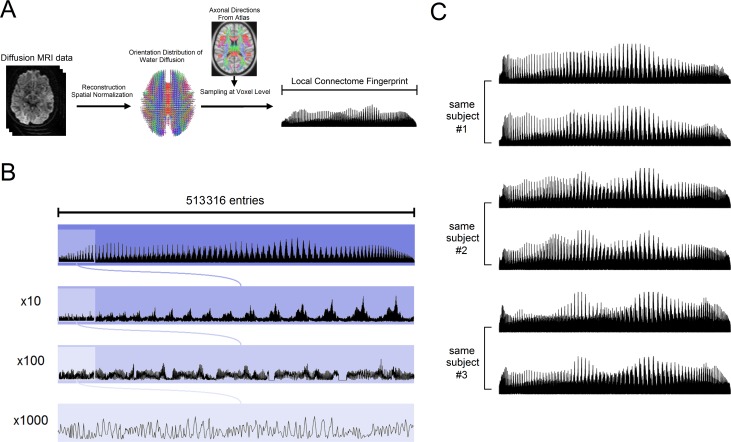
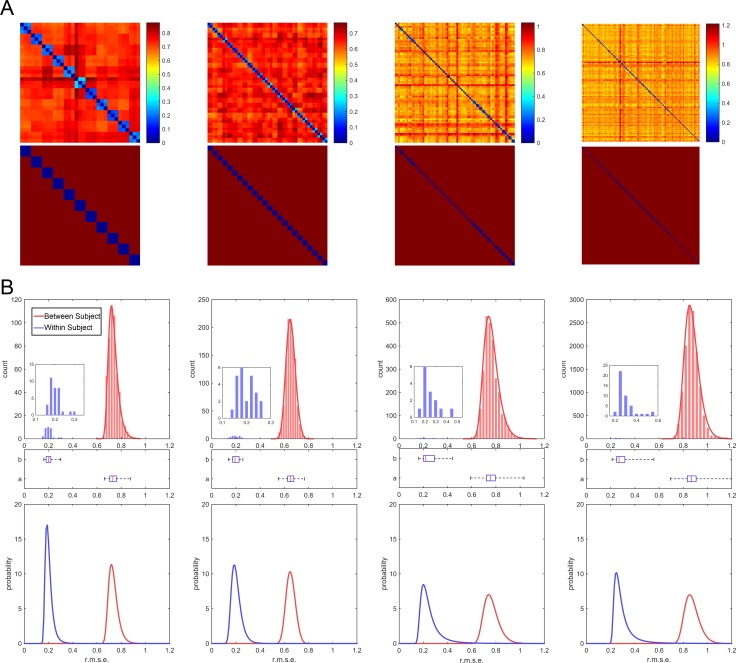
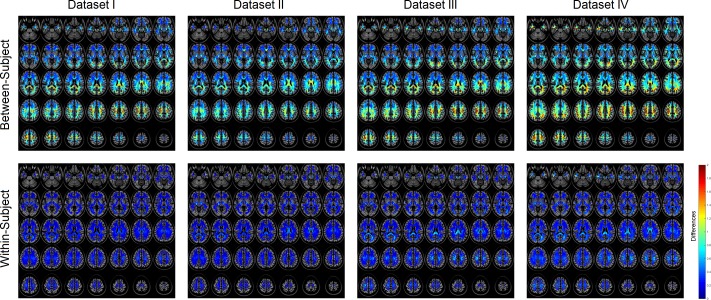
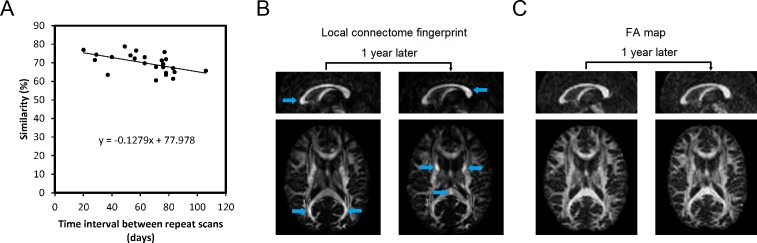
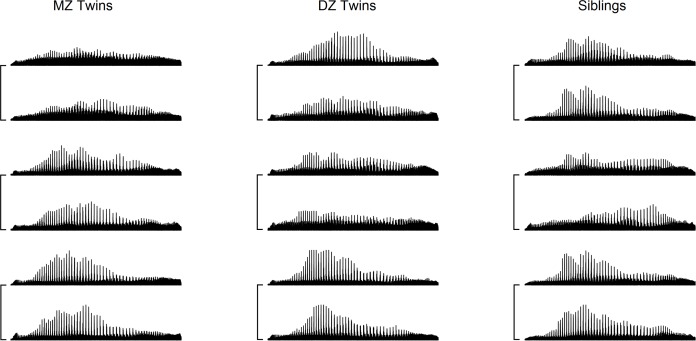
Quantifying differences or similarities in connectomes has been a challenge due to the immense complexity of global brain networks. Here we introduce a noninvasive method that uses diffusion MRI to characterize whole-brain white matter architecture as a single local connectome fingerprint that allows for a direct comparison between structural connectomes. In four independently acquired data sets with repeated scans (total N = 213), we show that the local connectome fingerprint is highly specific to an individual, allowing for an accurate self-versus-others classification that achieved 100% accuracy across 17,398 identification tests. The estimated classification error was approximately one thousand times smaller than fingerprints derived from diffusivity-based measures or region-to-region connectivity patterns for repeat scans acquired within 3 months. The local connectome fingerprint also revealed neuroplasticity within an individual reflected as a decreasing trend in self-similarity across time, whereas this change was not observed in the diffusivity measures. Moreover, the local connectome fingerprint can be used as a phenotypic marker, revealing 12.51% similarity between monozygotic twins, 5.14% between dizygotic twins, and 4.51% between none-twin siblings, relative to differences between unrelated subjects. This novel approach opens a new door for probing the influence of pathological, genetic, social, or environmental factors on the unique configuration of the human connectome.
由于全脑网络极其复杂,量化连接组中的差异或相似性一直是一项挑战。在此,我们介绍一种非侵入性方法,该方法利用扩散磁共振成像将全脑白质结构表征为单个局部连接组指纹,从而能够直接比较结构连接组。在四个独立获取的包含重复扫描的数据集(总N = 213)中,我们表明局部连接组指纹对个体具有高度特异性,能够实现准确的自我与他人分类,在17398次识别测试中准确率达到100%。估计的分类误差比基于扩散率的测量或3个月内重复扫描的区域间连接模式得出的指纹小约一千倍。局部连接组指纹还揭示了个体内部的神经可塑性,表现为随时间自我相似性的下降趋势,而在扩散率测量中未观察到这种变化。此外,局部连接组指纹可用作表型标记,相对于无关个体之间的差异,同卵双胞胎之间的相似度为12.51%,异卵双胞胎之间为5.14%,非双胞胎兄弟姐妹之间为4.51%。这种新方法为探究病理、遗传、社会或环境因素对人类连接组独特构型的影响打开了一扇新的大门。