1 Mayo Clinic, Phoenix, AZ, USA.
2 The Geisel School of Medicine at Dartmouth, Hanover, NH, USA.
Cephalalgia. 2018 May;38(6):1038-1048. doi: 10.1177/0333102418762525. Epub 2018 Mar 4.
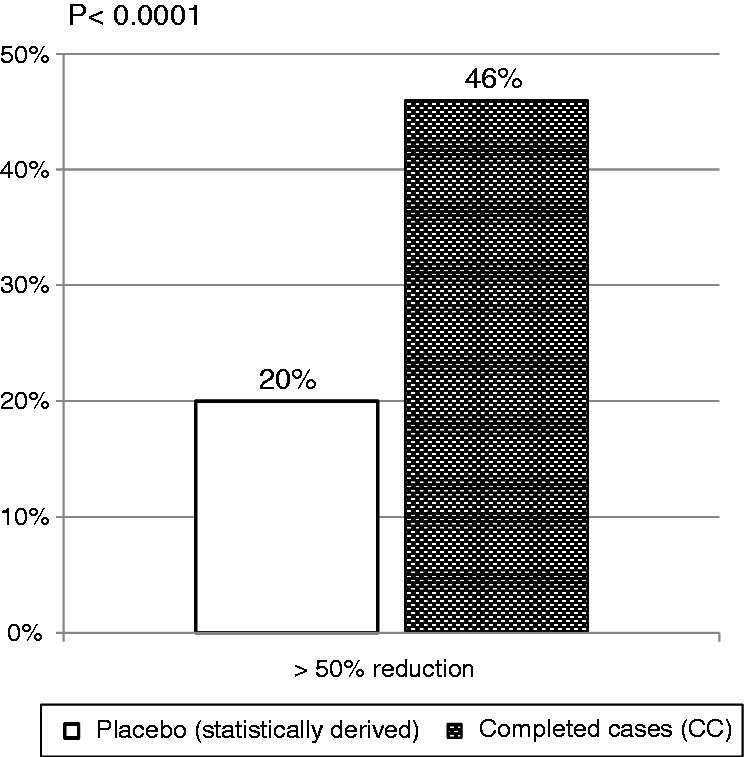
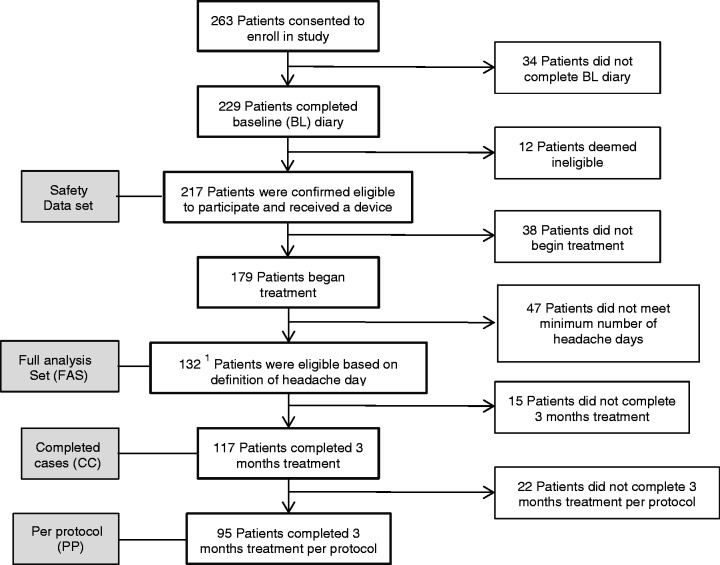
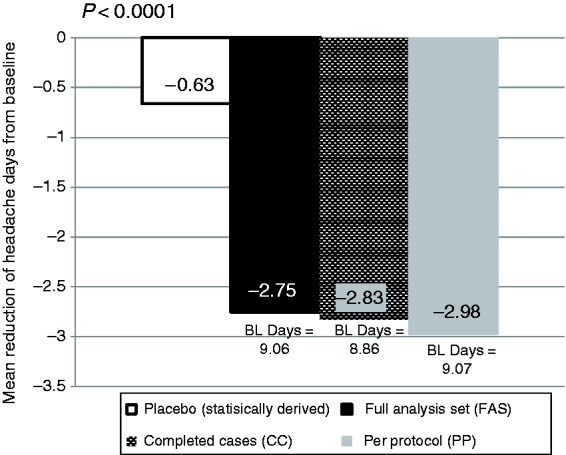
Objective To evaluate the efficacy and tolerability of single pulse transcranial magnetic stimulation (sTMS) for the preventive treatment of migraine. Background sTMS was originally developed for the acute treatment of migraine with aura. Open label experience has suggested a preventive benefit. The objective of this trial was to evaluate the efficacy and tolerability of sTMS for migraine prevention. Methods The eNeura SpringTMS Post-Market Observational U.S. Study of Migraine (ESPOUSE) Study was a multicenter, prospective, open label, observational study. From December 2014 to March 2016, patients with migraine (n = 263) were consented to complete a 1-month baseline headache diary followed by 3 months of treatment. The treatment protocol consisted of preventive (four pulses twice daily) and acute (three pulses repeated up to three times for each attack) treatment. Patients reported daily headache status, medication use, and device use with a monthly headache diary. The primary endpoint, mean reduction of headache days compared to baseline, was measured over the 28-day period during weeks 9 to 12. The primary endpoint was compared to a statistically-derived placebo estimate (performance goal). Secondary endpoints included: 50% responder rate, acute headache medication consumption, HIT-6, and mean reduction in total headache days from baseline of any intensity. Results Of a total of 263 consented subjects, 229 completed a baseline diary, and 220 were found to be eligible based on the number of headache days. The device was assigned to 217 subjects (Safety Data Set) and 132 were included in the intention to treat Full Analysis Set. For the primary endpoint, there was a -2.75 ± 0.40 mean reduction of headache days from baseline (9.06 days) compared to the performance goal (-0.63 days) ( p < 0.0001). The 50% responder rate of 46% (95% CI 37%, 56%) was also significantly higher ( p < 0.0001) than the performance goal (20%). There was a reduction of -2.93 (5.24) days of acute medication use, headache impact measured by HIT-6, -3.1 (6.4) ( p < 0.0001), and total headache days of any intensity -3.16 days (5.21) compared to the performance goal (-0.63 days) ( p < 0.0001). The most common adverse events were lightheadedness (3.7%), tingling (3.2%), and tinnitus (3.2%). There were no serious adverse events. Conclusions This open label study suggests that sTMS may be an effective, well-tolerated treatment option for migraine prevention. Trial registration number NCT02357381.
评估单次经颅磁刺激(sTMS)治疗偏头痛预防性治疗的疗效和耐受性。
sTMS 最初是为偏头痛伴先兆的急性治疗而开发的。开放标签经验表明具有预防作用。本试验的目的是评估 sTMS 预防偏头痛的疗效和耐受性。
eNeura SpringTMS 上市后美国偏头痛观察研究(ESPOUSE)是一项多中心、前瞻性、开放标签、观察性研究。从 2014 年 12 月至 2016 年 3 月,同意 263 例偏头痛患者(n=263)完成为期 1 个月的基线头痛日记,然后进行 3 个月的治疗。治疗方案包括预防性(每天两次四次脉冲)和急性(每次发作重复三次,最多三次)治疗。患者每月通过头痛日记报告每日头痛状况、药物使用和设备使用情况。主要终点是在第 9 至 12 周的 28 天期间与基线相比头痛天数的平均减少。主要终点与统计学衍生的安慰剂估计(性能目标)进行比较。次要终点包括:50%应答率、急性头痛药物使用、HIT-6 和从基线任何强度的总头痛天数的平均减少。
在总共同意的 263 名受试者中,有 229 名完成了基线日记,并且根据头痛天数,有 220 名被认为符合条件。该设备分配给 217 名受试者(安全数据集中),132 名受试者被纳入意向治疗全分析集。对于主要终点,与性能目标(-0.63 天)相比,头痛天数从基线(9.06 天)平均减少了-2.75±0.40 天(p<0.0001)。46%(95%CI 37%,56%)的 50%应答率也显著高于(p<0.0001)性能目标(20%)。急性药物使用天数减少了-2.93(5.24)天,头痛影响测量的 HIT-6 减少了-3.1(6.4)(p<0.0001),任何强度的总头痛天数减少了-3.16 天(5.21)天与性能目标(-0.63 天)相比(p<0.0001)。最常见的不良事件是头晕(3.7%)、刺痛(3.2%)和耳鸣(3.2%)。没有严重的不良事件。
这项开放标签研究表明,sTMS 可能是偏头痛预防性治疗的一种有效且耐受性良好的治疗选择。
NCT02357381。