The Institute of Cytology and Genetics, The Siberian Branch of the Russian Academy of Sciences, Prospekt Lavrentyeva 10, 630090, Novosibirsk, Russia.
Laboratory of Computer Genomics, Novosibirsk State University, Pirogova Str. 2, 630090, Novosibirsk, Russia.
BMC Genomics. 2018 Feb 9;19(Suppl 3):76. doi: 10.1186/s12864-018-4474-7.
Estimation of functional connectivity in gene sets derived from genome-wide or other biological experiments is one of the essential tasks of bioinformatics. A promising approach for solving this problem is to compare gene networks built using experimental gene sets with random networks. One of the resources that make such an analysis possible is CrossTalkZ, which uses the FunCoup database. However, existing methods, including CrossTalkZ, do not take into account individual types of interactions, such as protein/protein interactions, expression regulation, transport regulation, catalytic reactions, etc., but rather work with generalized types characterizing the existence of any connection between network members.
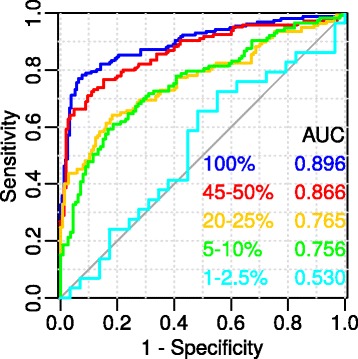
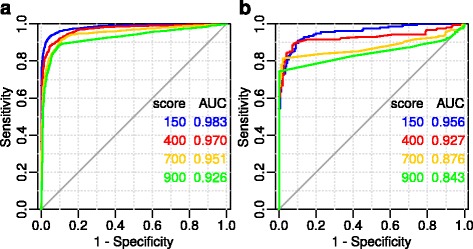
We developed the online tool FunGeneNet, which utilizes the ANDSystem and STRING to reconstruct gene networks using experimental gene sets and to estimate their difference from random networks. To compare the reconstructed networks with random ones, the node permutation algorithm implemented in CrossTalkZ was taken as a basis. To study the FunGeneNet applicability, the functional connectivity analysis of networks constructed for gene sets involved in the Gene Ontology biological processes was conducted. We showed that the method sensitivity exceeds 0.8 at a specificity of 0.95. We found that the significance level of the difference between gene networks of biological processes and random networks is determined by the type of connections considered between objects. At the same time, the highest reliability is achieved for the generalized form of connections that takes into account all the individual types of connections. By taking examples of the thyroid cancer networks and the apoptosis network, it is demonstrated that key participants in these processes are involved in the interactions of those types by which these networks differ from random ones.
FunGeneNet is a web tool aimed at proving the functionality of networks in a wide range of sizes of experimental gene sets, both for different global networks and for different types of interactions. Using examples of thyroid cancer and apoptosis networks, we have shown that the links over-represented in the analyzed network in comparison with the random ones make possible a biological interpretation of the original gene/protein sets. The FunGeneNet web tool for assessment of the functional enrichment of networks is available at http://www-bionet.sscc.ru/fungenenet/ .
从全基因组或其他生物实验中得出的基因集的功能连接估计是生物信息学的基本任务之一。解决此问题的一种很有前途的方法是将使用实验基因集构建的基因网络与随机网络进行比较。实现这种分析的一种资源是 CrossTalkZ,它使用 FunCoup 数据库。然而,现有的方法,包括 CrossTalkZ,都没有考虑到个体类型的相互作用,如蛋白质/蛋白质相互作用、表达调控、运输调控、催化反应等,而是使用概括性的类型来描述网络成员之间存在的任何连接。
我们开发了在线工具 FunGeneNet,该工具利用 ANDSystem 和 STRING 使用实验基因集重建基因网络,并估计它们与随机网络的差异。为了比较重建网络与随机网络,采用了 CrossTalkZ 中实现的节点置换算法作为基础。为了研究 FunGeneNet 的适用性,对涉及基因本体论生物过程的基因集构建的网络进行了功能连接分析。我们表明,该方法的灵敏度在特异性为 0.95 时超过 0.8。我们发现,生物过程基因网络与随机网络之间差异的显著性水平取决于所考虑的对象之间的连接类型。同时,考虑到所有个体类型的连接的连接的广义形式可实现最高的可靠性。通过甲状腺癌网络和细胞凋亡网络的例子,证明了这些过程中的关键参与者参与了这些网络与随机网络不同的那些类型的相互作用。
FunGeneNet 是一个网络工具,旨在证明广泛大小的实验基因集的网络功能,无论是对于不同的全局网络还是对于不同类型的相互作用。通过甲状腺癌和细胞凋亡网络的例子,我们表明,与随机网络相比,在分析网络中过表达的链接使得对原始基因/蛋白质集进行生物学解释成为可能。用于评估网络功能富集的 FunGeneNet 网络工具可在 http://www-bionet.sscc.ru/fungenenet/ 获得。