Wallace H Coulter Department of Biomedical Engineering, Emory University and Georgia Institute of Technology, Atlanta, GA, USA.
Children's Heart Research & Outcomes (HeRO) Center, Children's Healthcare of Atlanta & Emory University, Atlanta, GA, USA; Division of Pediatric Cardiology, Department of Pediatrics, Emory University School of Medicine, USA.
Acta Biomater. 2018 Apr 15;71:235-246. doi: 10.1016/j.actbio.2018.02.025. Epub 2018 Mar 2.
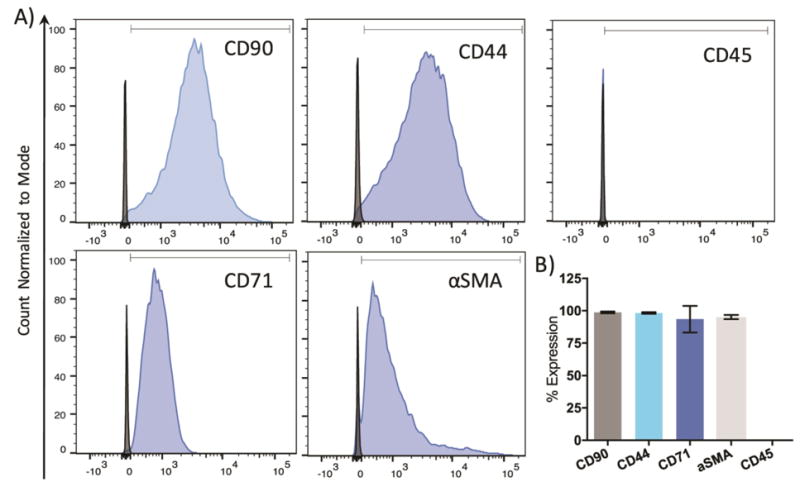
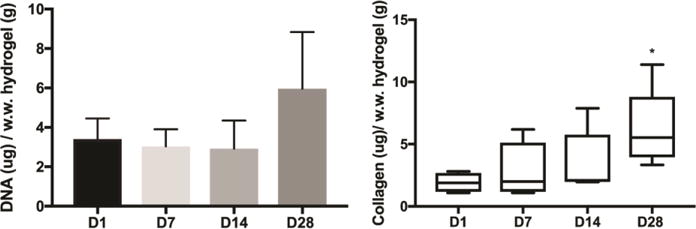
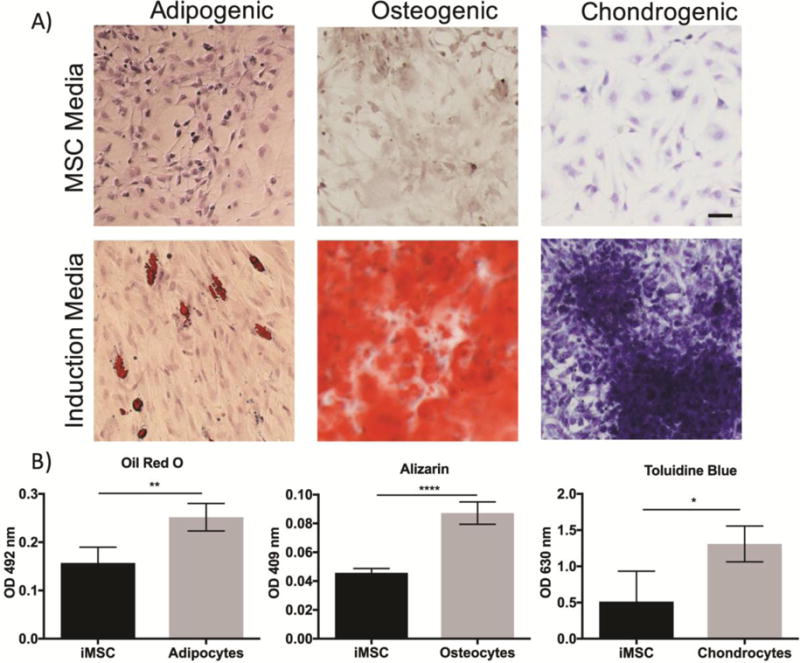
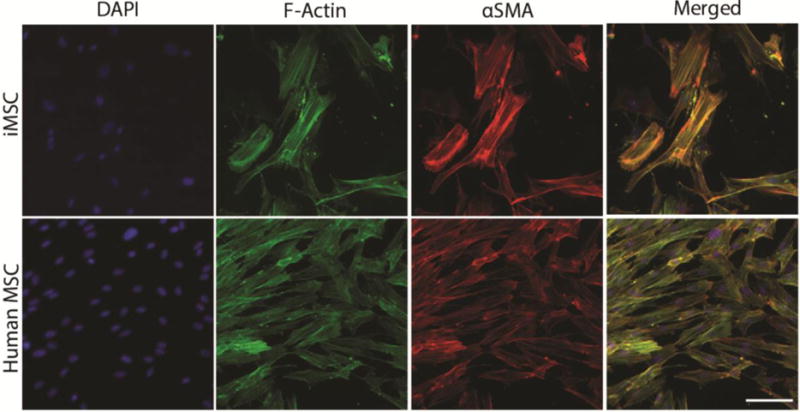
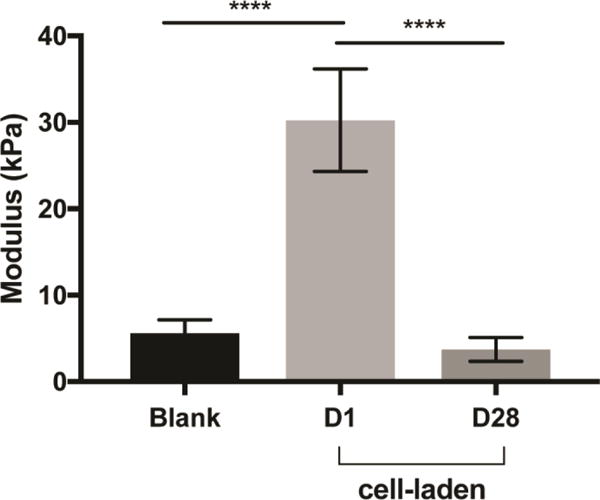
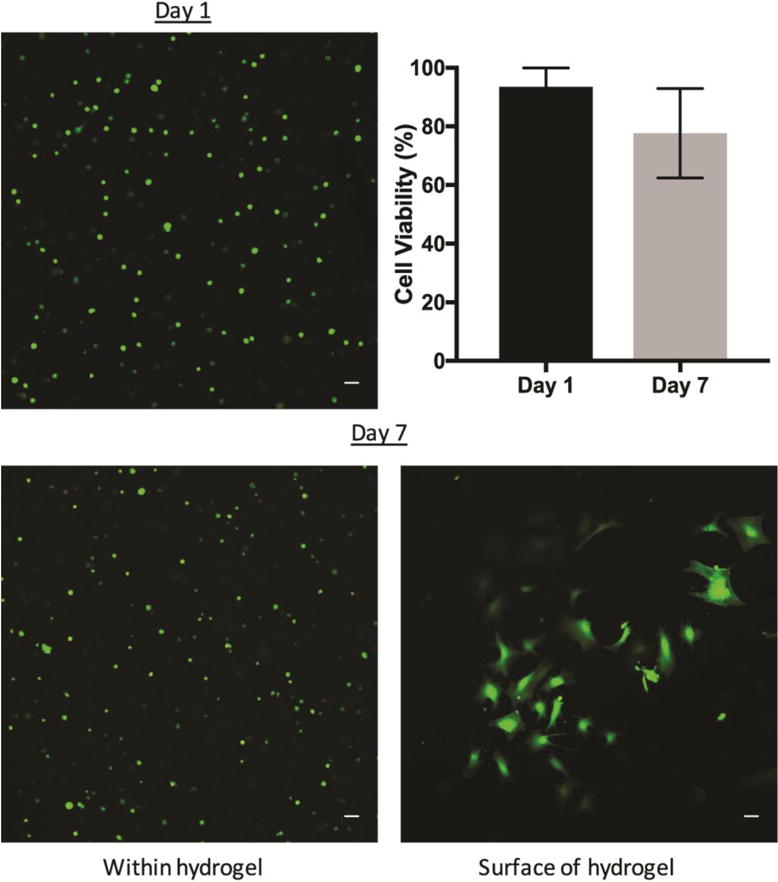
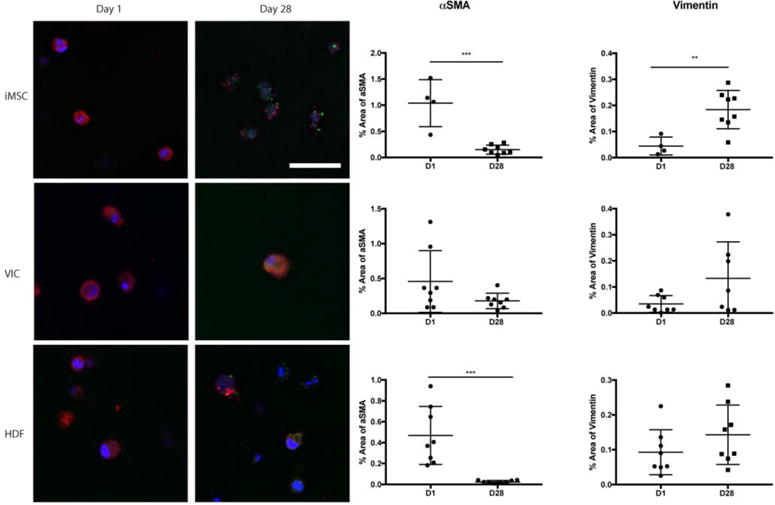
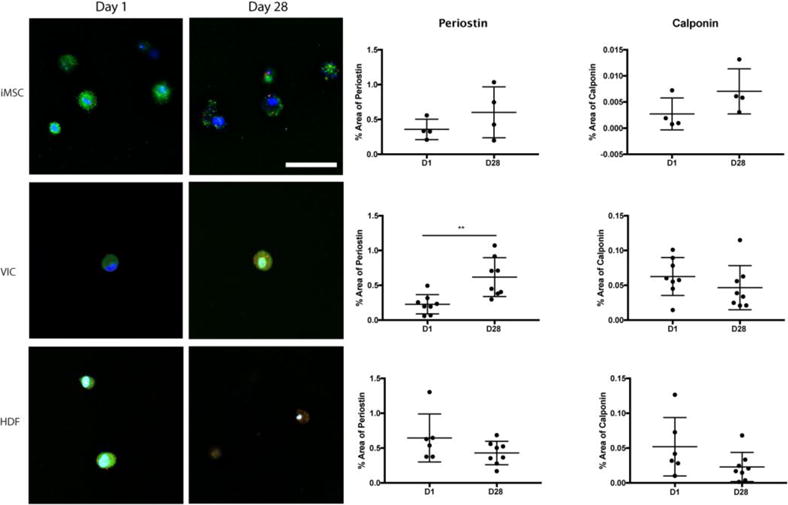
Despite recent advances in tissue engineered heart valves (TEHV), a major challenge is identifying a cell source for seeding TEHV scaffolds. Native heart valves are durable because valve interstitial cells (VICs) maintain tissue homeostasis by synthesizing and remodeling the extracellular matrix. This study demonstrates that induced pluripotent stem cells (iPSC)-derived mesenchymal stem cells (iMSCs) can be derived from iPSCs using a feeder-free protocol and then further matured into VICs by encapsulation within 3D hydrogels. The differentiation efficiency was characterized using flow cytometry, immunohistochemistry staining, and trilineage differentiation. Using our feeder-free differentiation protocol, iMSCs were differentiated from iPSCs and had CD90, CD44, CD71, αSMA, and CD45 expression. Furthermore, iMSCs underwent trilineage differentiation when cultured in induction media for 21 days. iMSCs were then encapsulated in poly(ethylene glycol)diacrylate (PEGDA) hydrogels grafted with adhesion peptide (RGDS) to promote remodeling and further maturation into VIC-like cells. VIC phenotype was assessed by the expression of alpha-smooth muscle actin (αSMA), vimentin, and collagen production after 28 days. When MSC-derived cells were encapsulated in PEGDA hydrogels that mimic the leaflet modulus, a decrease in αSMA expression and increase in vimentin was observed. In addition, iMSCs synthesized collagen type I after 28 days in 3D hydrogel culture. Thus, the results from this study suggest that iMSCs may be a promising cell source for TEHV.
Developing a suitable cell source is a critical component for the success and durability of tissue engineered heart valves. The significance of this study is the generation of iPSCs-derived mesenchymal stem cells (iMSCs) that have the capacity to mature into valve interstitial-like cells when introduced into a 3D cell culture designed to mimic the layers of the valve leaflet. iMSCs were generated using a feeder-free protocol, which is one major advantage over other methods, as it is more clinically relevant. In addition to generating a potential new cell source for heart valve tissue engineering, this study also highlights the importance of a 3D culture environment to influence cell phenotype and function.
尽管组织工程心脏瓣膜(TEHV)领域取得了新进展,但确定用于接种 TEHV 支架的细胞来源仍是一个重大挑战。天然心脏瓣膜之所以持久耐用,是因为瓣膜间质细胞(VIC)通过合成和重塑细胞外基质来维持组织内稳态。本研究证明,诱导多能干细胞(iPSC)衍生的间充质干细胞(iMSC)可通过无饲养层方案从 iPSC 中分离出来,然后通过包裹在 3D 水凝胶中进一步成熟为 VIC。通过流式细胞术、免疫组织化学染色和三系分化来表征分化效率。使用我们的无饲养层分化方案,iMSC 可从 iPSC 中分化出来,并表达 CD90、CD44、CD71、αSMA 和 CD45。此外,当在诱导培养基中培养 21 天时,iMSC 经历三系分化。然后,将 iMSC 包裹在聚乙二醇二丙烯酸酯(PEGDA)水凝胶中,该水凝胶接枝有粘附肽(RGDS),以促进重塑并进一步成熟为 VIC 样细胞。通过在 28 天时表达α-平滑肌肌动蛋白(αSMA)、波形蛋白和胶原蛋白的产生来评估 VIC 表型。当 MSC 衍生细胞被包裹在模仿瓣叶模量的 PEGDA 水凝胶中时,观察到 αSMA 表达减少和波形蛋白增加。此外,iMSC 在 3D 水凝胶培养 28 天后合成胶原蛋白 I。因此,这项研究的结果表明,iMSC 可能是 TEHV 的一种有前途的细胞来源。
开发合适的细胞来源是组织工程心脏瓣膜成功和耐用性的关键组成部分。这项研究的意义在于,生成了 iPSCs 衍生的间充质干细胞(iMSC),当将其引入设计为模仿瓣叶层的 3D 细胞培养物中时,它具有成熟为瓣膜间质样细胞的能力。iMSC 是通过无饲养层方案生成的,这是其优于其他方法的主要优势之一,因为它更符合临床实际。除了为心脏瓣膜组织工程生成新的潜在细胞来源外,这项研究还强调了 3D 培养环境对影响细胞表型和功能的重要性。