Joller Sara, Bertschinger Flurina, Kump Erwin, Spiri Astrid, von Rotz Alois, Schweizer-Gorgas Daniela, Drögemüller Cord, Flury Christine
Institute of Genetics, Vetsuisse Faculty, University of Bern, Bern, Switzerland.
School of Agricultural, Forest and Food Sciences, Bern University of Applied Sciences, Zollikofen, Switzerland.
BMC Vet Res. 2018 Mar 5;14(1):68. doi: 10.1186/s12917-018-1398-z.
Crossed beaks have been reported to occur in Appenzeller Barthuhn, a local Swiss chicken breed. The assumed causes for this beak deformity which are also seen in other bird species including domestic chickens, range from environmental influences to genetic factors. The aim of this project was to characterize the prevalence, the phenotype, and the underlying genetics of crossed beaks in Appenzeller Barthuhn chickens.
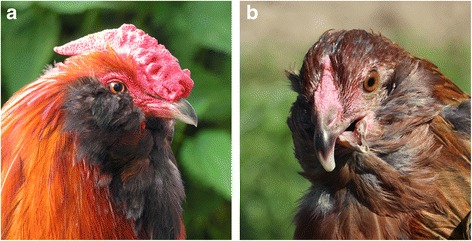
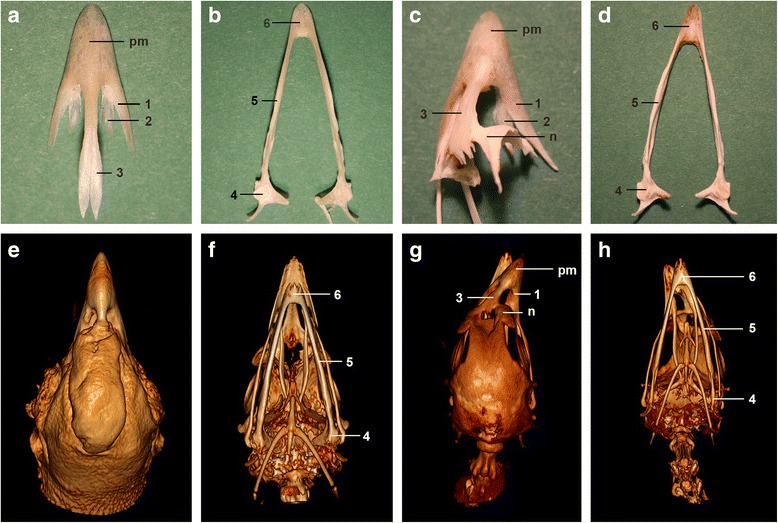
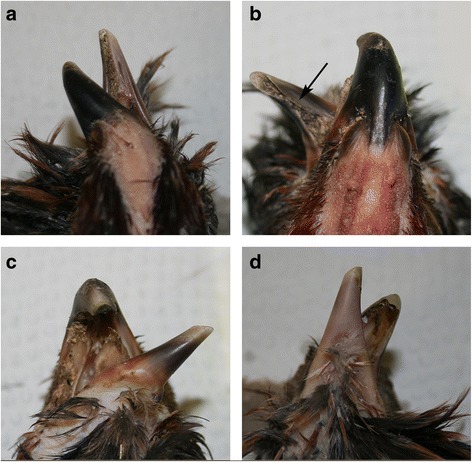
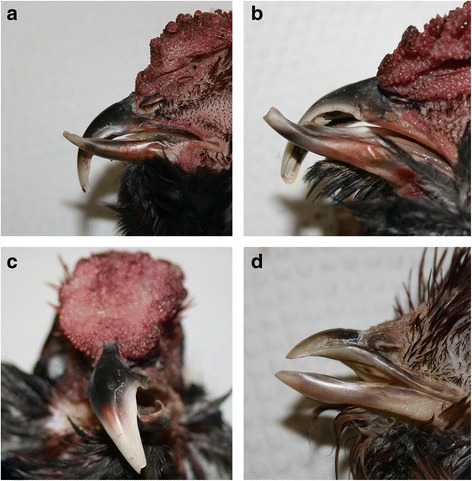
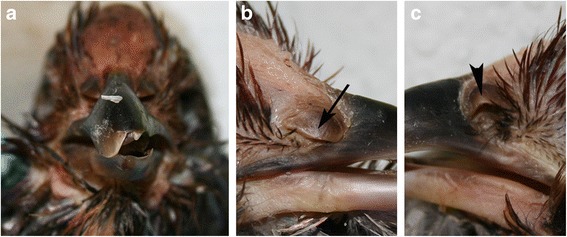
The estimated prevalence of 7% crossed beaks in Appenzeller Barthuhn was significantly higher compared to two other local Swiss chicken breeds. A breeding trial showed significantly higher prevalence of offspring with deformed beaks from mating of affected parents compared to mating of non-affected parents. Examination of 77 Appenzeller Barthuhn chickens with crossed beaks showed a variable phenotype presentation. The deviation of the beak from the median plane through the head ranged from 1° to 61°. In more than 60% of the cases, the upper and lower beak were bent in the same direction, whereas the remaining cases showed different forms of crossed beaks. Computed tomographic scans and bone maceration of the head of two chickens with crossed beaks revealed that the maxilla and the mandibula were affected, while other parts of the skull appeared to be normal. The gene LOC426217, a member of the keratin family, was postulated as a candidate gene for beak deformity in domestic chickens. Sequencing of the coding region revealed two significantly associated synonymous variants for crossed beaks in Appenzeller Barthuhn chickens. A genome-wide association study and a comparative analysis of runs of homozygosity based on high-density SNP array genotyping data of 53 cases and 102 controls showed no evidence of association.
The findings suggest a hereditary cause of crossed beaks in Appenzeller Barthuhn chickens. However, the observed variation in the phenotype, together with the inconclusive molecular genetic results indicates the need for additional research to unravel the genetic architecture of this beak deformity.
据报道,瑞士当地品种阿彭策尔巴图恩鸡会出现交叉喙。在包括家鸡在内的其他鸟类中也可见到这种喙畸形,其假定原因从环境影响到遗传因素不等。本项目的目的是描述阿彭策尔巴图恩鸡交叉喙的患病率、表型及潜在遗传学特征。
阿彭策尔巴图恩鸡交叉喙的估计患病率为7%,与另外两个瑞士当地鸡品种相比显著更高。一项育种试验表明,与未受影响的亲本交配相比,受影响的亲本交配产生的喙畸形后代患病率显著更高。对77只阿彭策尔巴图恩鸡交叉喙进行检查,发现其表型呈现多样。喙偏离通过头部的正中平面的角度范围为1°至61°。在超过60%的病例中,上喙和下喙朝同一方向弯曲,而其余病例表现出不同形式的交叉喙。对两只交叉喙鸡的头部进行计算机断层扫描和骨骼浸软处理后发现,上颌骨和下颌骨受到影响,而颅骨的其他部分似乎正常。基因LOC426217是角蛋白家族的成员,被假定为家鸡喙畸形的候选基因。编码区测序揭示了阿彭策尔巴图恩鸡交叉喙的两个显著相关的同义变异。基于53例病例和102例对照的高密度SNP阵列基因分型数据进行的全基因组关联研究和纯合子片段的比较分析未发现关联证据。
研究结果表明阿彭策尔巴图恩鸡交叉喙存在遗传原因。然而,观察到的表型变异以及分子遗传学结果的不确定性表明,需要进一步研究以阐明这种喙畸形的遗传结构。