Department of Clinical Nutrition, German Institute of Human Nutrition Potsdam-Rehbrücke (DIfE), Nuthetal 14558, Germany; German Center for Diabetes Research (DZD), München-Neuherberg 85764, Germany.
Department of Clinical Nutrition, German Institute of Human Nutrition Potsdam-Rehbrücke (DIfE), Nuthetal 14558, Germany.
Mol Metab. 2018 May;11:129-136. doi: 10.1016/j.molmet.2018.02.004. Epub 2018 Feb 12.
Reduction of brain glucose transporter GLUT1 results in severe neurological dysfunction. VEGF is required to restore and maintain brain glucose uptake across the blood brain barrier via GLUT1, which was shown to be acutely diminished in response to a high fat diet (HFD) in mice. The genetic and HFD-related regulation and association of VEGF and GLUT1 (SLC2A1) in humans was investigated in the NUtriGenomic Analysis in Twins (NUGAT) study.
92 healthy and non-obese twins were standardized to a high-carbohydrate low-fat diet for 6 weeks before switched to a 6-week HFD under isocaloric conditions. Three clinical investigation days were conducted: after 6 weeks of low-fat diet and after 1 and 6 weeks of HFD. Serum VEGF and other cytokine levels were measured using ELISA. Gene expression in subcutaneous adipose tissue was assessed by quantitative Real-Time PCR. Genotyping was performed using microarray. The Auditory Verbal Learning Task was conducted to measure cognitive performance.
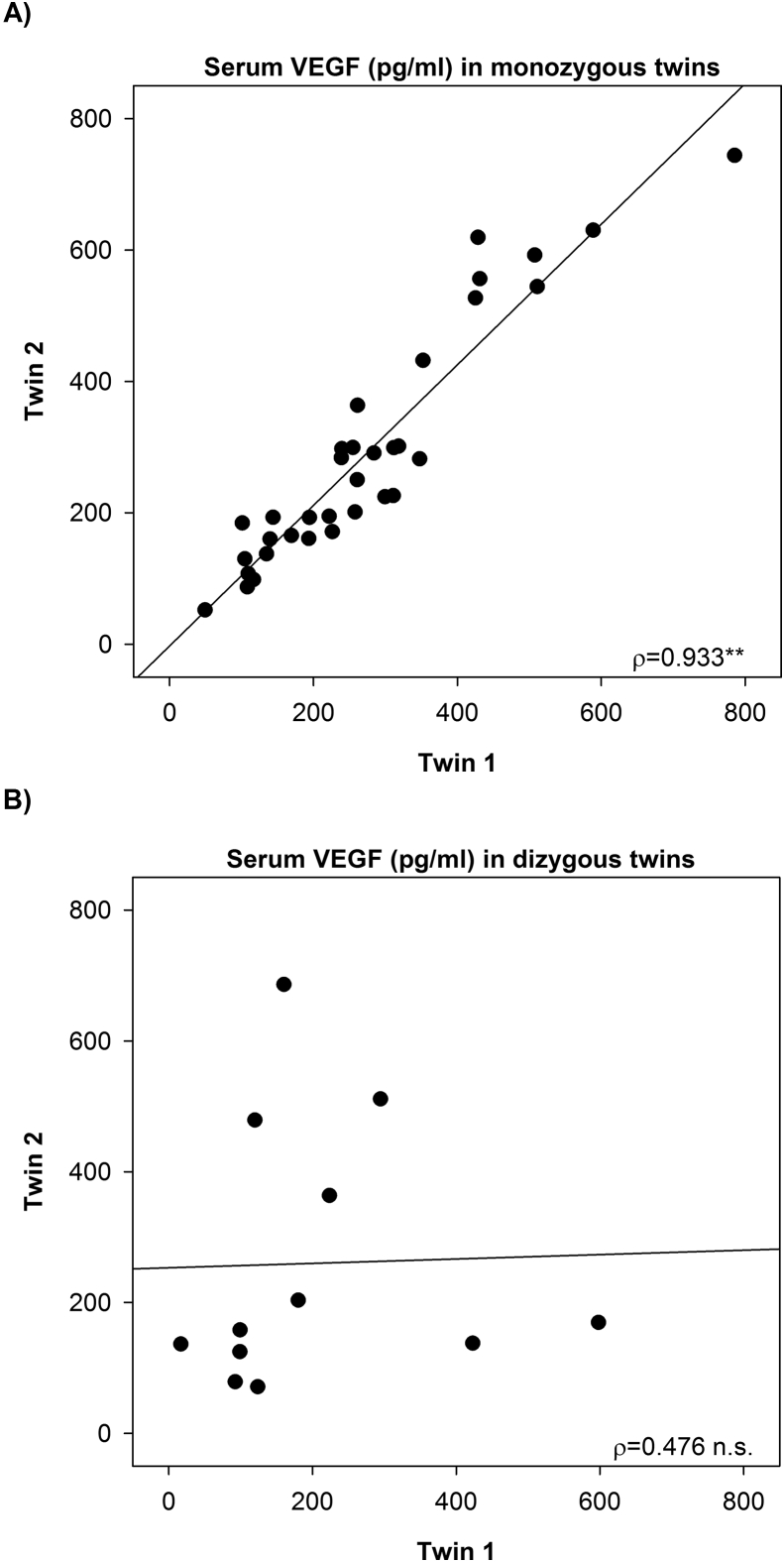
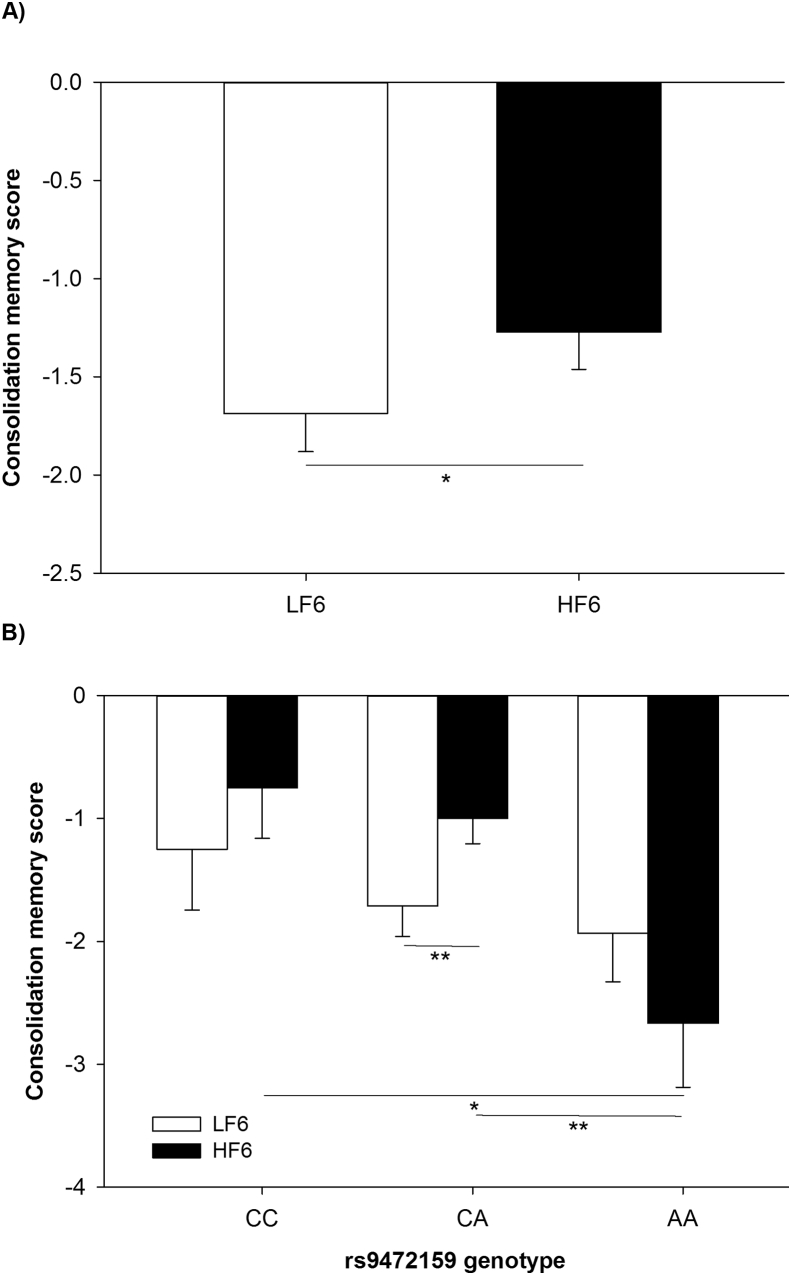
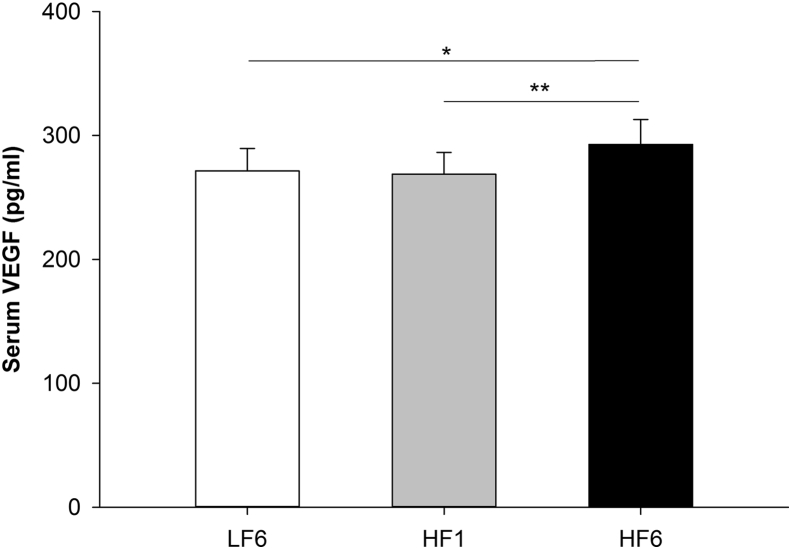
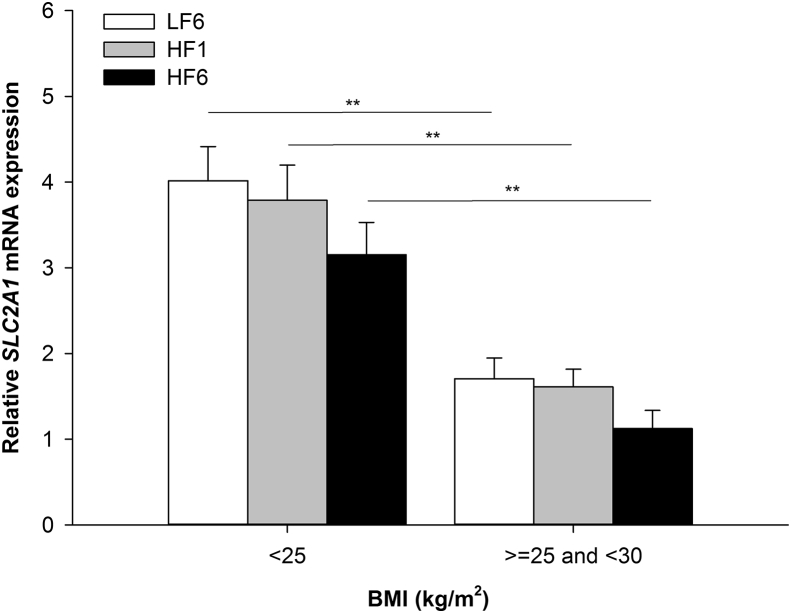
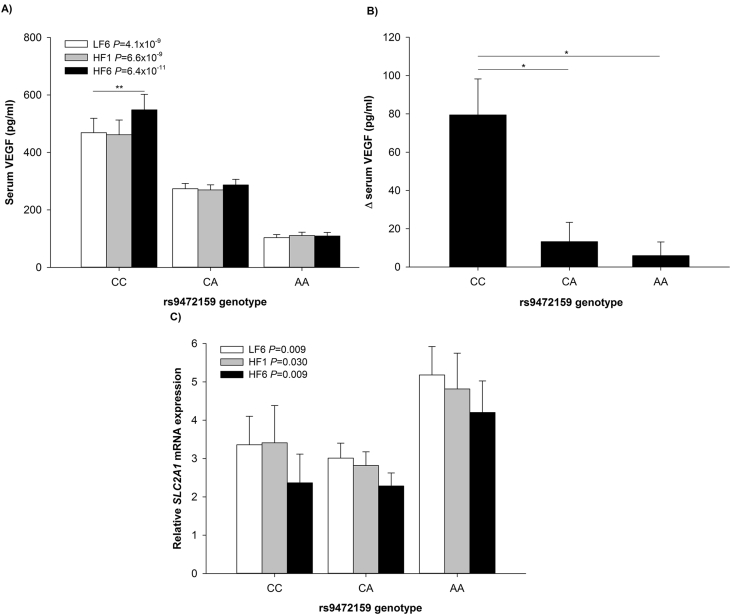
In this human study, we showed that the environmental regulation of SLC2A1 expression and serum VEGF by HFD was inversely correlated and both factors showed strong heritability (>90%). In response to the HFD containing 45% fat, serum VEGF levels increased (P = 0.002) while SLC2A1 mRNA expression in adipose tissue decreased (P = 0.001). Higher BMI was additionally associated with lower SLC2A1 expression. AA-genotypes of the rs9472159 polymorphism, which explained ∼39% of the variation in circulating VEGF concentrations, showed significantly reduced serum VEGF levels (P = 6.4 × 10) but higher SLC2A1 expression (P = 0.009) in adipose tissue compared to CC/CA-genotypes after 6 weeks of HFD. Memory performance in AA-genotypes declined in response to the HFD compared to CC- and CA-genotypes.
The results provide evidence to suggest the translatability of the dietary regulation of VEGF and GLUT1 from mouse models to humans. Our data demonstrate that HFD induces a genetically determined and correlated decrease of GLUT1 and increase of VEGF which may affect memory performance.
NCT01631123.
降低脑葡萄糖转运蛋白 GLUT1 会导致严重的神经功能障碍。VEGF 是通过 GLUT1 恢复和维持脑葡萄糖摄取所必需的,研究表明高脂肪饮食(HFD)会使小鼠 GLUT1 急剧减少。本研究在 NUtriGenomic Analysis in Twins (NUGAT) 研究中调查了人类中 VEGF 和 GLUT1(SLC2A1)的遗传和与 HFD 相关的调节和关联。
92 名健康、非肥胖的双胞胎在接受高碳水化合物、低脂肪饮食 6 周后,在等热量条件下切换到 6 周的 HFD。进行了 3 次临床研究:低脂饮食 6 周后,以及 HFD 1 周和 6 周后。使用 ELISA 测量血清 VEGF 和其他细胞因子水平。通过定量实时 PCR 评估皮下脂肪组织中的基因表达。使用微阵列进行基因分型。进行听觉言语学习任务以测量认知表现。
在这项人类研究中,我们表明 HFD 对 SLC2A1 表达和血清 VEGF 的环境调节呈负相关,并且这两个因素都具有很强的遗传性(>90%)。对含有 45%脂肪的 HFD 做出反应时,血清 VEGF 水平升高(P=0.002),而脂肪组织中的 SLC2A1 mRNA 表达降低(P=0.001)。更高的 BMI 还与 SLC2A1 表达降低相关。rs9472159 多态性的 AA 基因型解释了循环 VEGF 浓度变化的约 39%,与 CC/CA 基因型相比,在接受 HFD 治疗 6 周后,AA 基因型的血清 VEGF 水平显著降低(P=6.4×10),但脂肪组织中的 SLC2A1 表达升高(P=0.009)。与 CC 和 CA 基因型相比,AA 基因型的记忆表现随着 HFD 的摄入而下降。
研究结果提供了证据表明,从老鼠模型到人类,VEGF 和 GLUT1 的饮食调节具有可转移性。我们的数据表明,HFD 诱导了 GLUT1 的遗传决定的、相关的减少和 VEGF 的增加,这可能会影响记忆表现。
NCT01631123。