Kobayashi Wataru, Yanagita Ayumu, Akaba Takahiro, Shimono Takahiro, Tanabe Daiki, Moritomo Yutaka
Graduate School of Pure and Applied Sciences, University of Tsukuba, Ibaraki, 305-8571, Japan.
Division of Physics, Faculty of Pure and Applied Sciences, University of Tsukuba, Ibaraki, 305-8571, Japan.
Sci Rep. 2018 Mar 5;8(1):3988. doi: 10.1038/s41598-018-22279-9.
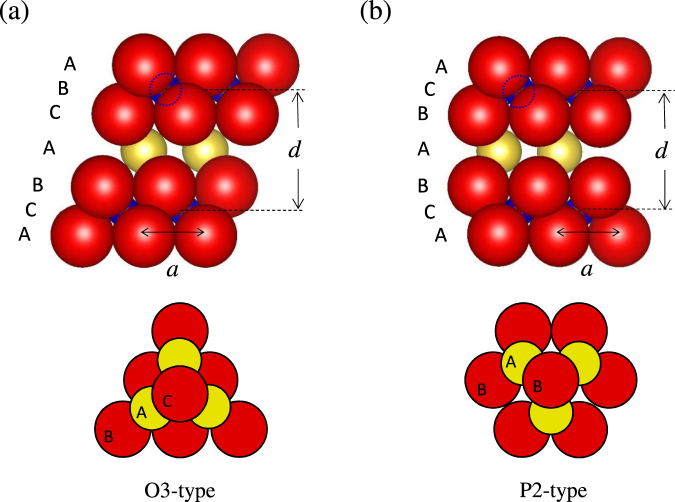
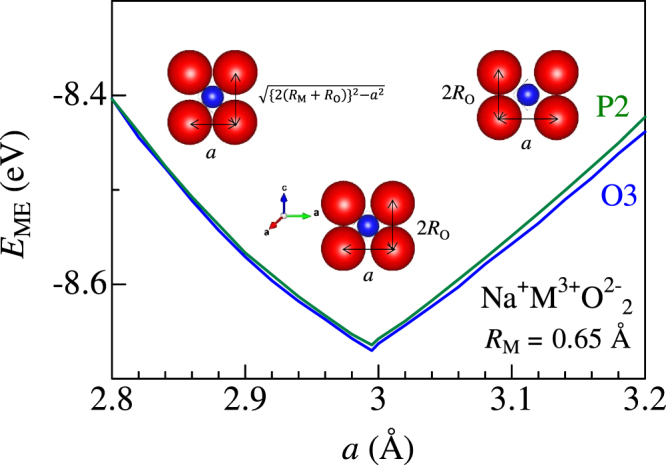
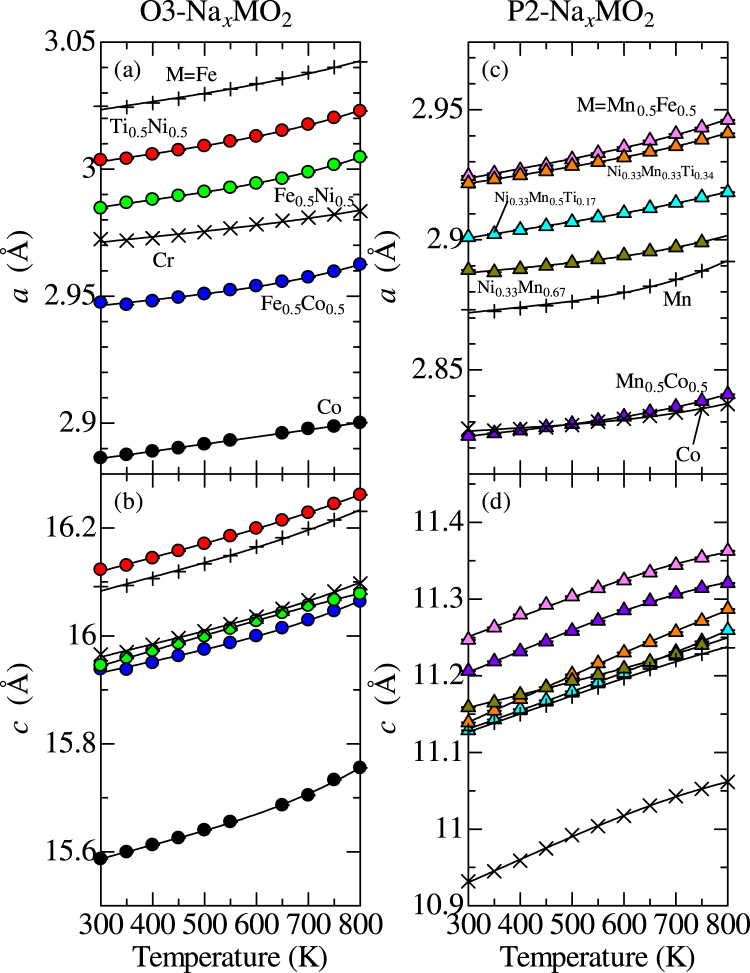
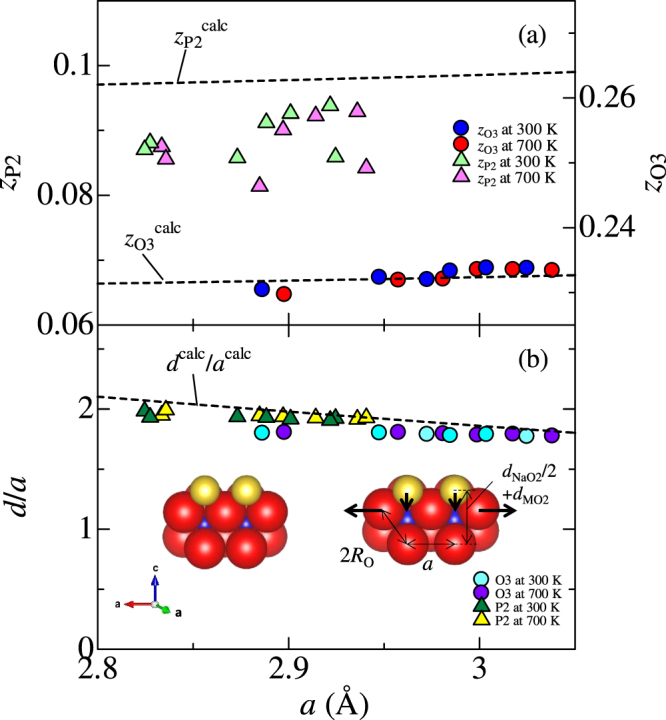
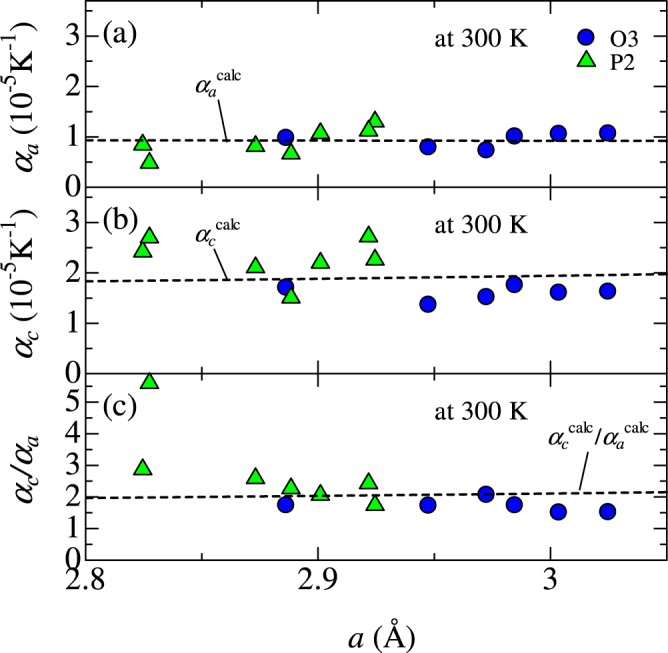
Layered oxide Na MO (M: transition metal) is a promising cathode material for sodium-ion secondary battery. Crystal structure of O3- and P2-type Na MO with various M against temperature (T) was systematically investigated by synchrotron x-ray diffraction mainly focusing on the T-dependences of a- and c-axis lattice constants (a and c) and z coordinate (z) of oxygen. Using a hard-sphere model with minimum Madelung energy, we confirmed that c/a and z values in O3-type Na MO were reproduced. We further evaluated the thermal expansion coefficients (α and α ) along a- and c-axis at 300 K. The anisotropy of the thermal expansion was quantitatively reproduced without adjustable parameters for O3-type Na MO. Deviations of z from the model for P2-type Na MO are ascribed to Na vacancies characteristic to the structure.
层状氧化物NaMO(M:过渡金属)是一种很有前景的钠离子二次电池正极材料。通过同步加速器X射线衍射系统地研究了具有不同M的O3型和P2型NaMO晶体结构随温度(T)的变化,主要关注a轴和c轴晶格常数(a和c)以及氧的z坐标(z)随温度的变化。使用具有最小马德隆能量的硬球模型,我们证实了O3型NaMO中的c/a和z值可以被重现。我们进一步评估了在300 K时沿a轴和c轴的热膨胀系数(α 和α )。对于O3型NaMO,无需可调参数即可定量重现热膨胀的各向异性。P2型NaMO中z与模型的偏差归因于该结构特有的钠空位。