John A. Paulson School of Engineering and Applied Sciences, Harvard University, Cambridge, MA, USA.
Wyss Institute for Biologically Inspired Engineering, Harvard University, Boston, MA, USA.
Nat Mater. 2018 Jun;17(6):528-534. doi: 10.1038/s41563-018-0028-2. Epub 2018 Mar 5.
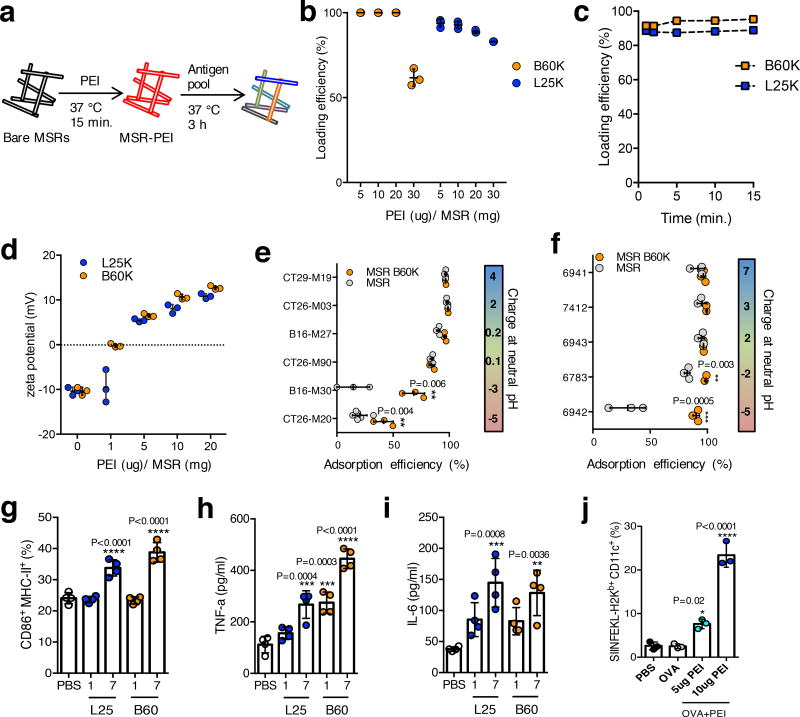
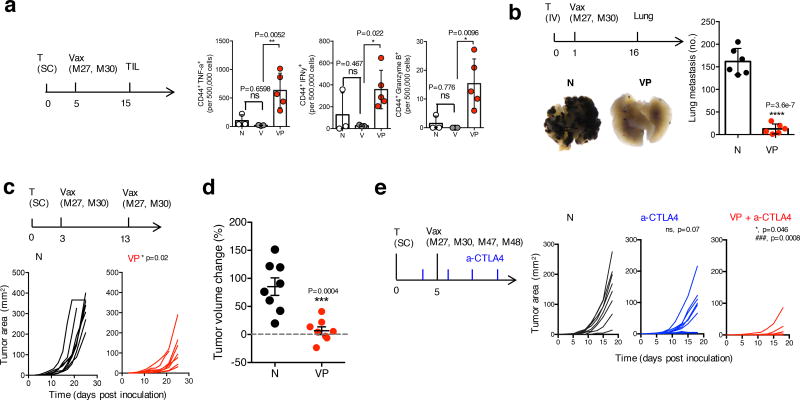
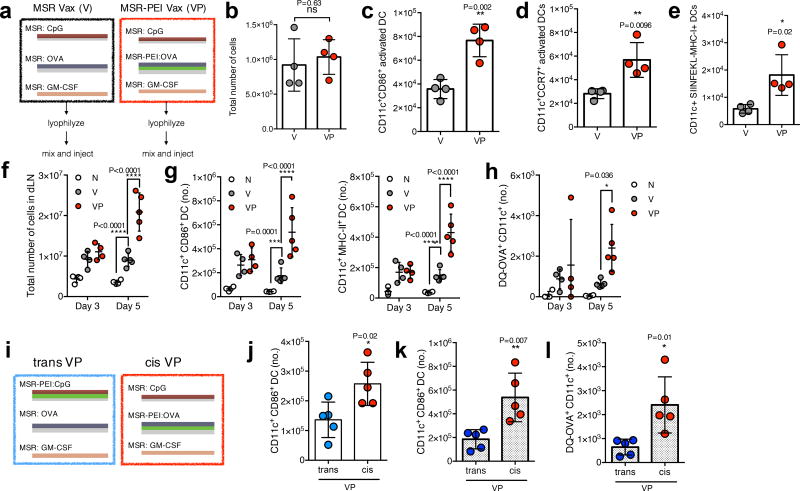
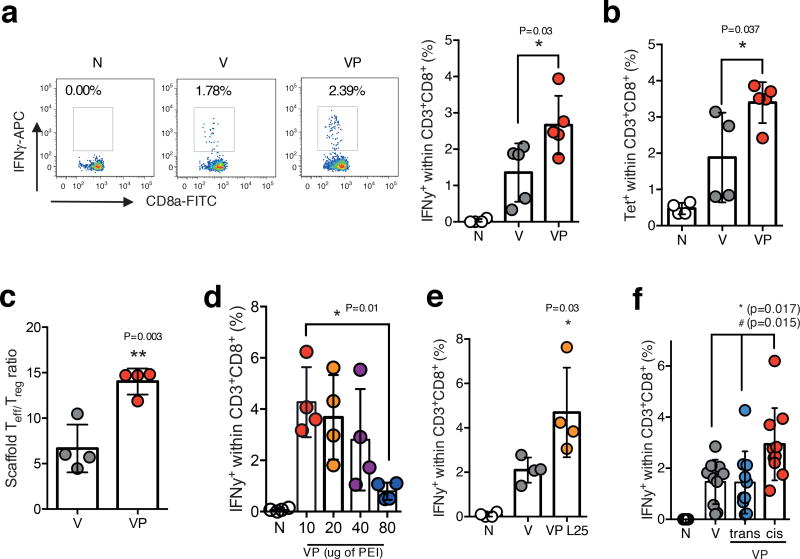
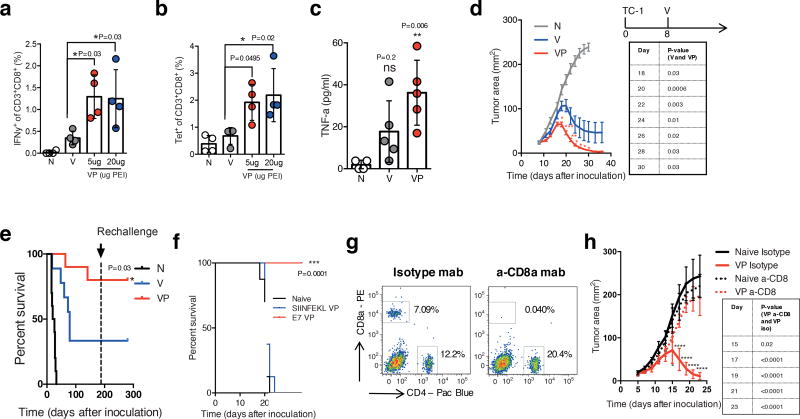
Existing strategies to enhance peptide immunogenicity for cancer vaccination generally require direct peptide alteration, which, beyond practical issues, may impact peptide presentation and result in vaccine variability. Here, we report a simple adsorption approach using polyethyleneimine (PEI) in a mesoporous silica microrod (MSR) vaccine to enhance antigen immunogenicity. The MSR-PEI vaccine significantly enhanced host dendritic cell activation and T-cell response over the existing MSR vaccine and bolus vaccine formulations. Impressively, a single injection of the MSR-PEI vaccine using an E7 peptide completely eradicated large, established TC-1 tumours in about 80% of mice and generated immunological memory. When immunized with a pool of B16F10 or CT26 neoantigens, the MSR-PEI vaccine eradicated established lung metastases, controlled tumour growth and synergized with anti-CTLA4 therapy. Our findings from three independent tumour models suggest that the MSR-PEI vaccine approach may serve as a facile and powerful multi-antigen platform to enable robust personalized cancer vaccination.
现有的增强肽免疫原性用于癌症疫苗接种的策略通常需要直接改变肽,这不仅存在实际问题,还可能影响肽的呈递并导致疫苗变异性。在这里,我们报告了一种使用聚乙烯亚胺(PEI)在介孔硅微球(MSR)疫苗中的简单吸附方法,以增强抗原的免疫原性。与现有的 MSR 疫苗和大剂量疫苗制剂相比,MSR-PEI 疫苗显著增强了宿主树突状细胞的激活和 T 细胞反应。令人印象深刻的是,使用 E7 肽的单次注射 MSR-PEI 疫苗就能使大约 80%的小鼠完全消除大的、已建立的 TC-1 肿瘤,并产生免疫记忆。当用 B16F10 或 CT26 新抗原免疫时,MSR-PEI 疫苗消除了已建立的肺转移,控制了肿瘤生长,并与抗 CTLA4 治疗协同作用。我们在三个独立的肿瘤模型中的发现表明,MSR-PEI 疫苗方法可以作为一种简便而强大的多抗原平台,实现强大的个性化癌症疫苗接种。