Jia Changjun, Dai Chaoliu, Wang Hailiang, Wan Yi, Qiao Yunyu, Xu Feng, Peng Songlin, Zhao Yang, Zhao Chuang, Zhao Liang
Department of Hepatobiliary and Splenic Surgery, Shengjing Hospital of China Medical University, Shenyang, Liaoning 110004, China.
Department of Hepatobiliary Surgery, Weihai Central Hospital, Weihai, Shandong 264400, China.
Gastroenterol Res Pract. 2018 Jan 8;2018:5309286. doi: 10.1155/2018/5309286. eCollection 2018.
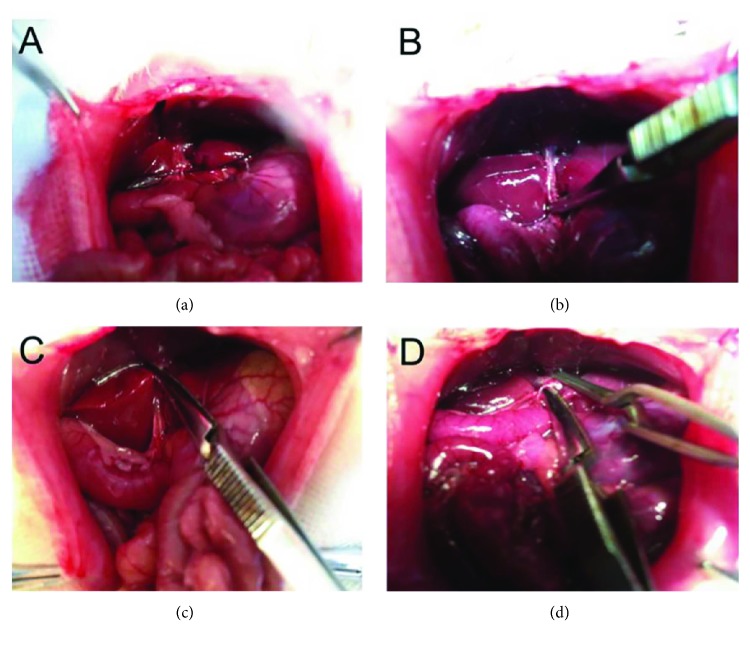
BACKGROUND/AIMS: Hepatic ischemia-reperfusion (I/R) injury is a serious concern during hepatic vascular occlusion. The objectives of this study were to assess effects of three techniques for hepatic vascular occlusion on I/R injury and to explore the underlying mechanisms.
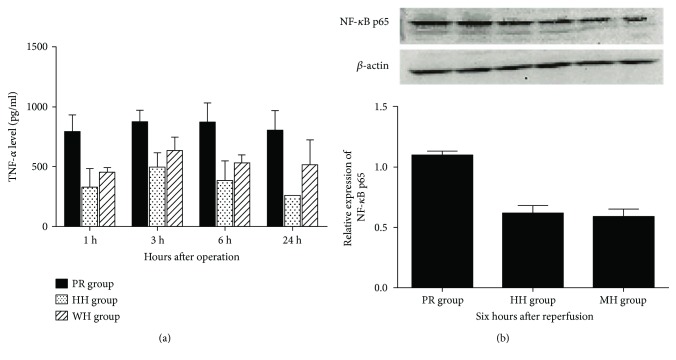
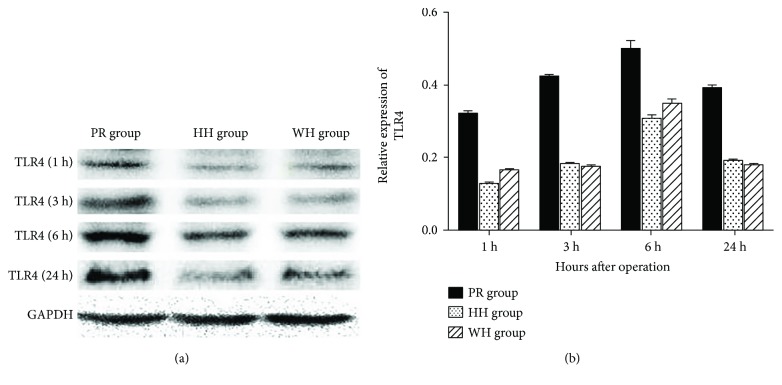
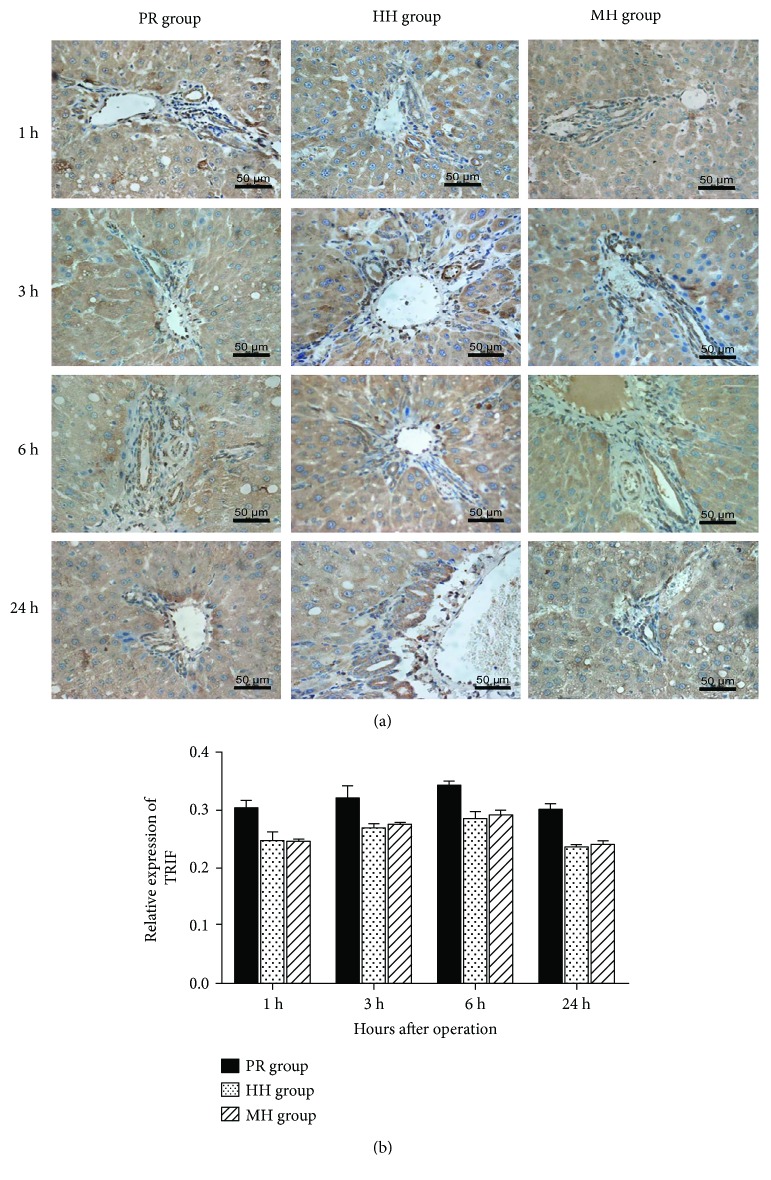
Liver cirrhotic rats had undertaken Pringle maneuver (PR), hemihepatic vascular occlusion (HH), or hepatic blood inflow occlusion without hemihepatic artery control (WH). Levels of tumor necrosis factor alpha (TNF-), nuclear factor kappa B (NF-B), toll-like receptor 4 (TLR4), TIR-domain-containing adapter-inducing interferon- (TRIF), and hemeoxygenase 1 (HMOX1) were assayed.
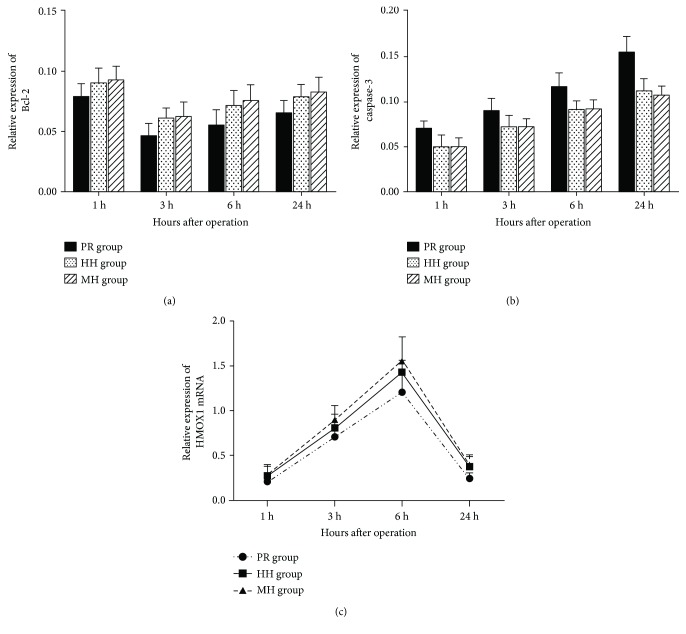
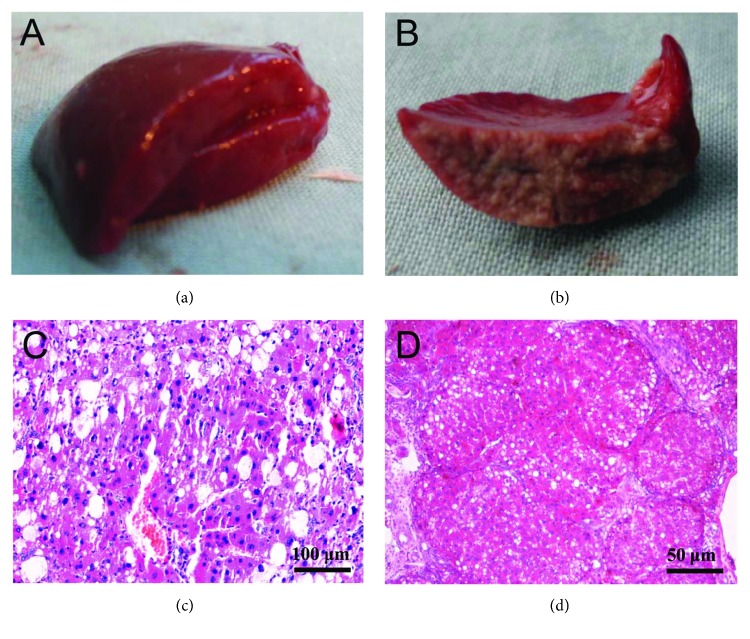
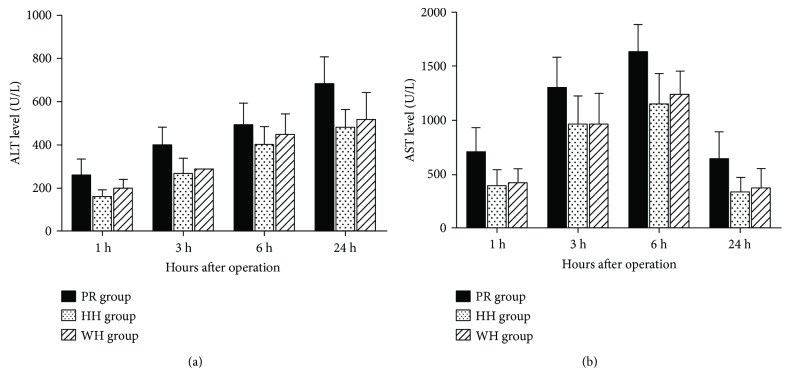
The histopathologic analysis displayed that liver harm was more prominent in the PR group, but similar in the HH and WH groups. The HH and WH groups responded to hepatic I/R inflammation similarly but better than the PR group. Mechanical studies suggested that TNF-/NF-B signaling and TLR4/TRIF transduction pathways were associated with the differential effects. In addition, the HH and WH groups had significantly higher levels of hepatic HMOX1 ( < 0.05) than the PR group.
HH and WH confer better preservation of liver function and protection than the Pringle maneuver in combating I/R injury. Upregulation of HMOX1 may lead to better protection and clinical outcomes after liver resection.
背景/目的:肝缺血再灌注(I/R)损伤是肝血管阻断过程中一个严重问题。本研究的目的是评估三种肝血管阻断技术对I/R损伤的影响,并探究其潜在机制。
肝硬化大鼠接受了普林格尔手法(PR)、半肝血管阻断(HH)或无半肝动脉控制的肝血流阻断(WH)。检测肿瘤坏死因子α(TNF-)、核因子κB(NF-κB)、Toll样受体4(TLR4)、含TIR结构域的接头蛋白诱导干扰素-β(TRIF)和血红素加氧酶1(HMOX1)的水平。
组织病理学分析显示,PR组肝损伤更显著,但HH组和WH组相似。HH组和WH组对肝I/R炎症的反应相似,但优于PR组。机制研究表明,TNF-/NF-κB信号通路和TLR4/TRIF转导通路与这些差异效应有关。此外,HH组和WH组肝HMOX1水平显著高于PR组(P<0.05)。
在对抗I/R损伤方面,HH和WH比普林格尔手法能更好地保护肝功能。HMOX1的上调可能导致肝切除术后更好的保护效果和临床结局。