Wang Lei, Xu Xin, Dong Hao, Gui Rong, Pu Fangling
School of Electronic Information, Wuhan University, Wuhan 430079, China.
Collaborative Innovation Center of Geospatial Technology, Wuhan University, Wuhan 430079, China.
Sensors (Basel). 2018 Mar 3;18(3):769. doi: 10.3390/s18030769.
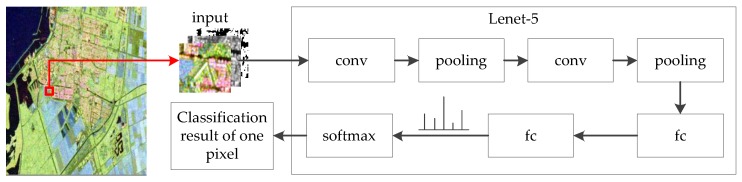
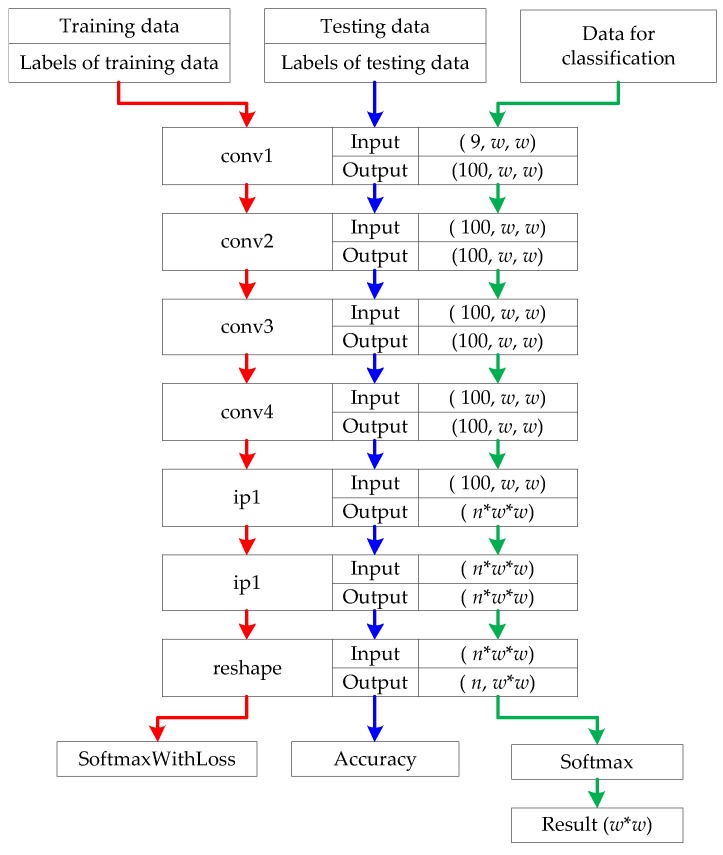
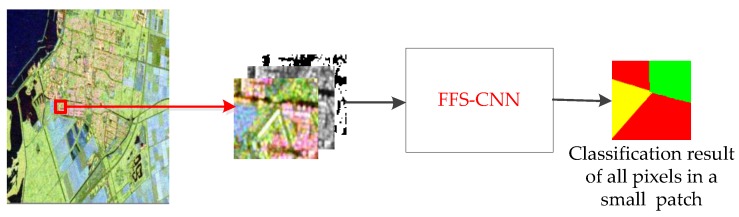
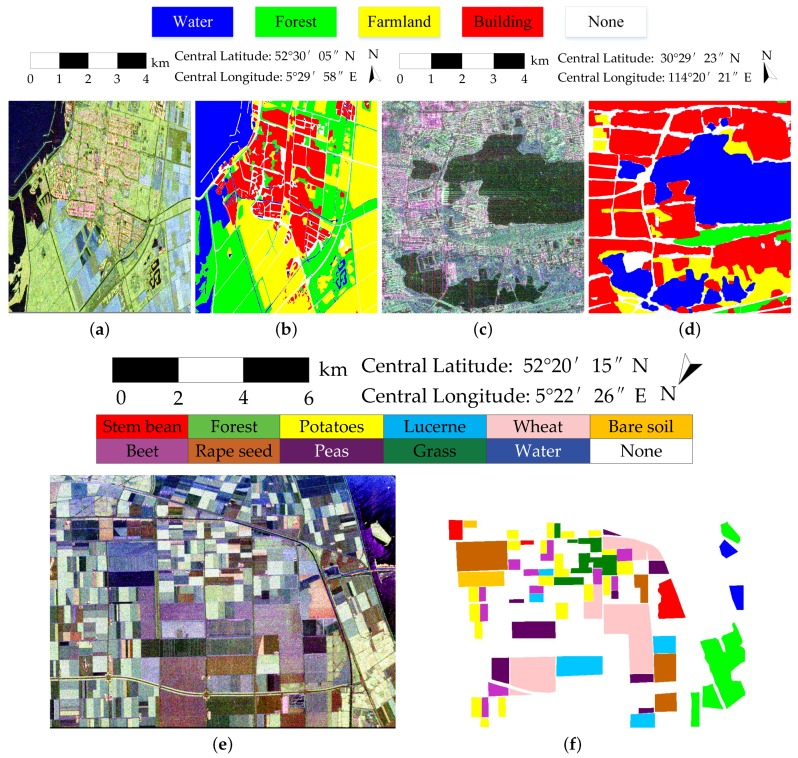
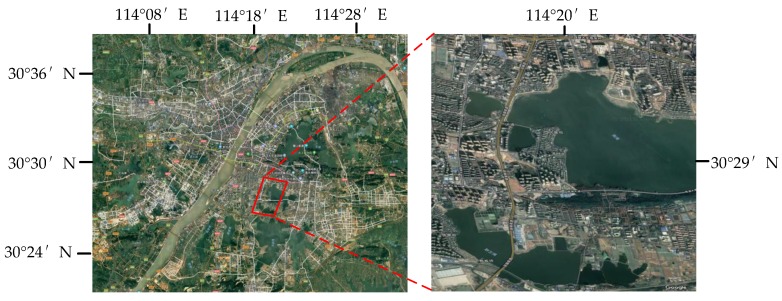
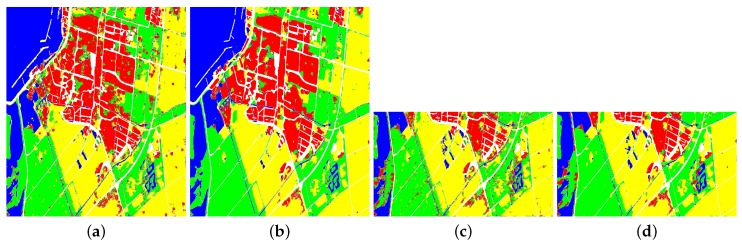
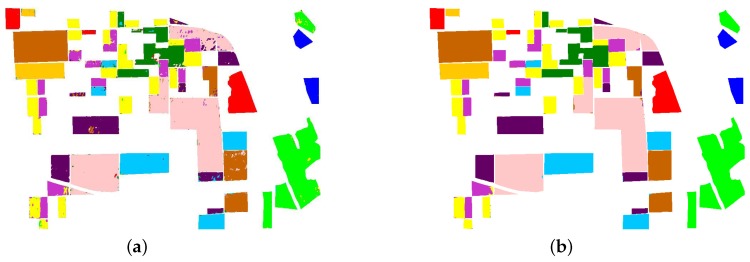
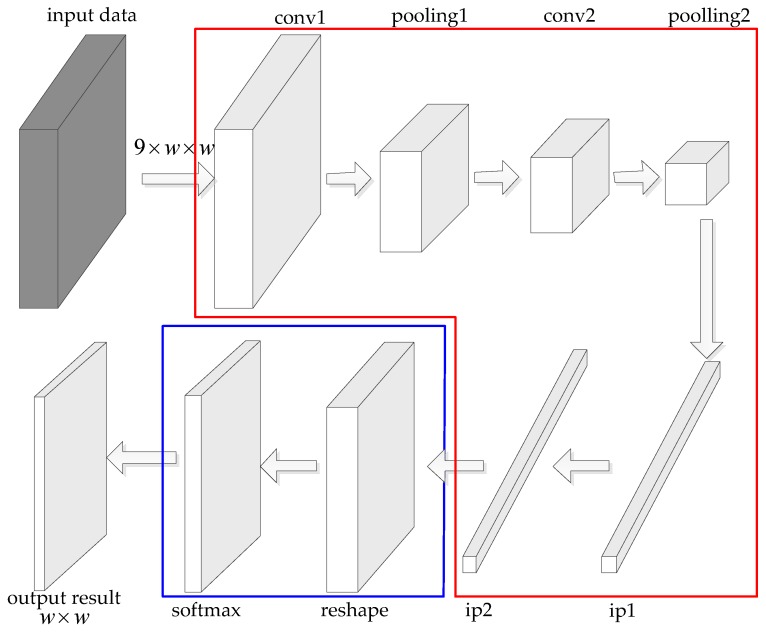
Convolutional neural networks (CNN) have achieved great success in the optical image processing field. Because of the excellent performance of CNN, more and more methods based on CNN are applied to polarimetric synthetic aperture radar (PolSAR) image classification. Most CNN-based PolSAR image classification methods can only classify one pixel each time. Because all the pixels of a PolSAR image are classified independently, the inherent interrelation of different land covers is ignored. We use a fixed-feature-size CNN (FFS-CNN) to classify all pixels in a patch simultaneously. The proposed method has several advantages. First, FFS-CNN can classify all the pixels in a small patch simultaneously. When classifying a whole PolSAR image, it is faster than common CNNs. Second, FFS-CNN is trained to learn the interrelation of different land covers in a patch, so it can use the interrelation of land covers to improve the classification results. The experiments of FFS-CNN are evaluated on a Chinese Gaofen-3 PolSAR image and other two real PolSAR images. Experiment results show that FFS-CNN is comparable with the state-of-the-art PolSAR image classification methods.
卷积神经网络(CNN)在光学图像处理领域取得了巨大成功。由于CNN的出色性能,越来越多基于CNN的方法被应用于极化合成孔径雷达(PolSAR)图像分类。大多数基于CNN的PolSAR图像分类方法每次只能对一个像素进行分类。由于PolSAR图像的所有像素都是独立分类的,不同地物覆盖的内在相关性被忽略了。我们使用固定特征大小的CNN(FFS-CNN)同时对一个小块中的所有像素进行分类。所提出的方法具有几个优点。首先,FFS-CNN可以同时对一个小区域内的所有像素进行分类。在对整个PolSAR图像进行分类时,它比普通的CNN更快。其次,FFS-CNN经过训练以学习一个小块中不同地物覆盖的相关性,因此它可以利用地物覆盖的相关性来提高分类结果。FFS-CNN的实验在中国高分三号PolSAR图像和其他两幅真实PolSAR图像上进行评估。实验结果表明,FFS-CNN与当前最先进的PolSAR图像分类方法相当。