Abdullah Hairil Rizal, Tan Sapphire RouXi, Lee Si Jia, Bin Abd Razak Hamid Rahmatullah, Seet Rachel Huiqi, Ying Hao, Sethi Ervin, Sim Eileen Yilin
Department of Anesthesiology, Singapore General Hospital, Singapore.
Duke-NUS Medical School, Singapore.
BMJ Open. 2018 Mar 6;8(3):e019426. doi: 10.1136/bmjopen-2017-019426.
Postoperative delirium is a serious and common complication in older adults following total joint arthroplasties (TJA). It is associated with increased risk of postoperative complications, mortality, length of hospital stay and postdischarge institutionalisation. Thus, it has a negative impact on the health-related quality of life of the patient and poses a large economic burden. This study aims to characterise the incidence of postoperative delirium following TJA in the South East Asian population and investigate any risk factors or associated outcomes.
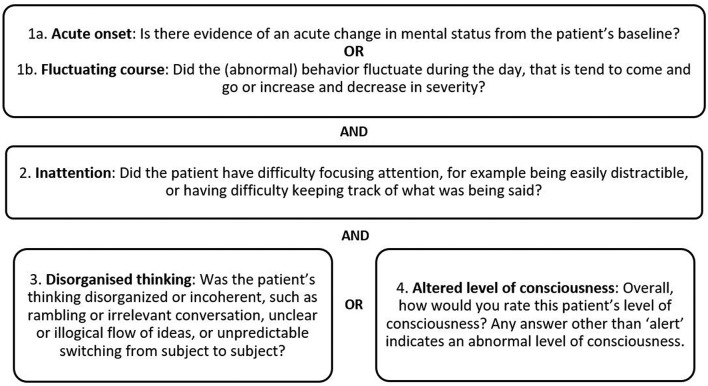
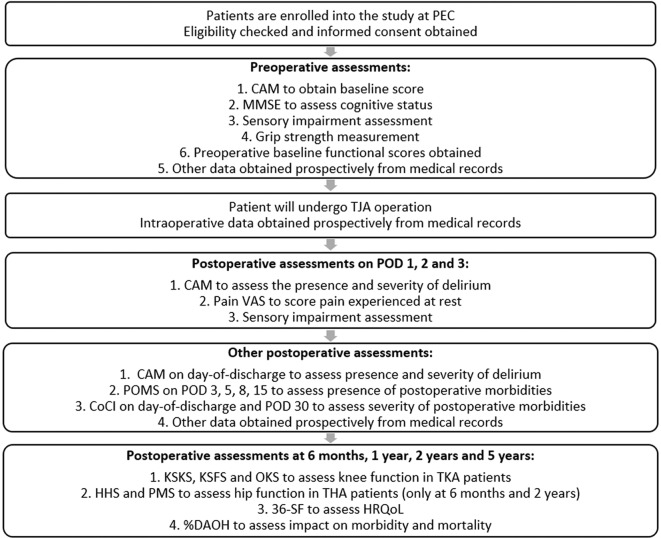
This is a single-centre prospective observational study recruiting patients between 65 and 90 years old undergoing elective total knee arthroplasty or total hip arthroplasty. Exclusion criteria included patients with clinically diagnosed dementia. Preoperative and intraoperative data will be obtained prospectively. The primary outcome will be the presence of postoperative delirium assessed using the Confusion Assessment Method on postoperative days 1, 2 and 3 and day of discharge. Other secondary outcomes assessed postoperatively will include hospital outcomes, pain at rest, knee and hip function, health-related quality of life and Postoperative Morbidity Survey-defined morbidity. Data will be analysed to calculate the incidence of postoperative delirium. Potential risk factors and any associated outcomes of postoperative delirium will also be determined.
This study has been approved by the Singapore General Hospital Institutional Review Board (SGH IRB) (CIRB Ref: 2017/2467) and is registered on the ClinicalTrials.gov registry (Identified: NCT03260218). An informed consent form will be signed by all participants before recruitment and translators will be made available to non-English-speaking participants. The results of this study will be presented at international conferences and submitted to a peer-reviewed journal. The data collected will also be made available in a public data repository.
NCT03260218.
术后谵妄是老年患者全关节置换术(TJA)后一种严重且常见的并发症。它与术后并发症、死亡率、住院时间延长及出院后入住机构的风险增加相关。因此,它会对患者与健康相关的生活质量产生负面影响,并带来巨大的经济负担。本研究旨在描述东南亚人群TJA术后谵妄的发生率,并调查任何风险因素或相关结局。
这是一项单中心前瞻性观察性研究,招募年龄在65至90岁之间接受择期全膝关节置换术或全髋关节置换术的患者。排除标准包括临床诊断为痴呆的患者。术前和术中数据将前瞻性获取。主要结局将是使用混乱评估法在术后第1天、第2天、第3天和出院日评估术后谵妄的存在情况。术后评估的其他次要结局将包括医院结局、静息时疼痛、膝关节和髋关节功能、与健康相关的生活质量以及术后发病率调查定义的发病率。将对数据进行分析以计算术后谵妄的发生率。还将确定术后谵妄的潜在风险因素和任何相关结局。
本研究已获得新加坡总医院机构审查委员会(SGH IRB)批准(CIRB编号:2017/2467),并在ClinicalTrials.gov注册(识别号:NCT03260218)。所有参与者在招募前将签署知情同意书,对于非英语使用者将提供翻译人员。本研究结果将在国际会议上展示,并提交给同行评审期刊。所收集的数据也将在公共数据储存库中提供。
NCT03260218。