Thomas Jacklyn, Bowman Megan J, Vega Andres, Kim Ha Ram, Mukherjee Arijit
Department of Biology, University of Central Arkansas, Conway, AR, 72035, USA.
Bioinformatics & Biostatistics Core, Van Andel Research Institute, Grand Rapids, MI, 49503, USA.
Funct Integr Genomics. 2018 May;18(3):315-326. doi: 10.1007/s10142-018-0594-z. Epub 2018 Mar 6.
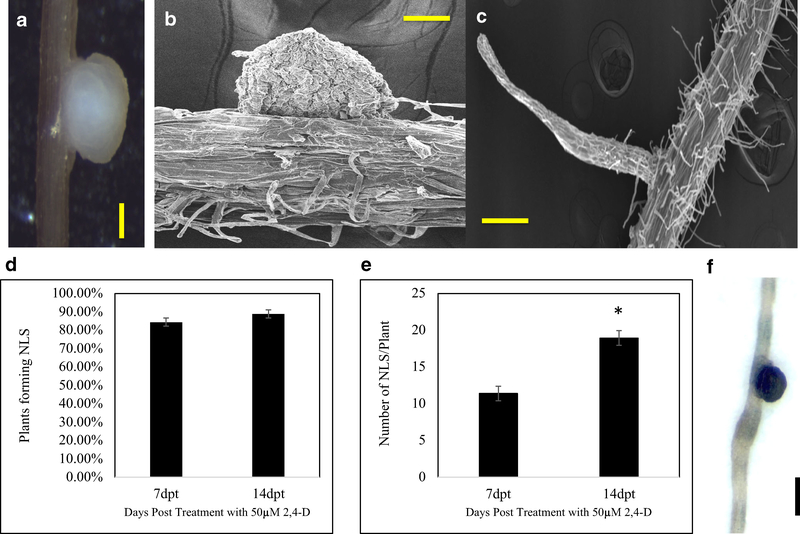
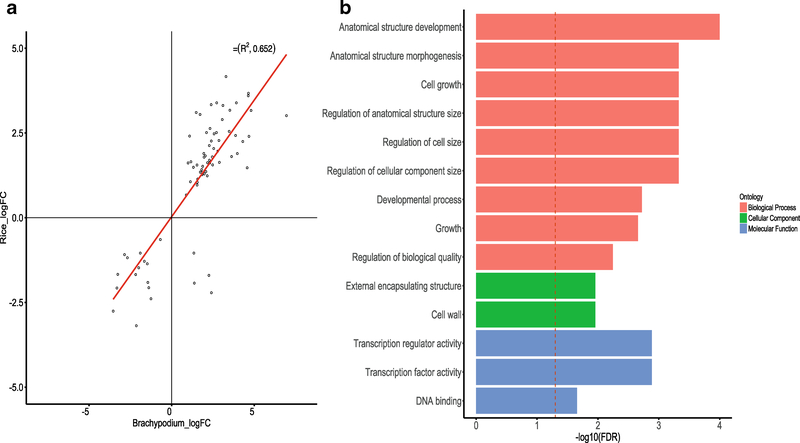
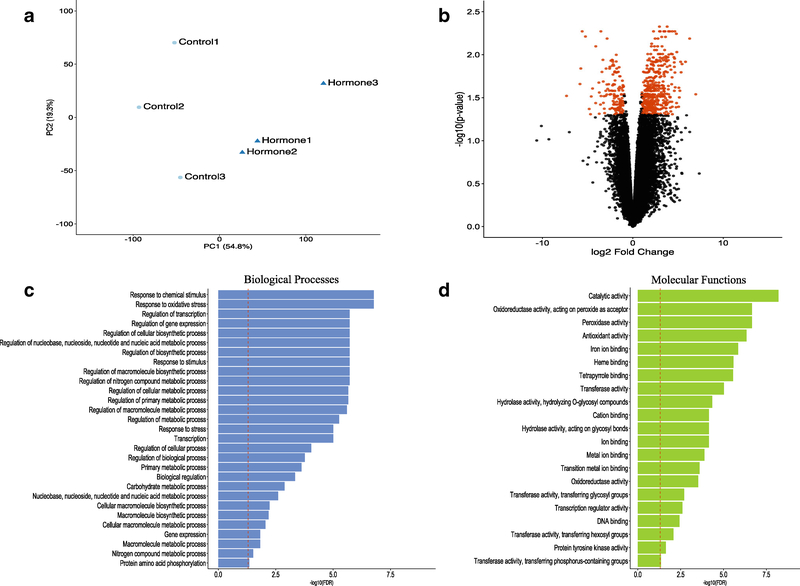
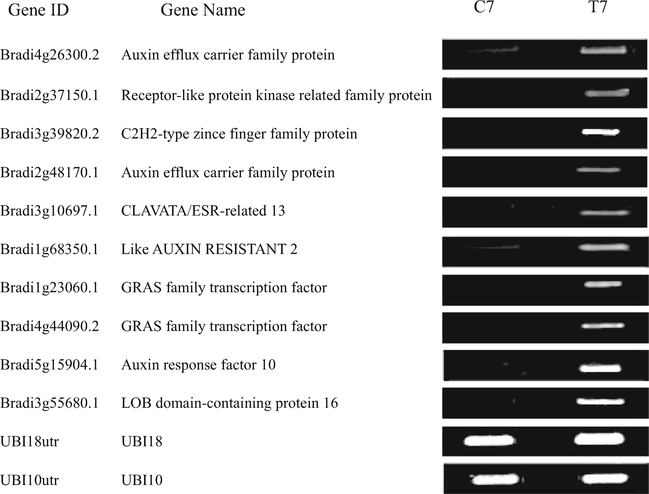
Auxins can induce the formation of nodule-like structures (NLS) in plant roots even in the absence of rhizobia and nitrogen-fixing bacteria can colonize these structures. Interestingly, NLS can be induced in roots of both legumes and non-legumes. However, our understanding of NLS formation in non-legumes at a molecular level is limited. This study aims to investigate NLS formation at a developmental and molecular level in Brachypodium distachyon. We treated Brachypodium roots with the synthetic auxin, 2,4-D, to induce NLS at a high frequency (> 80%) under controlled conditions. A broad base and a diffuse meristem characterized these structures. Next, we performed a comprehensive RNA-sequencing experiment to identify differentially expressed genes (DEGs) in Brachypodium roots during NLS formation. We identified 618 DEGs; several of which are promising candidates for control of NLS based on their biological and molecular functions. We validated the expression pattern of several genes via RT-PCR. Next, we compared the expression profile of Brachypodium roots with rice roots during NLS formation. We identified 76 single-copy ortholog pairs in rice and Brachypodium that are both differentially expressed during this process. Some of these genes are involved in auxin signaling, root development, and legume-rhizobia symbiosis. We established an experimental system to study NLS formation in Brachypodium at a developmental and genetic level, and used RNA-sequencing analysis to understand the molecular mechanisms controlling this root organogenesis program. Furthermore, our comparative transcriptome analysis in Brachypodium and rice identified a key set of genes for further investigating this genetic pathway in grasses.
生长素即使在没有根瘤菌的情况下也能诱导植物根中形成类根瘤结构(NLS),并且固氮细菌可以定殖于这些结构。有趣的是,豆类和非豆类植物的根中均可诱导形成NLS。然而,我们在分子水平上对非豆类植物中NLS形成的了解有限。本研究旨在从发育和分子水平上研究短柄草中NLS的形成。我们用合成生长素2,4-D处理短柄草的根,以便在可控条件下高频(>80%)诱导NLS。这些结构的特征是基部宽阔且分生组织分散。接下来,我们进行了一项全面的RNA测序实验,以鉴定短柄草根部在NLS形成过程中差异表达的基因(DEG)。我们鉴定出618个DEG;基于它们的生物学和分子功能,其中有几个是控制NLS的有潜力的候选基因。我们通过RT-PCR验证了几个基因的表达模式。接下来,我们比较了短柄草根部与水稻根部在NLS形成过程中的表达谱。我们在水稻和短柄草中鉴定出76个单拷贝直系同源基因对,它们在此过程中均差异表达。其中一些基因参与生长素信号传导、根发育以及豆科植物与根瘤菌的共生。我们建立了一个实验系统,从发育和遗传水平研究短柄草中NLS的形成,并利用RNA测序分析来了解控制这种根器官发生程序的分子机制。此外,我们对短柄草和水稻的比较转录组分析鉴定出了一组关键基因,用于进一步研究禾本科植物中的这条遗传途径。