Experimental and Clinical Physiopathology Research Group CTS-1039; Department of Health Sciences, Faculty of Health Sciences; University of Jaen, Campus Universitario Las Lagunillas, Jaen, Spain.
Curr Neuropharmacol. 2019;17(4):342-351. doi: 10.2174/1570159X16666180302120925.
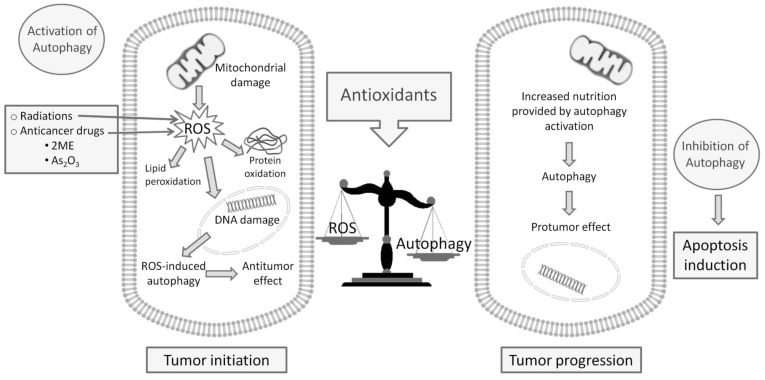
Gliomas are the most frequent brain tumors in the adult population and unfortunately the adjuvant therapies are not effective. Brain tumorigenesis has been related both to the increased levels of free radicals as inductors of severe damages in healthy cells, but also with the reduced response of endogenous enzyme and non-enzymatic antioxidant defenses. In turn, both processes induce the change to malignant cells. In this review, we analyzed the role of the imbalance between free radicals production and antioxidant mechanism in the development and progression of gliomas but also the influence of redox status on the two major distinctive forms of programmed cell death related to cancer: apoptosis and autophagy. These data may be the reference to the development of new pharmacological options based on redox microenvironment for glioma treatment.
神经胶质瘤是成年人中最常见的脑肿瘤,但不幸的是,辅助治疗并不有效。脑肿瘤的发生与自由基水平的增加有关,自由基是诱导健康细胞严重损伤的诱导物,但也与内源性酶和非酶抗氧化防御的反应降低有关。反过来,这两个过程都会导致恶性细胞的变化。在这篇综述中,我们分析了自由基产生与抗氧化机制之间的失衡在神经胶质瘤的发展和进展中的作用,以及氧化还原状态对与癌症相关的两种主要程序性细胞死亡形式(细胞凋亡和自噬)的影响。这些数据可能为基于神经胶质瘤治疗的氧化还原微环境的新药理选择的发展提供参考。