Department of Internal Medicine, Division of Pulmonary, Critical Care and Sleep Medicine, Wayne State University School of Medicine, Detroit Medical Center, Detroit, MI, United States.
Center for Molecular Medicine and Genetics, Wayne State University School of Medicine, Detroit, MI, United States.
Front Immunol. 2018 Feb 21;9:279. doi: 10.3389/fimmu.2018.00279. eCollection 2018.
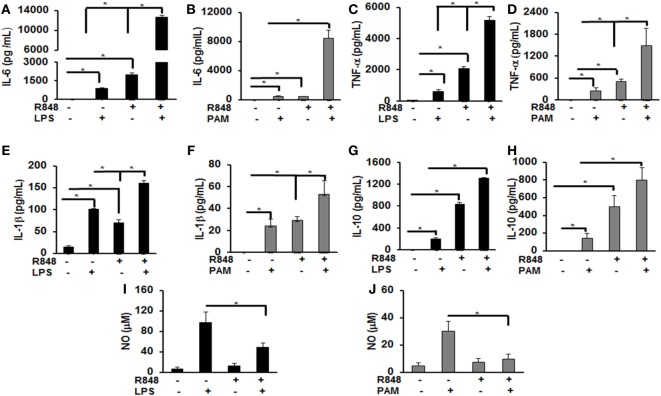
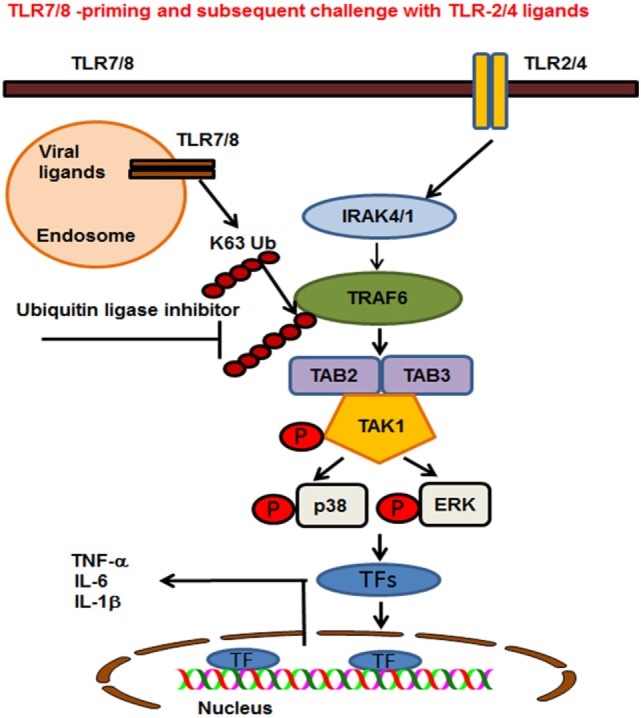
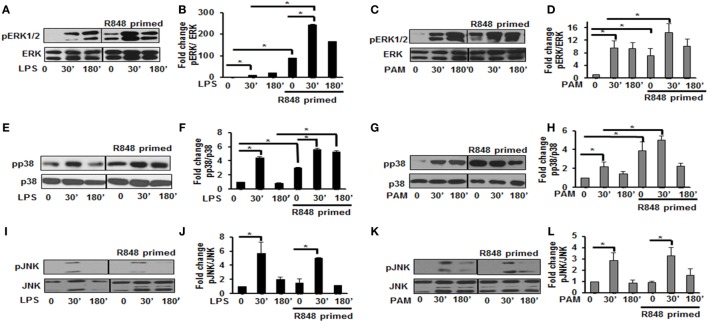
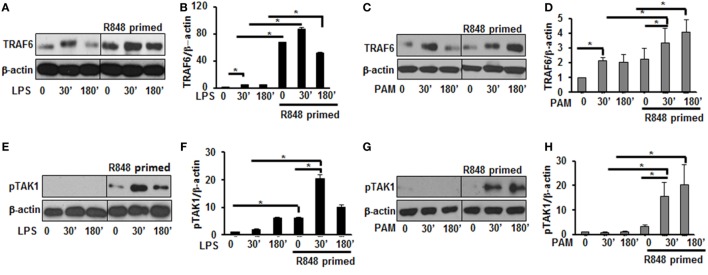
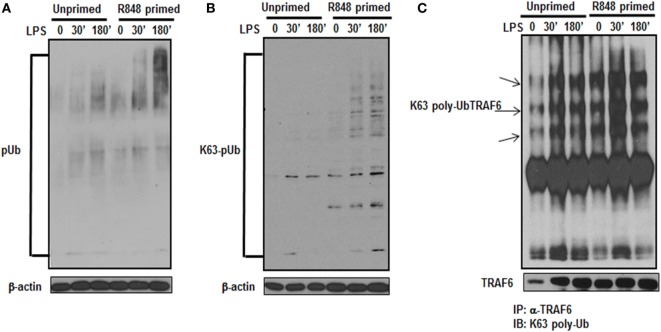
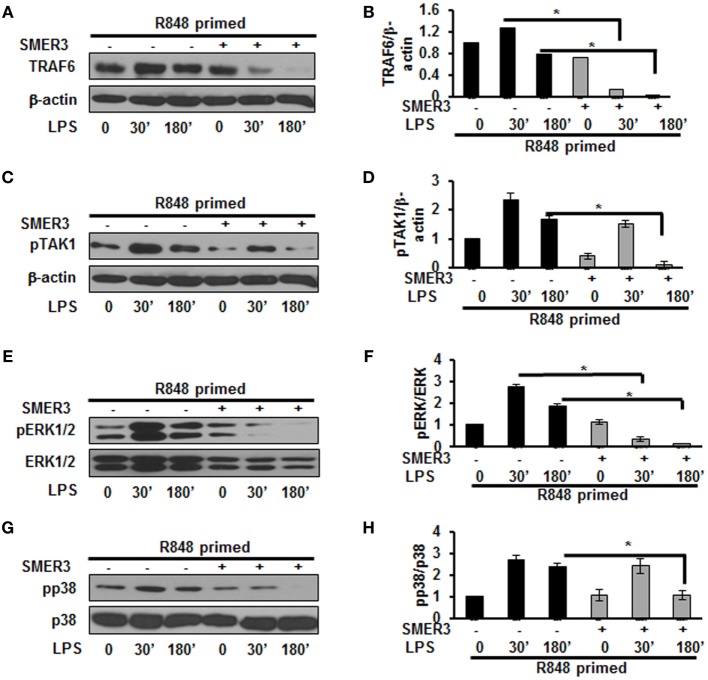
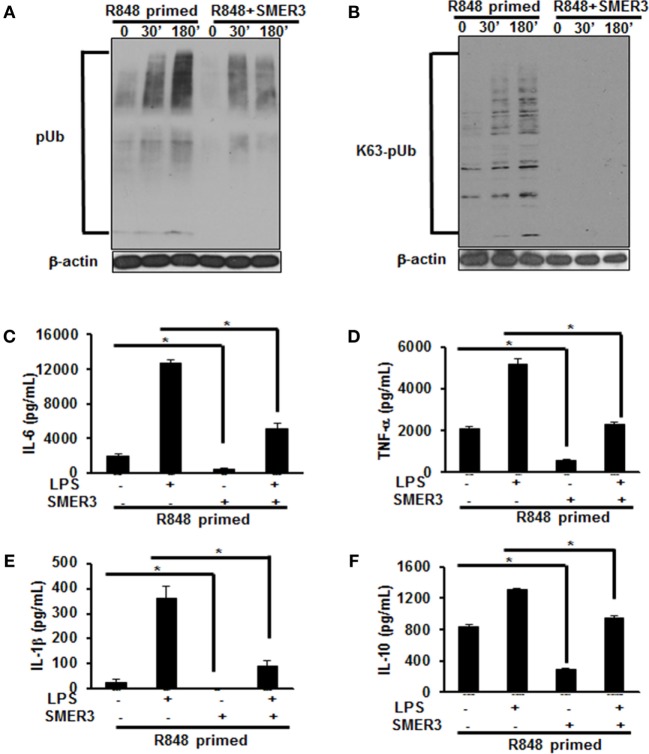
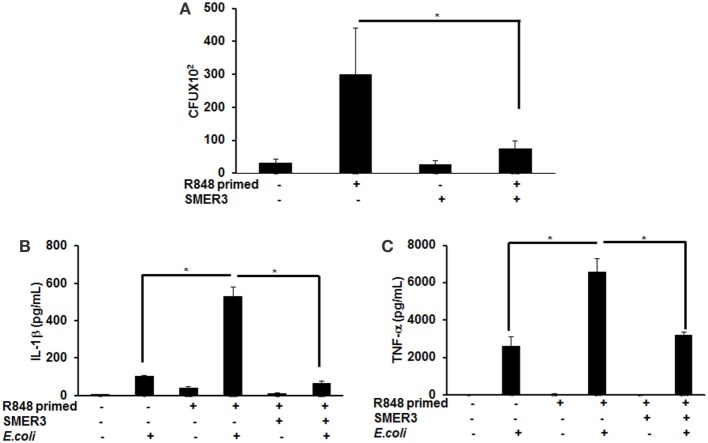
Post viral infection bacterial pneumonia is a major cause of morbidity and mortality associated with both seasonal and pandemic influenza virus illness. Despite much efforts put into the discovery of mechanisms of post viral-bacterial infections and their complications in recent years, the molecular mechanisms underlying the increased susceptibility to bacterial infection remain poorly understood. In this study, we focused on the pathways regulating immune responses in murine macrophages and modeled post viral-bacterial infections through pretreatment of bone marrow-derived macrophages (BMDMs) with a toll-like receptor (TLR) 7/8 ligand (R848) and subsequent challenge with TLR2/4 agonists to mimic bacterial infection. We found R848-primed BMDMs upon subsequent exposure to TLR2/4 ligands respond with enhanced inflammatory cytokine production, especially IL-6 and TNF-α. The enhanced cytokine production in R848-primed BMDMs in response to TLR2/4 was due to increased TGF-β-activated kinase (TAK) 1 phosphorylation with subsequent activation of ERK and p38 MAPKs. Furthermore, we identified that R848 priming leads to increased K63-linked polyubiquitination on TRAF6. K63-linked polyubiquitination on TRAF6 is a signal leading to enhanced activation of downstream pathways including TAK1. Importantly, R848-primed BMDMs infected with live bacteria exhibited decreased bacterial clearance. Small-molecule enhancer of rapamycin 3, an ubiquitin ligase inhibitor reversed the K63-linked polyubiquitination on TRAF6 in R848-primed BMDMs and subsequently decreased TAK1 and MAPK phosphorylation, and cytokine production as well as reversed the decreased bacterial clearance capacity of BMDMs. Our study may provide a novel molecular target to alleviate post viral-bacterial infections.
病毒性感染后继发细菌性肺炎是季节性流感病毒和大流行性流感病毒感染相关发病率和死亡率的主要原因。尽管近年来在发现病毒性-细菌性感染及其并发症的机制方面付出了巨大努力,但对增加细菌易感性的分子机制仍知之甚少。在这项研究中,我们专注于调节鼠巨噬细胞免疫反应的途径,并通过用 Toll 样受体(TLR)7/8 配体(R848)预处理骨髓来源的巨噬细胞(BMDM),随后用 TLR2/4 激动剂挑战来模拟细菌感染,来建立病毒性-细菌性感染模型。我们发现,在用 TLR2/4 配体再次暴露后,R848 预刺激的 BMDM 会产生增强的炎症细胞因子产生,特别是 IL-6 和 TNF-α。R848 预刺激的 BMDM 对 TLR2/4 的反应中增强的细胞因子产生归因于 TGF-β 激活激酶(TAK)1 磷酸化增加,随后 ERK 和 p38 MAPKs 被激活。此外,我们确定 R848 引发导致 TRAF6 上增加的 K63 连接多泛素化。TRAF6 上的 K63 连接多泛素化是导致包括 TAK1 在内的下游途径增强激活的信号。重要的是,用活细菌感染的 R848 预刺激的 BMDM 表现出降低的细菌清除能力。雷帕霉素 3 的小分子增强剂,一种泛素连接酶抑制剂,逆转了 R848 预刺激的 BMDM 中 TRAF6 上的 K63 连接多泛素化,随后降低了 TAK1 和 MAPK 磷酸化以及细胞因子产生,并逆转了 BMDM 降低的细菌清除能力。我们的研究可能为减轻病毒性-细菌性感染提供了一个新的分子靶标。