Wang Xiaomei, Malawista Anna, Qian Feng, Ramsey Christine, Allore Heather G, Montgomery Ruth R
Department of Internal Medicine, Yale University School of Medicine, New Haven, Connecticut.
State Key Laboratory of Genetic Engineering and Ministry of Education Key Laboratory of Contemporary Anthropology, School of Life Sciences, Fudan University, Shanghai, China.
Oncotarget. 2018 Jan 3;9(11):9572-9580. doi: 10.18632/oncotarget.23851. eCollection 2018 Feb 9.
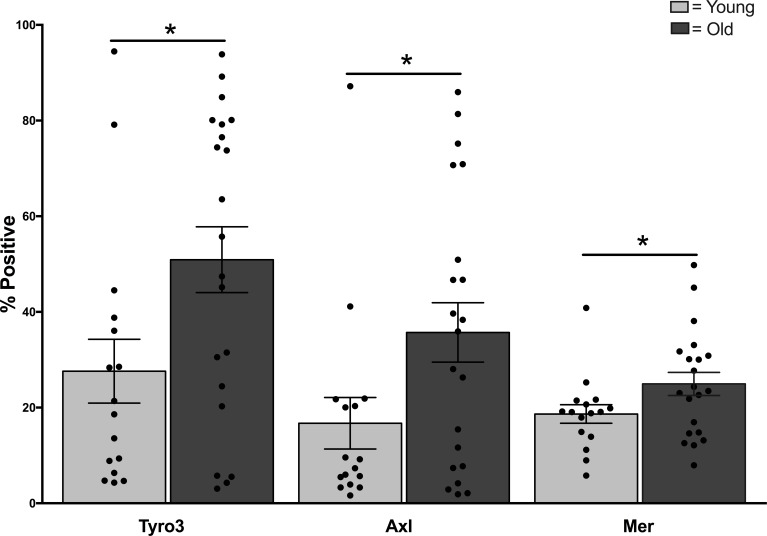
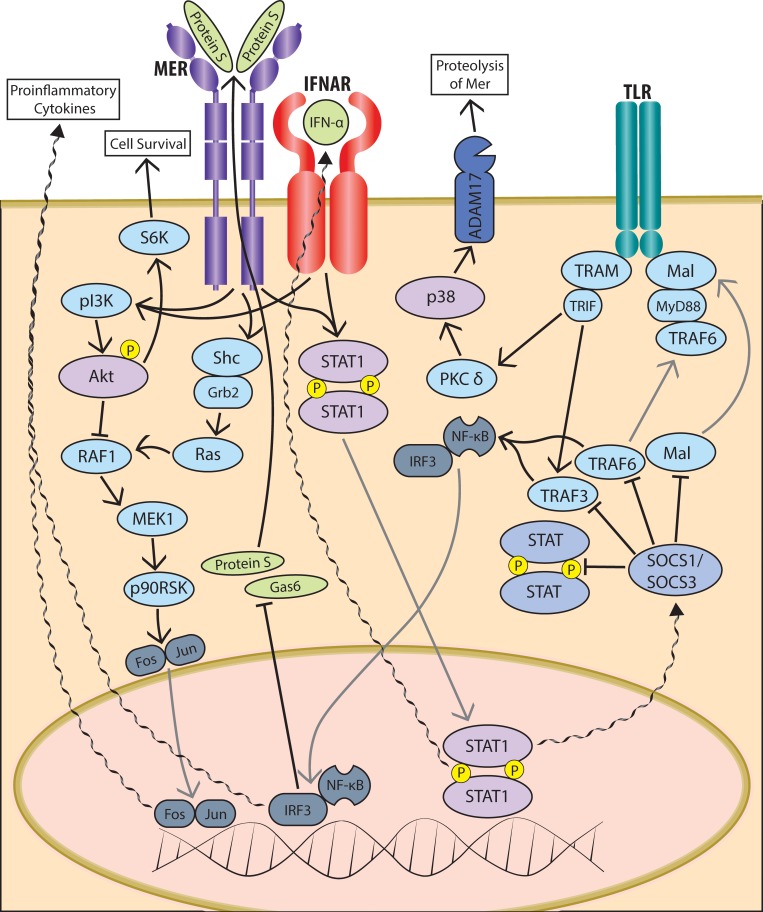
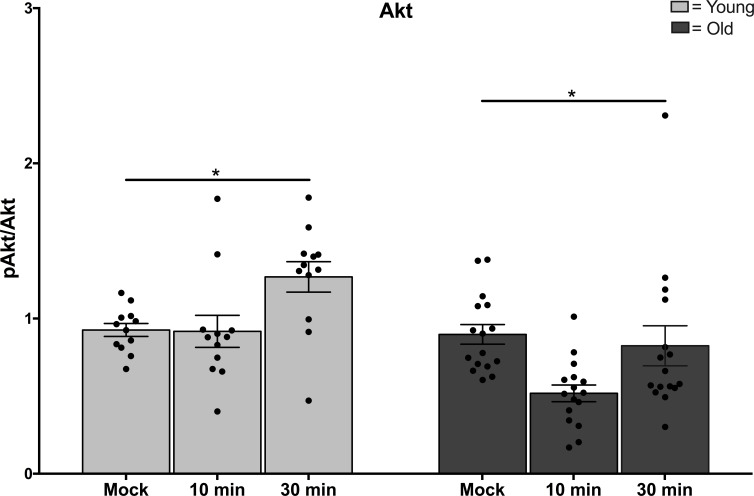
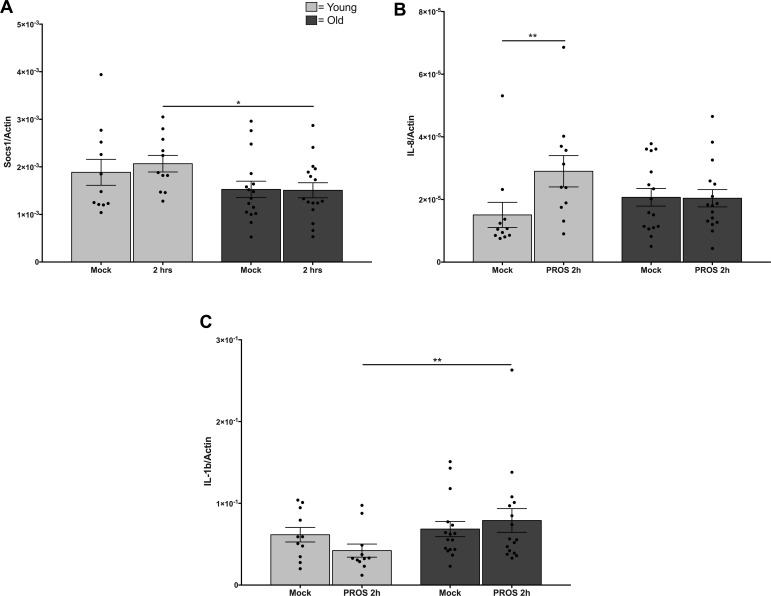
The multifactorial immune deterioration in aging--termed "inflamm-aging"--is comprised of a state of low-grade, chronic inflammation and complex dysregulation of responses to immune stimulation. The TAM family (Tyro 3, Axl, and Mer) of receptor tyrosine kinases are negative regulators of Toll like receptor-mediated immune responses that broadly inhibit cytokine receptor cascades to inhibit inflammation. Here we demonstrate elevated expression of TAM receptors in monocytes of older adults, and an age-dependent difference in signaling mediator AKT resulting in dysregulated responses to signaling though Mer. Our results may be especially significant in tissue, where levels of Mer are highest, and may present avenues for modulation of chronic tissue inflammation noted in aging.
衰老过程中多因素导致的免疫功能衰退——称为“炎症衰老”——包括低度慢性炎症状态以及免疫刺激反应的复杂失调。受体酪氨酸激酶的TAM家族(Tyro 3、Axl和Mer)是Toll样受体介导的免疫反应的负调节因子,可广泛抑制细胞因子受体级联反应以抑制炎症。在此,我们证明了老年人单核细胞中TAM受体的表达升高,以及信号转导介质AKT的年龄依赖性差异,导致通过Mer的信号反应失调。我们的结果在Mer水平最高的组织中可能尤为重要,并且可能为调节衰老过程中出现的慢性组织炎症提供途径。