Yang Chendong, Hou Aihua, Yu Chunfeng, Dai Lingling, Wang Wen, Zhang Kangle, Shao Hongmin, Ma Jinghua, Xu Wenjuan
Yantai Hospital of Traditional Chinese Medicine.
Binzhou Medical University, Yantai, China.
Onco Targets Ther. 2018 Feb 26;11:983-996. doi: 10.2147/OTT.S153814. eCollection 2018.
Multidrug resistance (MDR) frequently contributes to the failure of chemotherapeutic treatments in patients diagnosed with hepatocellular carcinoma (HCC). Revealing the molecular mechanism of MDR is indispensable for the development of effective chemotherapeutic drugs.
Due to the low-toxicity modulators to inhibit MDR, we considered that Kanglaite (KLT) is a potential agent for reversing MDR in HCC.
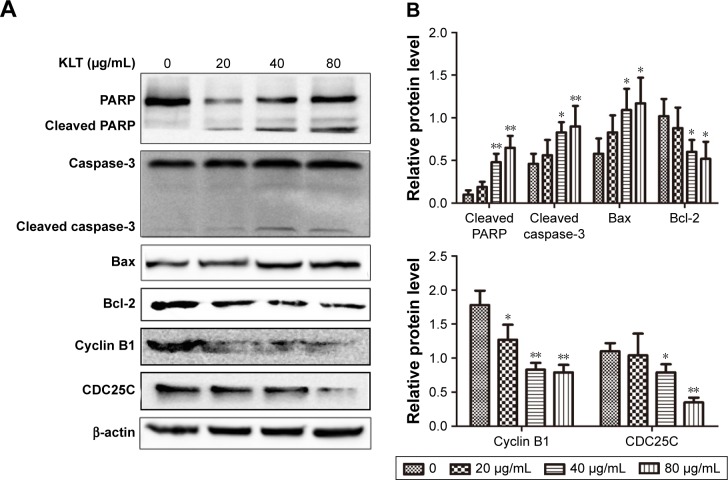
BEL-7402/5-fluorouracil (5-FU) and HepG2/adriamycin (ADM) were analyzed for cell viability, colony formation assay, cell scratch assay, and cell cycle analysis and apoptosis assay by flow cytometry. The expression of PARP, caspase-3, Bax, Bcl-2, CDC25C, Cyclin B1 and phosphorylation of PTEN, PI3K, and AKT in HepG2/ADM cells were detected by western blotting.
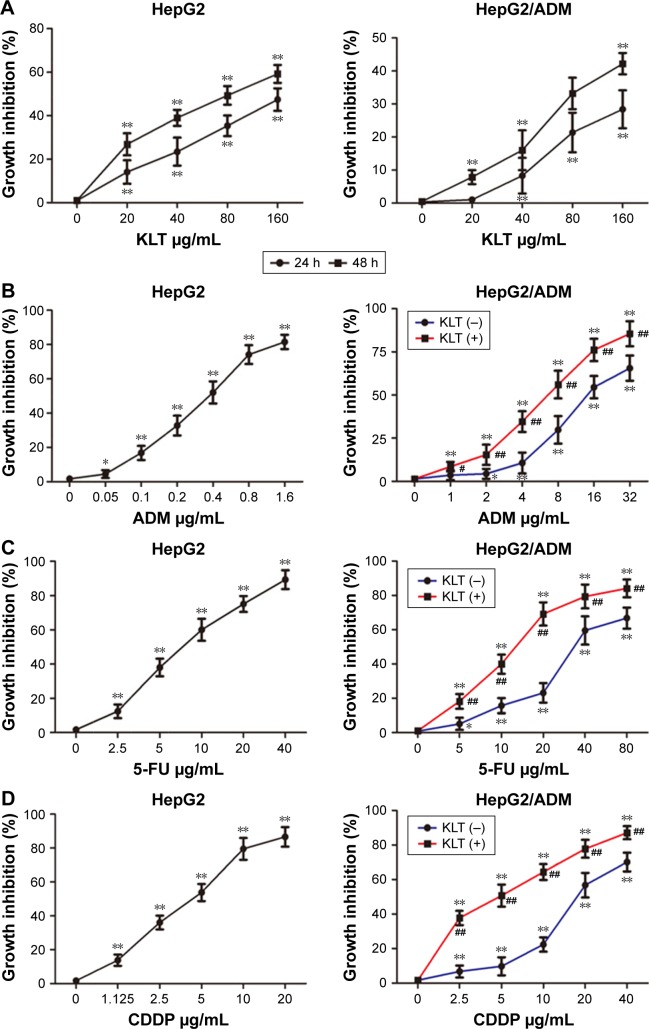
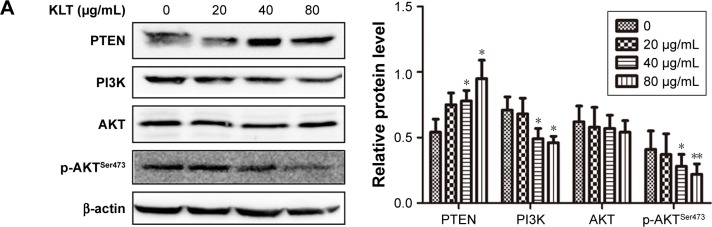
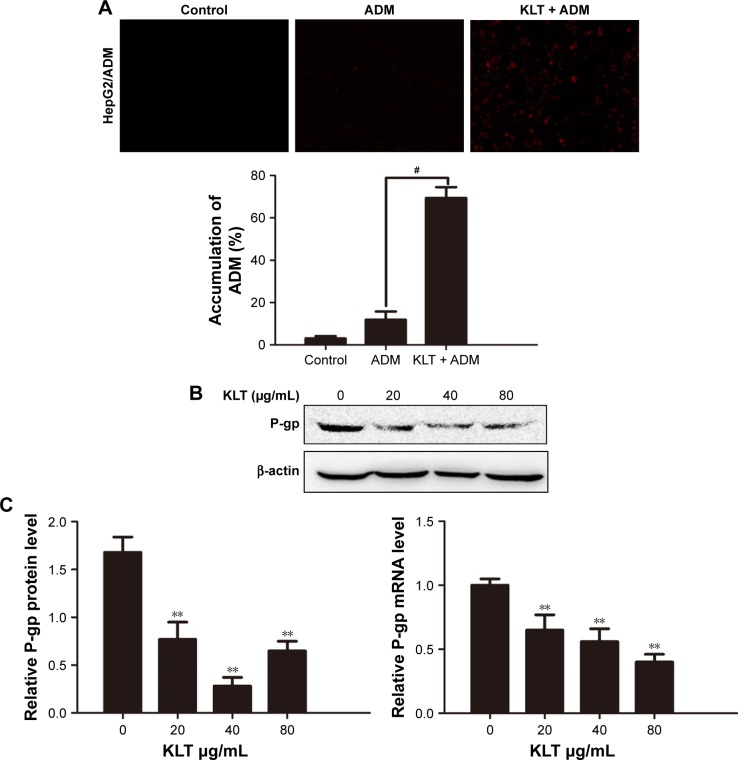
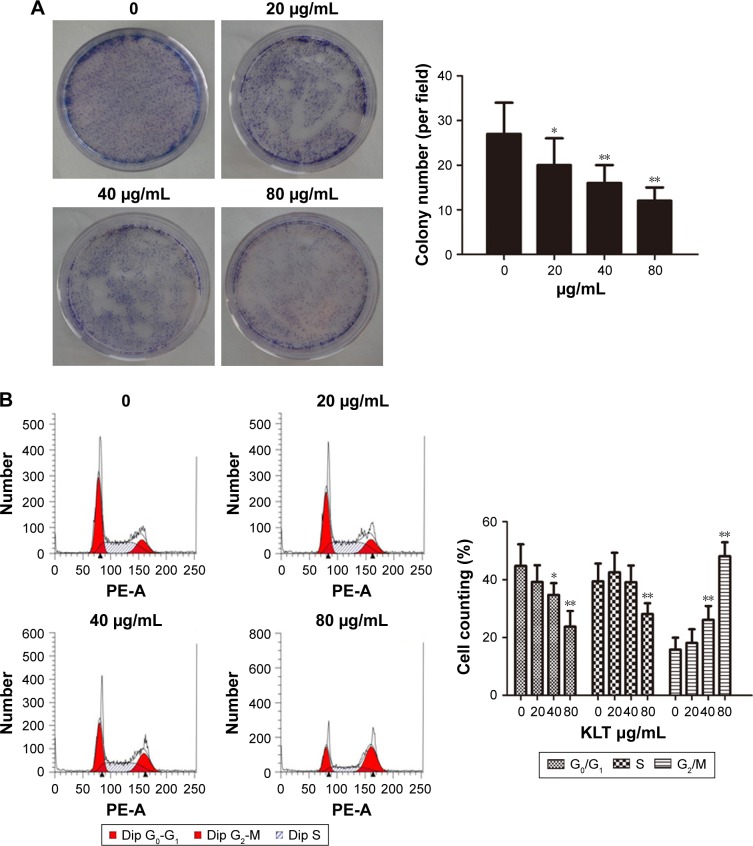
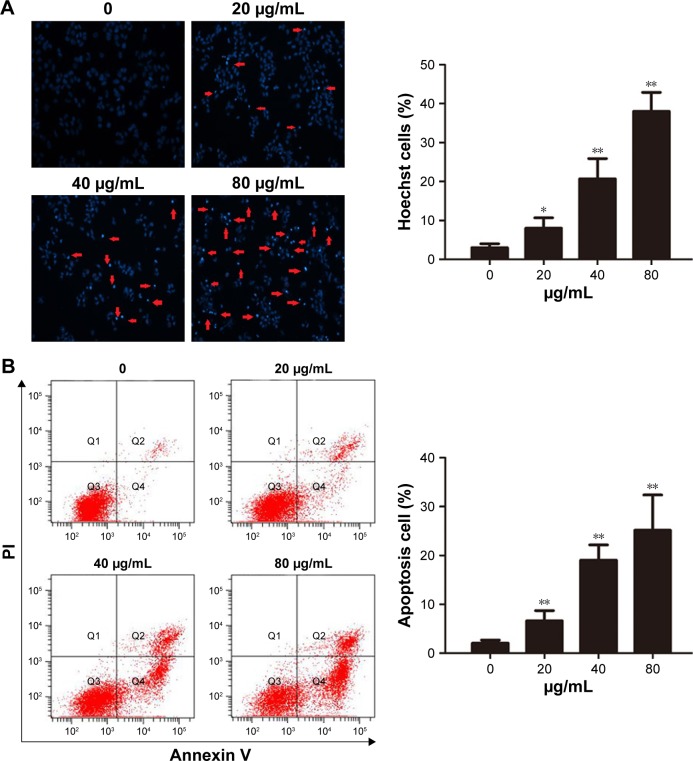
The proliferation of drug-resistant cell lines BEL-7402/5-FU and HepG2/ADM pretreated with KLT was significantly inhibited when compared with drug alone. KLT could increase the accumulation of ADM in HepG2/ADM cells. In this study, we found that KLT treatment notably reduced cell viability, induced apoptosis and cell cycle arrest in human HepG2/ADM and BEL-7402/5-FU cells, and effectively reversed the MDR by p-glycoprotein (P-gp) inhibition. Moreover, KLT decreased the phosphorylation of AKT and PI3K in KLT-treated HepG2/ADM cells. These data together implied that KLT might reverse drug resistance in HCC by blocking the PI3K/AKT signaling.
We demonstrated that KLT reversed MDR of human HCC by inducing apoptosis and cell cycle arrest via the PI3K/AKT signaling pathway.
多药耐药(MDR)常常导致肝细胞癌(HCC)患者化疗失败。揭示MDR的分子机制对于开发有效的化疗药物至关重要。
由于低毒性调节剂可抑制MDR,我们认为康莱特(KLT)是逆转HCC中MDR的潜在药物。
通过流式细胞术分析BEL-7402/5-氟尿嘧啶(5-FU)和HepG2/阿霉素(ADM)的细胞活力、集落形成试验、细胞划痕试验、细胞周期分析和凋亡试验。通过蛋白质印迹法检测HepG2/ADM细胞中PARP、半胱天冬酶-3、Bax、Bcl-2、CDC25C、细胞周期蛋白B1的表达以及PTEN、PI3K和AKT的磷酸化。
与单独使用药物相比,用KLT预处理的耐药细胞系BEL-7402/5-FU和HepG2/ADM的增殖受到显著抑制。KLT可增加ADM在HepG2/ADM细胞中的蓄积。在本研究中,我们发现KLT处理显著降低了人HepG2/ADM和BEL-7402/5-FU细胞的细胞活力,诱导凋亡和细胞周期阻滞,并通过抑制P-糖蛋白(P-gp)有效逆转MDR。此外,KLT降低了KLT处理的HepG2/ADM细胞中AKT和PI3K的磷酸化。这些数据共同表明,KLT可能通过阻断PI3K/AKT信号通路逆转HCC中的耐药性。
我们证明KLT通过PI3K/AKT信号通路诱导凋亡和细胞周期阻滞,从而逆转人HCC的MDR。